
Catalogue Search | MBRL


Are you sure you want to remove the book from the shelf?

{{itemTitle}}
206
result(s) for
"Beech, Mark"
Sort by:
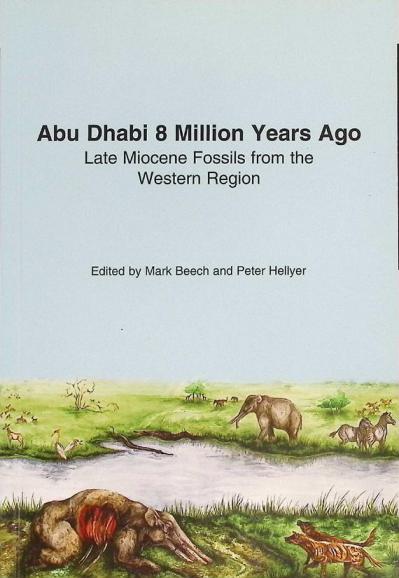
Abu Dhabi - 8 million years ago : late Miocene fossils from the western region
\"Abu Dhabi - 8 Million Years Ago\" is a seminal scientific survey of the fossil-rich Baynunah Formation in the Al Dhafra (Western) Region of Abu Dhabi. Edited by archaeologists Mark Beech and Peter Hellyer, the volume compiles the findings of the Abu Dhabi Islands Archaeological Survey (ADIAS) and international collaborators. It provides a startling reconstruction of a \"Green Arabia,\" revealing that eight million years ago, the now-arid desert was a lush riverine landscape comparable to the modern East African savannah, inhabited by a diverse array of extinct megafauna.
BOOK

Early guenon from the late Miocene Baynunah Formation, Abu Dhabi, with implications for cercopithecoid biogeography and evolution
A newly discovered fossil monkey (AUH 1321) from the Baynunah Formation, Emirate of Abu Dhabi, United Arab Emirates, is important in a number of distinct ways. At ∼6.5–8.0 Ma, it represents the earliest known member of the primate subfamily Cercopithecinae found outside of Africa, and it may also be the earliest cercopithecine in the fossil record. In addition, the fossil appears to represent the earliest member of the cercopithecine tribe Cercopithecini (guenons) to be found anywhere, adding between 2 and 3.5 million y (∼50–70%) to the previous first-appearance datum of the crown guenon clade. It is the only guenon—fossil or extant—known outside the continent of Africa, and it is only the second fossil monkey specimen so far found in the whole of Arabia. This discovery suggests that identifiable crown guenons extend back into the Miocene epoch, thereby refuting hypotheses that they are a recent radiation first appearing in the Pliocene or Pleistocene. Finally, the new monkey is a member of a unique fauna that had dispersed from Africa and southern Asia into Arabia by this time, suggesting that the Arabian Peninsula was a potential filter for cross-continental faunal exchange. Thus, the presence of early cercopithecines on the Arabian Peninsula during the late Miocene reinforces the probability of a cercopithecoid dispersal route out of Africa through southwest Asia before Messinian dispersal routes over the Mediterranean Basin or Straits of Gibraltar.
Journal Article

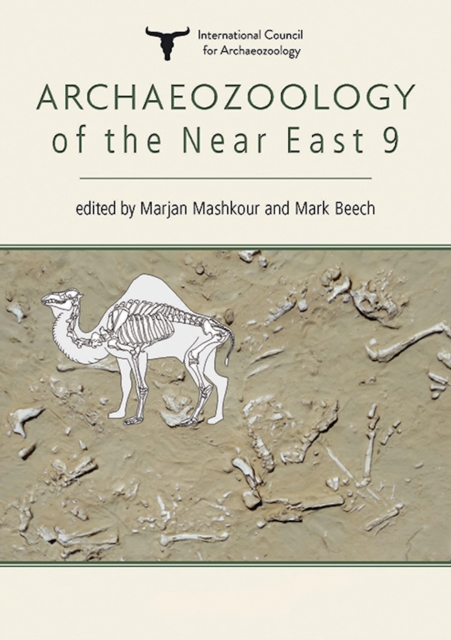
Archaeozoology of the Near East
This two part volume brings together over 60 specialists to present 31 papers on the latest research into archaeozoology of the Near East. The papers are wide-ranging in terms of period and geographical coverage: from Palaeolithic rock shelter assemblages in Syria to Byzantine remains in Palestine and from the Caucasus to Cyprus. Papers are grouped into thematic sections examining patterns of Palaeolithic and Neolithic subsistence in northern Mesopotamia, Anatolia and the Iranian plateau; Palaeolithic to Neolithic faunal remains from Armenia; animal exploitation in Bronze Age urban sites; new evidence concerning pastoralism, nomadism and mobility; aspects of domestication and animal exploitation in the Arabian peninsula; several case studies on ritual animal deposits; and specific analyses of patterns of animal exploitation at urban sites in Turkey, Palestine and Jordan. This important collection of significant new work builds on the well-established foundation of previous ICAZ publications to present the very latest results of archaeozoological research in the prehistory of this formative region in the development of animal exploitation.
eBook

World money
\"Presents an introduction to financial literacy and the global economy, discussing how countries trade, value their currency, and manage poverty and wealth. Includes index, glossary, and discussion questions\"-- Provided by publisher.
Book

Your money
\"Presents an introduction to financial literacy and the economic factors that affect an individual's wealth, such as earning, saving, spending, and sharing money. Discusses ways to manage finances by creating income, budgeting, and saving. Includes index, glossary, and discussion questions\"-- Provided by publisher.
Book


Archaeozoology of the Near East 9 Proceedings of the Al Ain-Abu Dhabi conference
This two part volume brings together over 60 specialists to present 31 papers on the latest research into archaeozoology of the Near East. The papers are wide-ranging in terms of period and geographical coverage: from Palaeolithic rock shelter assemblages in Syria to Byzantine remains in Palestine and from the Caucasus to Cyprus. Papers are grouped into thematic sections examining patterns of Palaeolithic and Neolithic subsistence in northern Mesopotamia, Anatolia and the Iranian plateau; Palaeolithic to Neolithic faunal remains from Armenia; animal exploitation in Bronze Age urban sites; new evidence concerning pastoralism, nomadism and mobility; aspects of domestication and animal exploitation in the Arabian peninsula; several case studies on ritual animal deposits; and specific analyses of patterns of animal exploitation at urban sites in Turkey, Palestine and Jordan.This important collection of significant new work builds on the well-established foundation of previous ICAZ publications to present the very latest results of archaeozoological research in the prehistory of this formative region in the development of animal exploitation.
Book