
Catalogue Search | MBRL


Are you sure you want to remove the book from the shelf?

{{itemTitle}}
322
result(s) for
"Bekoff, Marc"
Sort by:


Compassion as a Practical and Evolved Ethic for Conservation
The ethical position underpinning decisionmaking is an important concern for conservation biologists when setting priorities for interventions. The recent debate on how best to protect nature has centered on contrasting intrinsic and aesthetic values against utilitarian and economic values, driven by an inevitable global rise in conservation conflicts. These discussions have primarily been targeted at species and ecosystems for success, without explicitly expressing concern for the intrinsic value and welfare of individual animals. In part, this is because animal welfare has historically been thought of as an impediment to conservation. However, practical implementations of conservation that provide good welfare outcomes for individuals are no longer conceptually challenging; they have become reality. This reality, included under the auspices of “compassionate conservation,” reflects an evolved ethic for sharing space with nature and is a major step forward for conservation.
Journal Article

Animal Emotions: Exploring Passionate Natures
Current interdisciplinary research provides compelling evidence that many animals experience such emotions as joy, fear, love, despair, and grief. Bekoff suggests that scientists pay closer attention to anecdotes along with empirical data and philosophical arguments as heuristics for future research.
Journal Article


Animal Passions and Beastly Virtues
What is it really like to be a dog? Do animals experience emotions like pleasure, joy, and grief? Marc Bekoff's work draws world-wide attention for its originality and its probing into what animals think about and know as well as what they feel, what physical and mental skills they use to live successfully within their social community. Bekoff's work, whether addressed to scientists or the general public, demonstrates that investigations into animal thought, emotions, self-awareness, behavioral ecology, and conservation biology can be compassionate as well as scientifically rigorous.In Animal Passions and Beastly Virtues, Bekoff brings together essays on his own ground-breaking research and on what scientists know about the remarkable range and flexibility of animal behavior. His fascinating and often amusing observations of dogs, wolves, coyotes, prairie dogs, elephants, and other animals playing, leaving and detecting scent-marks (\"yellow snow\"), solving problems, and forming friendships challenge the idea that science and the ethical treatment of animals are incompatible.
eBook
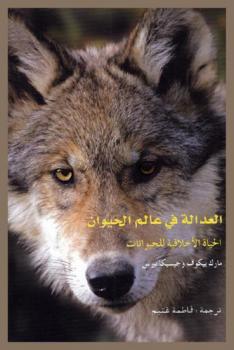
العدالة في عالم الحيوان : الحياة الأخلاقية للحيوانات
إن المعلومات الجديدة التي تتراكم يوميا تنسف الحدود المدركة بين البشر والحيوانات، وتجبرنا على إعادة النظر في الأفكار النمطية العتيقة وضيق الأفق حول قدرات الحيوانات الفكرية والأدائية والشعورية، في هذا الكتاب \"العدالة في عالم الحيوان\" نقدم الحجة على أن الحيوانات تمارس مجموعة كبيرة من السلوكيات الأخلاقية، وأن حياتها الجماعية تتأثر بأنماطها السلوكية، ويؤدي ما هو مفترض وما هو واجب فيما يتعلق بالصواب والخطأ دورا مهما في تفاعلاتها الاجتماعية، كما هو الحال بالضبط في تفاعلاتنا وإذا كنت تشعر ببعض الريبة فإننا ندعوك لأن تطلق العنان لعقلك تنظر إلى الحيوانات من منظور مختلف، ونأمل أن يشرع القراء في تغيير وجهات نظرهم حول فكرة السلوك الأخلاقي في عالم الحيوان.
Book

Summoning compassion to address the challenges of conservation
Conservation practice is informed by science, but it also reflects ethical beliefs about how humanity ought to value and interact with Earth's biota. As human activities continue to drive extinctions and diminish critical life-sustaining ecosystem processes, achieving conservation goals becomes increasingly urgent. However, the determination to react decisively can drive conservationists to handle complex challenges without due deliberation, particularly when wildlife individuals are sacrificedfor the so-called greater good of wildlife collectives (populations, species, ecosystems). With growing recognition of the widespread sentience and sapience of many nonhuman animals, standard conservation practices that categorically prioritize collectives without due consideration for the well-being of individuals are ethically untenable. Here we highlight 3 overarching ethical orientations characterizing current and historical practices in conservation that suppress compassion: instrumentalism, collectivism, and nativism. We examine how establishing a commitment to compassion could reorient conservation in more ethically expansive directions that incorporate recognition of the intrinsic value of wildlife, the sentience of nonhuman animals, and the values of novel ecosystems, introduced species, and their members. A compassionate conservation approach allays practices that intentionally and unnecessarily harm wildlife individuals, while aligning with critical conservation goals. Although the urgency of achieving effective outcomes for solving major conservation problems may enhance the appeal of quick and harsh measures, the costs are too high. Continuing to justify moral indifference when causing the suffering of wildlife individuals, particularly those who possess sophisticated capacities for emotion, consciousness, and sociality, risks estranging conservation practice from prevailing, and appropriate, social values. As conservationists and compassionate beings, we must demonstrate concern for both the long-term persistence of collectives and the well-being of individuals by prioritizing strategies that do both. La práctica de la conservación recibe información por parte de la ciencia, pero también refleja las creencias éticas sobre cómo la humanidad debe de valorar e interactuar con la biota de la Tierra. Conforme las actividades humanas continúan causando las extinciones y disminuyendo los procesos ambientales de suma importancia para el soporte de la vida, alcanzar los objetivos de conservación se vuelve cada vez más urgente. Sin embargo, la determinación para reaccionar de manera decisiva puede llevar a los conservacionistas a tratar con retos complejos sin la deliberación apropiada, particularmente cuando se sacrifican ejemplares faunísticospor el llamado bien mayor de los colectivos faunísticos (poblaciones, especies, ecosistemas). Con el creciente reconocimiento de la gran sensibilidad y sapiencia de muchos animales no humanos, las prácticas estandarizadas de conservación que priorizan categóricamente los colectivos sin la consideración debida para el bienestar de los individuos son insostenibles éticamente. En este artículo resaltamos tres orientaciones dominantes que caracterizan las prácticas actuales e históricas dentro de la conservación que suprimen la compasión: el instrumentalismo, el colectivismo y el nativismo. Examinamos cómo el establecimiento de un compromiso con la compasión puede reorientar a la conservación hacia direcciones más expansivas éticamente que incorporen el reconocimiento del valor intrínseco de la fauna, la sensibilidad de los animales no humanos y los valores de los ecosistemas novedosos, las especies introducidas y sus integrantes. Una estrategia compasiva de conservación apacigua lasprácticas que dañan intencionalmente e innecesariamente a los ejemplares faunísticos, mientras se alinea con los objetivos críticos de conservación. Aunque la urgencia por alcanzar los resultados efectivos para la resolución de los problemas de conservación más importantes puede aumentar el atractivo de las medidas rápidas y rigurosas, los costos son muy elevados. Si se continúa justificando la indiferencia moral cuando se causa sufrimiento a los ejemplares faunísticos, particularmente a aquellos que poseen capacidades sofisticadas para las emociones, la conciencia, y la sociabilidad, se corre el riesgo de distanciar la práctica de la conservación de los valores sociales persistentes y apropiados. Como conservacionistas y seres compasivos, debemos mostrar preocupación tanto por la persistencia a largo plazo de los colectivos como por el bienestar de los individuos alpriorizar estrategias que permitan cumplir ambos objetivos. 保护实践建立在科学知识上,但也反映着人类如何看待地球上的生物并与之相处的伦理观念。随着人类 活动不断导致物种灭绝以及维持生命的重要生态系统过程减少,实现保护目标越来越迫在 睫。然而,果断行 动的决心可能使保护主义者在考虑不周的情况下处理复杂的挑故,特别是当面临野生生物 体要为所谓的集合 体麵ヽ物# 、生态系统> 的利益而牺牲个体利益的情况时。现在已有越来越多的人意识到 多非人动物也 普遍具有感知能力和智慧,因此对个体福祉不加考虑而优先保护集合体的传统标准的保护 践在伦理上是站不 住脚的。本文重点讨论了当下和历史上漠视个体福祉的保护实践中三种主要的伦理取向: 工 主义、集体主义 和本土主义。我们研究了同情心的投入如何将保护重新导向到更具有伦理价值的方向,它 含了对野生生物内 在价值、非人动物的感知能力以及新生生态系统、引入种及其成员的价值的认识。富有同 心的保护方法可 以减少有意或不必要地伤害野生生物个体的行为,同时也与关键保护目标一致。尽管取得 决重大保护问题的 有效成果的紧迫性加强了人们对采取快速、严厉的措施的诉求,但这样做的代价过高。继 为伤害野生动物个 体(特別是那些富有情感、意识、社会性的个体) 的道德冷漠开脱,就要承担使保护实践背离主流的、恰当的社 会价值观的风险。作为保护主义者和具有同情心的人类,我们必须同时关心集合体的长期 存和个体的福祉,采 取兼顾二者的保护策略。
Journal Article


Minding Animals: A Transdisciplinary Approach for Furthering Our Understanding of Animals in Society
I'm honored to be the guest editor of this volume of Animals. The essays included here are in the spirit of this new and forward-looking journal http://www.mdpi.com/2076-2615/1/1/1/pdf. They stem from a precedent setting gathering of scholars from all over the world representing many different disciplines at a meeting called ‘Minding Animals’, held in Newcastle, Australia in July 2009 (http://www.mindinganimals.com//index.php?option=com_content&task=view&id=210&Itemid=236). All of the delegates who journeyed from varying distances, sometimes huge, to be part of this unique gathering, shared a deep interest in learning more about who nonhuman animals (hereafter, animals) are from colleagues studying them from various perspectives, representing disciplines including biology, psychology, anthropology, and the social sciences and humanities. Not surprisingly, the meeting was characterized by great enthusiasm, lots of discussion often bordering on the frenetic since people would soon be dispersing to their homelands and not be readily accessible, and a commitment to continue learning more about animals in society. [...]
Journal Article