
Catalogue Search | MBRL


Are you sure you want to remove the book from the shelf?

{{itemTitle}}
267
result(s) for
"Ben-Ghiat, Ruth"
Sort by:

Italian Fascism's Empire Cinema
Ruth Ben-Ghiat provides the first in-depth study of feature and documentary films produced under the auspices of Mussolini's government that took as their subjects or settings Italy's African and Balkan colonies. These \"empire films\" were Italy's entry into an international market for the exotic. The films engaged its most experienced and cosmopolitan directors (Augusto Genina, Mario Camerini) as well as new filmmakers (Roberto Rossellini) who would make their marks in the postwar years. Ben-Ghiat sees these films as part of the aesthetic development that would lead to neo-realism. Shot in Libya, Somalia, and Ethiopia, these movies reinforced Fascist racial and labor policies and were largely forgotten after the war. Ben-Ghiat restores them to Italian and international film history in this gripping account of empire, war, and the cinema of dictatorship.
eBook

Fascist Modernities
Ruth Ben-Ghiat's innovative cultural history of Mussolini's dictatorship is a provocative discussion of the meanings of modernity in interwar Italy. Eloquent, pathbreaking, and deft in its use of a broad range of materials, this work argues that fascism appealed to many Italian intellectuals as a new model of modernity that would resolve the contemporary European crisis as well as long-standing problems of the national past. Ben-Ghiat shows that—at a time of fears over the erosion of national and social identities—Mussolini presented fascism as a movement that would allow economic development without harm to social boundaries and national traditions. She demonstrates that although the regime largely failed in its attempts to remake Italians as paragons of a distinctly fascist model of mass society, twenty years of fascism did alter the landscape of Italian cultural life. Among younger intellectuals in particular, the dictatorship left a legacy of practices and attitudes that often continued under different political rubrics after 1945.
eBook

Italian colonialism
Italian Colonialism is a pioneering anthology of texts by scholars from seven countries who represent the best of classical and newer approaches to the study of Italian colonization.
eBook

America is Not a Fascist State
Ruth Ben-Ghiat is a professor of History and Italian Studies at New York University who has written extensively on authoritarianism and historic fascism. In this conversation, Ruth discusses the nature of contemporary American politics, why it reveals a number of authoritarian characteristics, the spectacle of Trump, on to the importance of history.
BRAD EVANS: Despite those who argue that mainstream fascism has been consigned to the pages of history, you continue to insist upon the need for a more urgent and considered appreciation of the term. This seems altogether more prescient given what’s happening in the United States today. With
Book Chapter
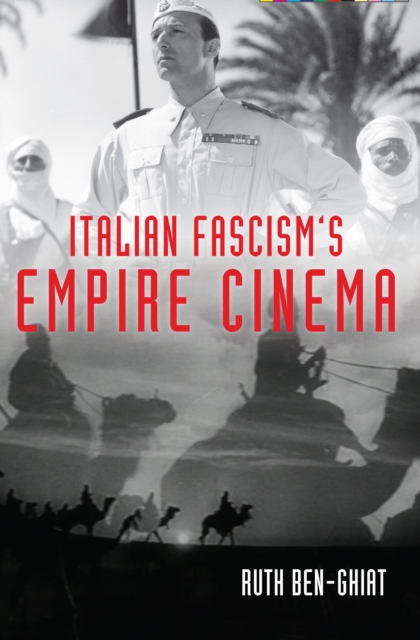

Italian Fascism's Empire Cinema
Ruth Ben-Ghiat provides the first in-depth study of feature and documentary films produced under the auspices of Mussolini’s government that took as their subjects or settings Italy’s African and Balkan colonies. These empire films were Italy's entry into an international market for the exotic. The films engaged its most experienced and cosmopolitan directors (Augusto Genina, Mario Camerini) as well as new filmmakers (Roberto Rossellini) who would make their marks in the postwar years. Ben-Ghiat sees these films as part of the aesthetic development that would lead to neo-realism. Shot in Libya, Somalia, and Ethiopia, these movies reinforced Fascist racial and labor policies and were largely forgotten after the war. Ben-Ghiat restores them to Italian and international film history in this gripping account of empire, war, and the cinema of dictatorship.
eBook

The Imperial Moment in Fascist Cinema
This article looks at how Italian feature and non-fiction cinema on imperial themes engaged with themes of temporality as it asserted Fascism’s right to occupy Ethiopia (1936) and, during World War II, Greece as well. For the Fascists, cinema was a means of displaying the colonies as theatres of Italian modernity, rebuking rhetorics of Italian «backwardness». As I argue, the movies made between 1936 and 1943 reflect the belief of many film professionals and Fascist officials that the scale of the Ethiopian invasion, and the stories it generated, could not be adequately communicated by traditional means of representation; only the movie camera could adequately capture the dense and mobile Fascist present. I analyse Roberto Rossellini’s 1942 aviation drama, Un pilota ritorna / A Pilot Returns, as the apex of this form of temporal and cinematographic thinking, but also as a film that presaged the undoing of Fascism’s empire and its cult of Italian modernity.
Journal Article

Response to Matteo Millan: Mapping Squadrist Violence
Matteo Millan's article is part of an important wave of scholarship that investigates the central role that violence played in Fascist governance throughout the long two decades of Benito Mussolini's rule. Whether at the level of street beatings, worker exploitation (including the use of forced labour) or abuses and mass death in a large network of Fascist concentration camps and confinement spaces (prisons, mental hospitals, penal colonies) that extended to Africa and the Balkans, it is only in the last decade that Italian Fascist violence has been taken seriously. I use this phrase with intent, to highlight the enduring impact of older historiographies that fostered a grave underestimation of Italian Fascist violence and minimised Italians' agency and responsibility for such violence.
Journal Article
Imperial Bodies, Part II
Chapter 6 moves from films of military conquest to films of colonization and from bodies bound by martial duty to corporeal encounters occasioned by everyday life on Italian agricultural settlements. BothL’Esclave blancandSotto la Croce del Sudmake spectacle of the dangerous passions sparked in white Italian men by the proximity to non-white women in Somalia and Ethiopia, respectively. Strong father figures in both films anchor the masculine trials and travails of the young male protagonists, which, in Sotto la Croce del Sud, shade into melodrama. Yet the real internal work on these plantation-style settings goes beyond resistance
Book Chapter