
Catalogue Search | MBRL


Are you sure you want to remove the book from the shelf?

{{itemTitle}}
355
result(s) for
"Benjamin Day"
Sort by:

Foreign policy analysis : classic and contemporary theory
\"Forereign Policy Analysis: Classic and Contemporary Theoryis a succinct yet comprehensive introduction to Foreign Policy Analysis (FPA) geared toward advanced undergraduate and beginning graduate students. Cogently written, clearly organized, and filled with illuminating examples, the third edition has been thoroughly revised and updated. Beginning with an overview of this broad field of study, Hudson and Day consider theory and research at multiple levels of analysis, including personality and psychology of foreign policy decision makers, small group dynamics, the organizational process, bureaucratic politics, domestic politics, cultural and societal influences, national attributes, and system-level effects on foreign policy. The authors also examine the promise and frustration of theoretical integration in FPA and review promising new work by non - North American scholars\"--Back cover.
Book

Magnetic hysteresis up to 80 kelvin in a dysprosium metallocene single-molecule magnet
Single-molecule magnets could prove useful in miniaturizing a wide variety of devices. However, their application has been severely hindered by the need to cool them to extremely low temperature using liquid helium. Guo et al. now report a dysprosium compound that manifests magnetic hysteresis at temperatures up to 80 kelvin. The principles applied to tuning the ligands in this complex could point the way toward future architectures with even higher temperature performance. Science , this issue p. 1400 Ligand tuning raises the upper temperature for hysteresis in a single-molecule magnet just above nitrogen’s boiling point. Single-molecule magnets (SMMs) containing only one metal center may represent the lower size limit for molecule-based magnetic information storage materials. Their current drawback is that all SMMs require liquid-helium cooling to show magnetic memory effects. We now report a chemical strategy to access the dysprosium metallocene cation [(Cp i Pr5 )Dy(Cp*)] + (Cp i Pr5 , penta-iso-propylcyclopentadienyl; Cp *, pentamethylcyclopentadienyl), which displays magnetic hysteresis above liquid-nitrogen temperatures. An effective energy barrier to reversal of the magnetization of U eff = 1541 wave number is also measured. The magnetic blocking temperature of T B = 80 kelvin for this cation overcomes an essential barrier toward the development of nanomagnet devices that function at practical temperatures.
Journal Article
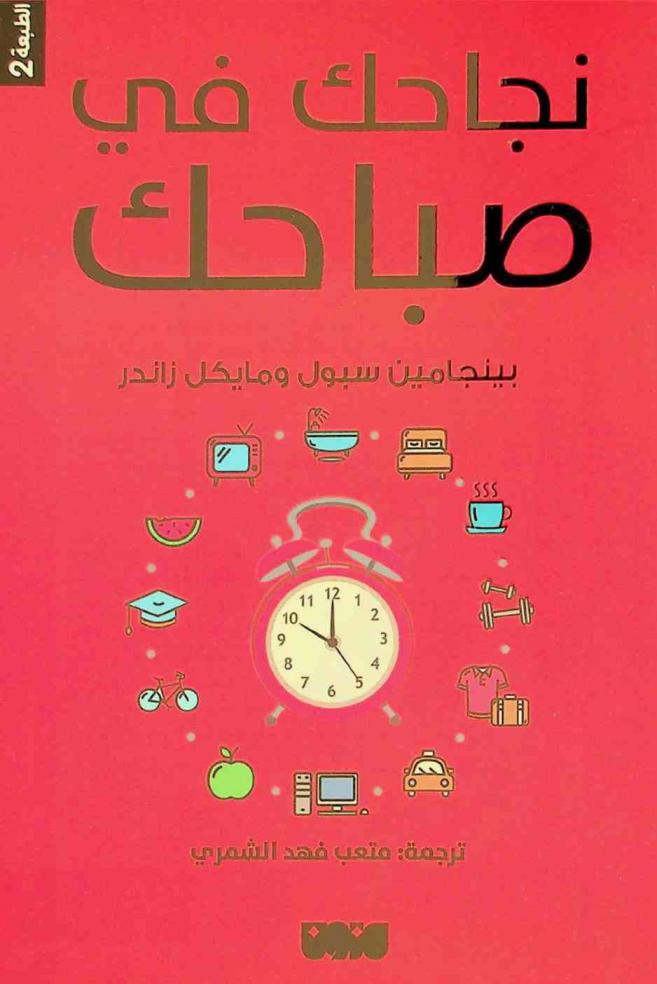
نجاحك في صباحك
يقدم الكتاب أفضل الوسائل في تكوين روتينك الصباحي، منها ما يركز على التمارين الصباحية والأداء القوي، ومنها ما تتم ممارسته بكل روية وتمهل، بل إن بعضها يصل إلى حد البذخ والترف، لكن العامل المشترك ما بين كل هذه الأنواع أنها لا تشعرك أنك تمارس عملا يوميا رتيبا. وبمجرد أن يستقر اختيارك على أحد هذه الأنواع فإنك ستجد نفسك في كل مرة تتطلع وبكل شغف للاستيقاظ بهمة ونشاط وسواء كانت غايتك التعزيز من مستوى الإنتاجية في عملك أو تأدية التدريبات الصباحية أو مزاولة الروتين التأملي على الوجه المطلوب أو لمجرد محاولة التكيف مع أصعب الظروف فإن هذا الكتاب يشمل كل ذلك وأكثر.
Book

The elite paradigm driving Australian aid policy: Learning to live with the 'cautious consensus'
This article explores the underlying reasons for why the Albanese Labor Governmentʼs stated policy ambition to 'rebuild Australiaʼs international development program' has not yet been accomplished and is unlikely to be realised, at least in the near- to-medium term. Based on interviews conducted with 21 Australian Members of Parliament, we find that the 'cautious consensus' - a collection of ideas guiding elite perspectives on Australian aid policy that emerged during the COVID-19 pandemic - has rapidly consolidated, to the point where it can now be considered a paradigm. We identify three main factors that have led to this consolidation: the declining salience of aid; growing elite scepticism about the usefulness of aid; and a combination of political challenges that are difficult for Labor to navigate, as it seeks to become a long-term Government. Given the prospects of shifting the unambitious status quo are unlikely in the in the near-to-medium term, we examine what 'living with the cautious consensus' means for the Australian development sector.
Journal Article
What parliamentarians think about Australia's post-COVID-19 aid program: The emerging 'cautious consensus' in Australian aid
Since the onset of the COVID-19 pandemic, the Australian Government has been ambiguous in the way it has communicated the aid budget. On some occasions, it has sought to downplay increases in aid spending, while at other times it has sought to downplay cuts to aid spending. We draw on interviews with federal parliamentarians and key informants to understand these dynamics, in the context of obtaining their views on changes to Australia's post-COVID-19 aid policy. We find evidence that a new political consensus is forming around Australian aid. While this 'cautious consensus' countenances aid spending increases, motivated in part by humanitarian concerns but especially by anxiety about increasing Chinese influence in the region, these priorities are tempered by considerable concern about public backlash at a time of significant economic challenges for Australian citizens. Based on this evidence, we define the contours of an emerging 'cautious consensus' by showing how it will differ from the earlier 'golden consensus' era of Australian aid.
Journal Article

Covid-19 and Papua New Guinea
The \"perfect storm\" that health officials had been dreading arrived belatedly in Papua New Guinea (PNG) in September 2021. By the end of October, mass burials of hundreds of bodies were being planned in Port Moresby, PNG's capital and largest city. Morgues across the country were filled beyond capacity. Hospitals had run out of oxygen and other supplies. And as more and more health workers tested positive for Covid-19, health services were being scaled back to cope with the pandemic. The storm was supposed to arrive eighteen months earlier. But after PNG's first confirmed Covid-19 case was recorded in March 2020, it took over four months until the first official death was recorded. It took another full year before PNG weathered its first serious wave of infections, from March to May 2021. Yet this outbreak also petered out earlier than expected.This dynamic, whereby the virus repeatedly failed to match expectations of its impact, ensured that \"Covid-19's manifestation in Papua New Guinea was fundamentally different from that in other countries.\"1 It has also fed into high levels of vaccine hesitancy. Given PNG's stressed and poorly funded health system, the limiting factor in the country's Covid-19 response was widely expected to be the availability and distribution of vaccines. Instead, the more pressing challenge has been the extraordinarily high level of vaccine hesitancy.
Journal Article

The Encyclopedia of Strikes in American History
Strikes have been part of American labor relations from colonial days to the present, reflecting the widespread class conflict that has run throughout the nation's history. Against employers and their goons, against the police, the National Guard, local, state, and national officials, against racist vigilantes, against their union leaders, and against each other, American workers have walked off the job for higher wages, better benefits, bargaining rights, legislation, job control, and just plain dignity. At times, their actions have motivated groundbreaking legislation, defining new rights for all citizens; at other times they have led to loss of workers' lives. This comprehensive encyclopedia is the first detailed collection of historical research on strikes in America. To provide the analytical tools for understanding strikes, the volume includes two types of essays - those focused on an industry or economic sector, and those focused on a theme. Each industry essay introduces a group of workers and their employers and places them in their economic, political, and community contexts. The essay then describes the industry's various strikes, including the main issues involved and outcomes achieved, and assesses the impact of the strikes on the industry over time. Thematic essays address questions that can only be answered by looking at a variety of strikes across industries, groups of workers, and time, such as, why the number of strikes has declined since the 1970s, or why there was a strike wave in 1946. The contributors include historians, sociologists, anthropologists, and philosophers, as well as current and past activists from unions and other social movement organizations. Photos, a Topic Finder, a bibliography, and name and subject indexes add to the works appeal.
eBook

Preacher to the Common People: An Analysis of the Use of Simplicity for Achieving Clarity in the Preaching of J. Vernon McGee
J. Vernon McGee (1904–1988) was an influential pastor and preacher whose radio ministry continues to have a worldwide presence more than thirty years after his death. McGee claimed that his approach to preaching was to expound the Bible in a simple way that children could understand. Scholars have attributed much of his preaching success to his simplicity, but no one has critically analyzed his preaching to see if and how he accomplished his goal of simplicity. The author’s thesis is that McGee utilized simplicity of language and structure in his preaching and that this simplicity contributed to his effectiveness as a preacher, especially in the clarity of his sermons. Therefore, this dissertation analyzed McGee’s preaching to determine the degree and nature of simplicity in his sermons.Chapter 1 introduces the dissertation. The thesis statement and the research question are presented. Next, the importance of the topic is affirmed, and the unique contribution the study makes to Christian scholarship and the field of preaching is stated. Lastly, the research methodology used in the study and delimitations are explained.Chapter 2 presents a biography of J. Vernon McGee. The biography surveys his early life and call to ministry, including his time as a student in theological education and his time as a young pastor. This section highlights the influences that shaped his theology and his approach to preaching. Next, McGee’s years as the pastor of the Church of the Open Door in Los Angeles are discussed in more detail, as this is the period of his preaching that the study analyzes. Lastly, his later years of leading the “Thru the Bible” radio ministry are briefly examined. This chapter also presents McGee’s homiletical theory as it examines the way that McGee expressed his theology and methodology of preaching. This section specifically highlights his advocation for simplicity in preaching since his target of simplicity is the focus of the study. Chapter 3 contends for the importance of simplicity in preaching. The chapter begins by examining the importance of clarity as an aspect of style in preaching. This section offers both a theological and rhetorical argument for why clarity is the most important aspect of style in preaching. The next section shows that simplicity, specifically simple words, sentences, and structure, has long been considered an integral component of achieving clarity. Both rhetorical and homiletical sources are cited to make this argument. Lastly, this chapter offers a brief survey of the history of Christian preaching to show that simplicity has been a focus of some of the most renowned and effective preachers.Chapter 4 discusses how simplicity can be measured. The chapter begins by giving a brief overview of the field of readability and the way that readability formulas have been used to measure simplicity in a variety of fields. Next, the chapter examines a few of the most widely used readability formulas and contends for the use of Flesch’s Reading Ease, the Flesch-Kincaid, and Dale-Chall readability formulas as the most effective for measuring the simplicity of McGee’s sermons. Lastly, this chapter shows that readability formulas have been proven to be an accurate predictor of “listenability,” which means the formulas are an effective means for measuring the simplicity of McGee’s preaching. The chapter concludes by describing the system that was used to analyze McGee’s sermons.Chapter 5 considers the results of the study. The chapter begins by discussing the results of the analysis and offering explanations and examples from sermons that give greater context to the results. The results are then critically analyzed to determine how McGee’s preaching compares to what experts in the field of readability have said about simplicity. The chapter concludes with a comparative analysis that puts the results of this study in context with studies that have been done on other preachers and other communicators.Chapter 6 concludes the study by summarizing the research and results of the study. The thesis is revisited for validation, and McGee’s beliefs about and methods for preaching with simplicity are summarized. The chapter concludes by looking ahead to the implications of this study on the field of preaching and areas for further research.
Dissertation

THE AFFORDABLE CARE ACT AND MEDICAL LOSS RATIOS: NO IMPACT IN FIRST THREE YEARS
The Patient Protection and Affordable Care Act set limits on insurers' overhead, mandating a medical loss ratio (MLR) of at least 80 percent in the individual and small-group markets and 85 percent in the large-group market starting in 2011. In implementing the law, the Obama administration introduced new rules that changed (and inflated) how insurers calculate MLRs, distorting time trends. We used insurers' filings with the U.S. Securities and Exchange Commission to calculate the largest insurers' MLRs before and after the regulations took effect, using a constant definition of MLR. MLRs averaged 83.04 percent in the three years before reform and 83.05 percent in the three years after reform. We conclude that the had no impact on insurance industry overhead spending.
Journal Article