
Catalogue Search | MBRL


Are you sure you want to remove the book from the shelf?

{{itemTitle}}
20
result(s) for
"Bennett, James, editor"
Sort by:

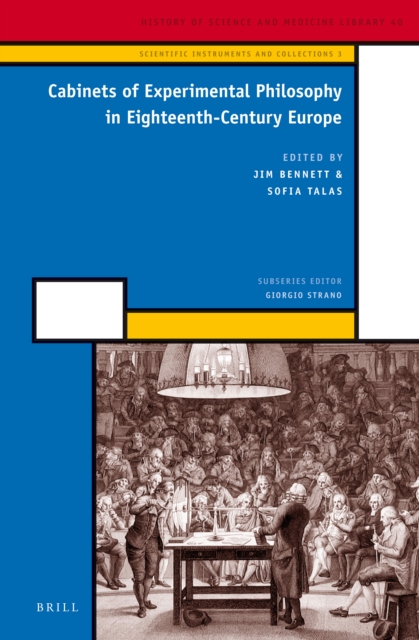
Cabinets of Experimental Philosophy in Eighteenth-Century Europe
Cabinets of Experimental Philosophy in Eighteenth-Century Europe explains how collections of instruments for demonstrating the principles of Newtonian science were offered successfully to a broad public audience and formed the basis of an intellectual, educational and cultural movement that spread across Europe.
eBook

New \Artists and Models\ Opens at Poll's Theater
A laborious and occasionally flagrant medley of song, dance, knockabout and pretty pictures called \"Artists and Models\" was disclosed for the first time here at Poli's theater last evening.
Newspaper Article

Highly Siderophile and Strongly Chalcophile Elements in High-Temperature Geochemistry and Cosmochemistry
This RiMG (Reviews in Mineralogy & Geochemistry) volume investigates the application of highly siderophile (HSE) and strongly chalcophile elements. This volume has its origin in a short course sponsored by the Mineralogical Society of America and the Geochemical Society held in San Diego, California on the 11th and 12th December 2015, ahead of the American Geophysical Union's Fall Meeting, which featured a session with the same title. Highly siderophile and strongly chalcophile elements comprise Re, Os, Ir, Ru, Pt, Rh, Pd, Au, Te, Se and S and are defined by their strong partitioning into the metallic phase, but will also strongly partition into sulfide phases, in the absence of metal. The chemical properties of the HSE mean that they are excellent tracers of key processes in high temperature geochemistry and cosmochemistry, having applications in virtually all areas of earth science.
eBook


Gibeon, Where the Sun Stood Still
This first book-length presentation of the results of our excavations at el-Jib has been written for the general reader who is concerned with the contribution that archaeology has made to the biblical history of the site... In telling the story of Gibeon I have tried to show how the tale of the city unfolded week by week and year by year through excavation and study. I have sought to give in these pages a personally conducted tour, as it were, of the ruins of ancient Gibeon and what we have seen in them... The results of the excavations at el-Jib are unique in that they can be related with a high degree of certainty to specific events described in the Old Testament. For the first time in the history of scientific archaeology in the land of the Bible an actual place name of a biblical city, neatly incised on clay, has been found under circumstances which make certain the identification of the name with the ruins.--from the Preface
eBook
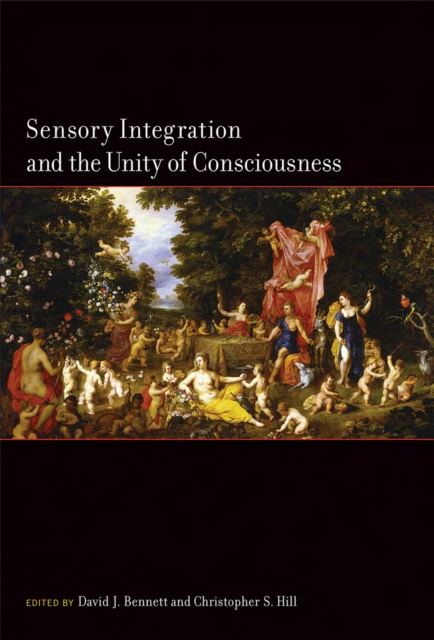
Sensory Integration and the Unity of Consciousness
In this volume, cognitive scientists and philosophers examine two closely related aspects of mind and mental functioning: the relationships among the various senses and the links that connect different conscious experiences to form unified wholes. The contributors address a range of questions concerning how information from one sense influences the processing of information from the other senses and how unified states of consciousness emerge from the bonds that tie conscious experiences together.Sensory Integration and the Unity of Consciousnessis the first book to address both of these topics, integrating scientific and philosophical concerns.A flood of recent work in both philosophy and perception science has challenged traditional conceptions of the sensory systems as operating in isolation. Contributors to the volume consider the ways in which perceptual contact with the world is or may be \"multisensory,\" discussing such subjects as the modeling of multisensory integration and philosophical aspects of sensory modalities. Recent years have seen a similar surge of interest in unity of consciousness. Contributors explore a range of questions on this topic, including the nature of that unity, the degree to which conscious experiences are unified, and the relationship between unified consciousness and the self.ContributorsTim Bayne, David J. Bennett, Berit Brogaard, Barry Dainton, Ophelia Deroy, Frederique de Vignemont, Marc Ernst, Richard Held, Christopher S. Hill, Geoffrey Lee, Kristan Marlow, Farid Masrour, Jennifer Matey, Casey O'Callaghan, Cesare V. Parise, Kevin Rice, Elizabeth Schechter, Pawan Sinha, Julia Trommershaeuser, Loes C. J. van Dam, Jonathan Vogel, James Van Cleve, Robert Van Gulick, Jonas Wulff
eBook

The lively experiment
Three hundred and fifty years ago, Roger Williams launched one of the world's first great experiments in religious toleration. Insisting that religion be separated from civil power, he founded Rhode Island, a colony that welcomed people of many faiths. Though stark forms of intolerance persisted, Williams' commitments to faith and liberty of conscience came to define the nation and its conception of itself. Through crisp essays that show how Americans demolished old prejudices while inventing new ones, The Lively Experiment offers a comprehensive account of America's boisterous history of interreligious relations.
eBook