
Catalogue Search | MBRL


Are you sure you want to remove the book from the shelf?

{{itemTitle}}
289,757
result(s) for
"Bennett, S"
Sort by:


Stereoselective Approaches to β-Linked 2-Deoxy Sugars
This review presents a survey of recent developments in the synthesis of β-linked 2-deoxy sugars. Approaches ranging from catalysis to de novo synthesis are described, with a focus on methods developed in the last 10 years. Where relevant, the application of these technologies to synthesis and mechanistic information is discussed. Finally, it concludes with an examination of the scope and limitations of these technologies, as well as examinations about where the field should head next.
Journal Article
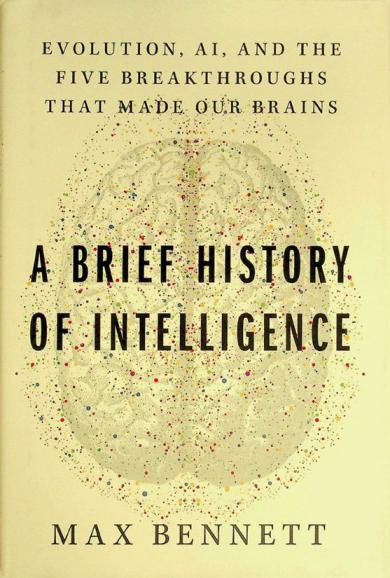
A brief history of intelligence : evolution, AI, and the five breakthroughs that made our brains
\"In the last decade, the science of understanding the human brain and replicating its most complicated processes through artificial intelligence has grown exponentially. Intricate neurological functions ranging from writing poetry to crafting original articles, arenas that had long been thought of as science fiction, have become our reality. And yet, large gaps remain in what AI can achieve-gaps that, as pioneering artificial intelligence entrepreneur Max Bennett argues compellingly, exist because there is still too much we don't understand about our own brains. Finding these answers requires diving into the long billion-year history of how animal brains emerged from matter; a history filled with countless half-starts, calamities, opportunities, and clever innovations. Not only do our brains have a story to tell-in fact the future of AI depends on it. Now, in A Brief History of Brains, Bennett bridges the gap between neuroscience and AI to tell the brain's evolutionary story, while demonstrating how understanding that story will shape the next generation of great AI breakthroughs. Deploying fresh perspective and lively storytelling, Bennett sheds long overdue light on evolutionary neuroscience, a historically small scientific field that holds the keys to the biggest secrets in AI. Working with support from many of the top minds in the field, Bennett consolidates four billion years into an approachable new model, identifying the Five Breakthroughs that mark the brain's most important evolutionary leaps. As we go back further in time, brains get much simpler and behavior gets much simpler, making it easier to understand these ancient brains and the complexity that emerges at each subsequent iteration. As each breakthrough brings new insight to the biggest mysteries of human development, it also contains fascinating corollaries to developments in AI, showing where our technological skill has matched the brain's evolution and where the missing links continue to hold us back. Indeed, until we understand and embrace every part of our brain's journey, parts of AI-including ones that we need to grow and evolve-will remain elusive. Endorsed and lauded by the brightest and best neuroscientists in the field today, Bennett's work synthesizes the most relevant scientific knowledge and cutting-edge research to create an easy-to-understand and riveting evolutionary story. With sweeping scope and stunning insights, A Brief History of Brains proves that understanding the arc of our brain's history can unlock the tools for successfully navigating our technological future\" -- Provided by publisher.
Book

William S. Burroughs' \The Revised Boy Scout Manual\ : an electronic revolution
\"An updated and satirical version of William S. Burroughs' The Revised Boy Scout Manual, which turns the purpose of that manual on its head to become a set of rationales and instructions for destabilizing the state\"-- Provided by publisher.
Book

Room-Temperature Quantum Bit Memory Exceeding One Second
Stable quantum bits, capable both of storing quantum information for macroscopic time scales and of integration inside small portable devices, are an essential building block for an array of potential applications. We demonstrate high-fidelity control of a solid-state qubit, which preserves its polarization for several minutes and features coherence lifetimes exceeding 1 second at room temperature. The qubit consists of a single ¹³C nuclear spin in the vicinity of a nitrogen-vacancy color center within an isotopically purified diamond crystal. The long qubit memory time was achieved via a technique involving dissipative decoupling of the single nuclear spin from its local environment. The versatility, robustness, and potential scalability of this system may allow for new applications in quantum information science.
Journal Article

Batman rebirth deluxe edition
\"The first two volumes of BATMAN as a part of DC Universe Rebirth are collected here in hardcover for the first time ever! The Caped Crusader has never been stopped. Not by the Joker. Not by Two-Face. Not even by the entire Justice League. But now, in the wake of DC UNIVERSE: REBIRTH, Batman must face his most challenging foe ever--a hero who wants to save Gotham...from the Batman! This collection features the first two paperback volumes of the series, combined to make a deluxe edition graphic novel in hardcover for the first time ever.\"-- Provided by publisher.
BOOK

Retrodicting the rise, spread, and fall of large-scale states in the Old World
Understanding the rise, spread, and fall of large-scale states in the ancient world has occupied thinkers for millennia. However, no comprehensive mechanistic model of state dynamics based on their insights has emerged, leaving it difficult to evaluate empirically or quantitatively the different explanations offered. Here I present a spatially- and temporally-resolved agent-based model incorporating several hypotheses about the behavior of large-scale (>200 thousand km 2 ) agrarian states and steppe nomadic confederations in Afro-Eurasia between the late Bronze and the end of the Medieval era (1500 BCE to 1500 CE). The model tracks the spread of agrarian states as they expand, conquer the territory of other states or are themselves conquered, and, occasionally, collapse. To accurately retrodict the historical record, several key contingent regional technological advances in state military and agricultural efficiencies are identified. Modifying the location, scale, and timing of these contingent developments allows quantitative investigation of historically-plausible alternative trajectories of state growth, spread, and fragmentation, while demonstrating the operation and limits of the model. Under nominal assumptions, the rapid yet staggered increase of agrarian state sizes across Eurasia after 600 BCE occurs in response to intense military pressure from ‘mirror‘ steppe nomadic confederations. Nevertheless, in spite of various technological advances throughout the period, the modeled creation and spread of new agrarian states is a fundamental consequence of state collapse and internal civil wars triggered by rising ‘demographic-structural’ pressures that occur when state territorial growth is checked yet (warrior elite) population growth continues. Together the model’s underlying mechanisms substantially account for the number of states, their duration, location, spread rate, overall occupied area, and total population size for three thousand years.
Journal Article

Batman by Grant Morrison omnibus
\"One of the greatest storytellers of his generation, Grant Morrison's arrival onto the Dark Knight was one of the most hyped debuts in industry history. This collection includes time-spanning epic graphic novels featuring the cataclysmic events of FINAL CRISIS and the introduction of Batman's son, Damian Wayne! These blockbuster stories featured a deconstruction of super hero comics like never before, with challenging, thought-provoking takes on the modern, four-color icons.\"-- Provided by publisher.
Book

A dormant overmassive black hole in the early Universe
Recent observations have found a large number of supermassive black holes already in place in the first few hundred million years after the Big Bang, many of which seem to be overmassive relative to their host galaxy stellar mass when compared with local relation
1
,
2
,
3
,
4
,
5
,
6
,
7
,
8
–
9
. Several different models have been proposed to explain these findings, ranging from heavy seeds to light seeds experiencing bursts of high accretion rate
10
,
11
,
12
,
13
,
14
,
15
–
16
. Yet, current datasets are unable to differentiate between these various scenarios. Here we report the detection, from the JADES survey, of broad Hα emission in a galaxy at
z
= 6.68, which traces a black hole with a mass of about 4 × 10
8
M
⊙
and accreting at a rate of only 0.02 times the Eddington limit. The black hole to host galaxy stellar mass ratio is about 0.4—that is, about 1,000 times above the local relation—whereas the system is closer to the local relations in terms of dynamical mass and velocity dispersion of the host galaxy. This object is most likely an indication of a much larger population of dormant black holes around the epoch of reionization. Its properties are consistent with scenarios in which short bursts of super-Eddington accretion have resulted in black hole overgrowth and massive gas expulsion from the accretion disk; in between bursts, black holes spend most of their life in a dormant state.
A dormant supermassive black hole at high redshift that is substantially overmassive relative to its host galaxy has been detected, indicating a much larger population of dormant black holes around the epoch of reionization.
Journal Article