
Catalogue Search | MBRL


Are you sure you want to remove the book from the shelf?

{{itemTitle}}
12,487
result(s) for
"Berger, M"
Sort by:


Broad spectral tuning of ultra-low-loss polaritons in a van der Waals crystal by intercalation
Phonon polaritons—light coupled to lattice vibrations—in polar van der Waals crystals are promising candidates for controlling the flow of energy on the nanoscale due to their strong field confinement, anisotropic propagation and ultra-long lifetime in the picosecond range
1
–
5
. However, the lack of tunability of their narrow and material-specific spectral range—the Reststrahlen band—severely limits their technological implementation. Here, we demonstrate that intercalation of Na atoms in the van der Waals semiconductor α-V
2
O
5
enables a broad spectral shift of Reststrahlen bands, and that the phonon polaritons excited show ultra-low losses (lifetime of 4 ± 1 ps), similar to phonon polaritons in a non-intercalated crystal (lifetime of 6 ± 1 ps). We expect our intercalation method to be applicable to other van der Waals crystals, opening the door for the use of phonon polaritons in broad spectral bands in the mid-infrared domain.
The spectral range of long-lived and confined phonon polaritons in a polar van der Waals crystal is shown to be tunable by intercalation of Na atoms, expanding their potential for nanophotonic applications in the mid-infrared domain.
Journal Article


Working-Class Suburb
This title is part of UC Press's Voices Revived program, which commemorates University of California Press's mission to seek out and cultivate the brightest minds and give them voice, reach, and impact. Drawing on a backlist dating to 1893, Voices Revived makes high-quality, peer-reviewed scholarship accessible once again using print-on-demand technology. This title was originally published in 1960.
eBook

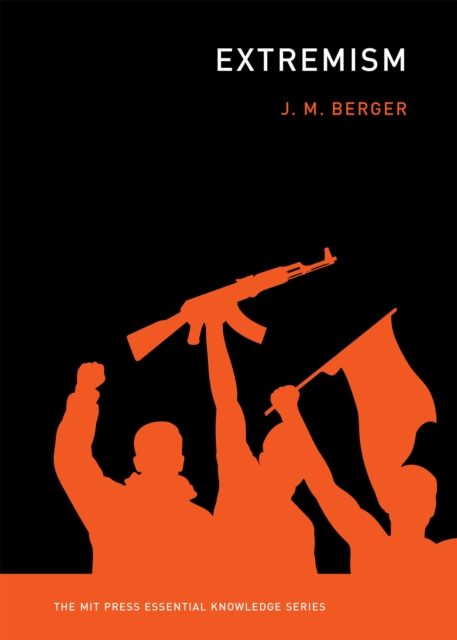
Extremism
What extremism is, how extremist ideologies are constructed, and why extremism can escalate into violence.A rising tide of extremist movements threaten to destabilize civil societies around the globe. It has never been more important to understand extremism, yet the dictionary definition-a logical starting point in a search for understanding-tells us only that extremism is \"the quality or state of being extreme.\" In this volume in the MIT Press Essential Knowledge series, J. M. Berger offers a nuanced introduction to extremist movements, explaining what extremism is, how extremist ideologies are constructed, and why extremism can escalate into violence. Berger shows that although the ideological content of extremist movements varies widely, there are common structural elements. Berger, an expert on extremist movements and terrorism, explains that extremism arises from a perception of \"us versus them,\" intensified by the conviction that the success of \"us\" is inseparable from hostile acts against \"them.\" Extremism differs from ordinary unpleasantness-run-of-the-mill hatred and racism-by its sweeping rationalization of an insistence on violence. Berger illustrates his argument with case studies and examples from around the world and throughout history, from the destruction of Carthage by the Romans-often called \"the first genocide\"-to the apocalyptic jihadism of Al Qaeda, America's new \"alt-right,\" and the anti-Semitic conspiracy tract The Protocols of the Elders of Zion. He describes the evolution of identity movements, individual and group radicalization, and more. If we understand the causes of extremism, and the common elements of extremist movements, Berger says, we will be more effective in countering it.
eBook


Optimisation of energy provision with supplemental parenteral nutrition in critically ill patients: a randomised controlled clinical trial
Enteral nutrition (EN) is recommended for patients in the intensive-care unit (ICU), but it does not consistently achieve nutritional goals. We assessed whether delivery of 100% of the energy target from days 4 to 8 in the ICU with EN plus supplemental parenteral nutrition (SPN) could optimise clinical outcome.
This randomised controlled trial was undertaken in two centres in Switzerland. We enrolled patients on day 3 of admission to the ICU who had received less than 60% of their energy target from EN, were expected to stay for longer than 5 days, and to survive for longer than 7 days. We calculated energy targets with indirect calorimetry on day 3, or if not possible, set targets as 25 and 30 kcal per kg of ideal bodyweight a day for women and men, respectively. Patients were randomly assigned (1:1) by a computer-generated randomisation sequence to receive EN or SPN. The primary outcome was occurrence of nosocomial infection after cessation of intervention (day 8), measured until end of follow-up (day 28), analysed by intention to treat. This trial is registered with ClinicalTrials.gov, number NCT00802503.
We randomly assigned 153 patients to SPN and 152 to EN. 30 patients discontinued before the study end. Mean energy delivery between day 4 and 8 was 28 kcal/kg per day (SD 5) for the SPN group (103% [SD 18%] of energy target), compared with 20 kcal/kg per day (7) for the EN group (77% [27%]). Between days 9 and 28, 41 (27%) of 153 patients in the SPN group had a nosocomial infection compared with 58 (38%) of 152 patients in the EN group (hazard ratio 0·65, 95% CI 0·43–0·97; p=0·0338), and the SPN group had a lower mean number of nosocomial infections per patient (−0·42 [−0·79 to −0·05]; p=0·0248).
Individually optimised energy supplementation with SPN starting 4 days after ICU admission could reduce nosocomial infections and should be considered as a strategy to improve clinical outcome in patients in the ICU for whom EN is insufficient.
Foundation Nutrition 2000Plus, ICU Quality Funds, Baxter, and Fresenius Kabi.
Journal Article

A guide to enteral nutrition in intensive care units: 10 expert tips for the daily practice
The preferential use of the oral/enteral route in critically ill patients over gut rest is uniformly recommended and applied. This article provides practical guidance on enteral nutrition in compliance with recent American and European guidelines. Low-dose enteral nutrition can be safely started within 48 h after admission, even during treatment with small or moderate doses of vasopressor agents. A percutaneous access should be used when enteral nutrition is anticipated for ≥ 4 weeks. Energy delivery should not be calculated to match energy expenditure before day 4–7, and the use of energy-dense formulas can be restricted to cases of inability to tolerate full-volume isocaloric enteral nutrition or to patients who require fluid restriction. Low-dose protein (max 0.8 g/kg/day) can be provided during the early phase of critical illness, while a protein target of > 1.2 g/kg/day could be considered during the rehabilitation phase. The occurrence of refeeding syndrome should be assessed by daily measurement of plasma phosphate, and a phosphate drop of 30% should be managed by reduction of enteral feeding rate and high-dose thiamine. Vomiting and increased gastric residual volume may indicate gastric intolerance, while sudden abdominal pain, distension, gastrointestinal paralysis, or rising abdominal pressure may indicate lower gastrointestinal intolerance.
Journal Article

High Gamma Power Is Phase-Locked to Theta Oscillations in Human Neocortex
We observed robust coupling between the high- and low-frequency bands of ongoing electrical activity in the human brain. In particular, the phase of the low-frequency theta (4 to 8 hertz) rhythm modulates power in the high gamma (80 to 150 hertz) band of the electrocorticogram, with stronger modulation occurring at higher theta amplitudes. Furthermore, different behavioral tasks evoke distinct patterns of theta/high gamma coupling across the cortex. The results indicate that transient coupling between low- and high-frequency brain rhythms coordinates activity in distributed cortical areas, providing a mechanism for effective communication during cognitive processing in humans.
Journal Article