
Catalogue Search | MBRL


Are you sure you want to remove the book from the shelf?

{{itemTitle}}
3
result(s) for
"Berkman, Alexander, 1870-1936, author"
Sort by:

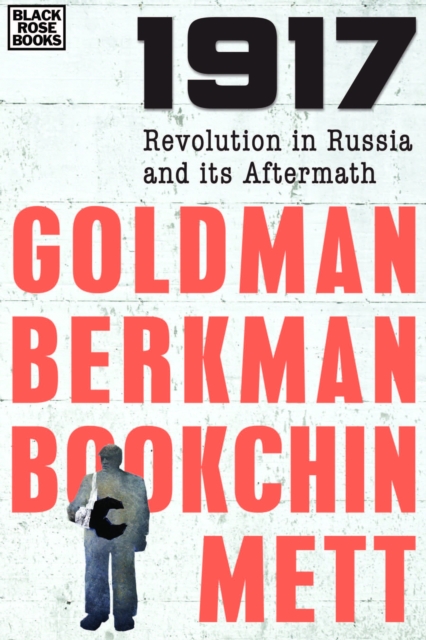
1917 : revolution in Russia and its aftermath
Upon their scandalous deportation from the United States in 1919, famous anarchist writers and activists Emma Goldman and Alexander Berkman were greeted like heroes by the new Bolshevik government in Russia. Berkman described it as \"the most sublime day of my life.\" And yet he would flee the country after only two years. Belarus-born Ida Mett, who went through a similar experience at the time, also wrote a harrowing account of the Red Army's brutal massacre at the Kronstadt Uprising before she too went into exile. How did each of these figures become so deeply disillusioned with Russia so quickly? And why, within a few years, did they all leave the country forever? 1917 offers a unique alternative perspective on the early years of the Russian Revolution through the narrative perspective of these three eyewitnesses. Featuring an introduction by Murray Bookchin, this book emphasizes the rarely discussed anarchist hopes for a democratic October revolution, while also critiquing the increasingly authoritarian responses of Bolshevik leaders at the time. Published for the centennial of the Russian revolutions, 1917 contains four essays by Emma Goldman, Alexander Berkman, Ida Mett, and Bookchin, as well as a poem by Dan Georgakas, that analyze, assess, celebrate, and bemoan both the wild successes and the bitter failures of the revolution.
eBook

Prison blossoms : anarchist voices from the American past
In 1892, unrepentant anarchists Alexander Berkman, Henry Bauer, and Carl Nold were sent to the Western Pennsylvania State Penitentiary for the attempted assassination of steel tycoon Henry Clay Frick. Searching for a way to continue their radical politics and to proselytize among their fellow inmates, these men circulated messages of hope and engagement via primitive means and sympathetic prisoners. On odd bits of paper, in German and in English, they shared their thoughts and feelings in a handwritten clandestine magazine called \"Prison Blossoms.\" This extraordinary series of essays on anarchism and revolutionary deeds, of prison portraits and narratives of homosexuality among inmates, and utopian poems and fables of a new world to come not only exposed the brutal conditions in American prisons, where punishment cells and starvation diets reigned, but expressed a continuing faith in the \"beautiful ideal\" of communal anarchism. Most of the \"Prison Blossoms\" were smuggled out of the penitentiary to fellow comrades, including Emma Goldman, as the nucleus of an exposé of prison conditions in America's Gilded Age. Those that survived relatively unrecognized for a century in an international archive are here transcribed, translated, edited, and published for the first time. Born at a unique historical moment, when European anarchism and American labor unrest converged, as each sought to repel the excesses of monopoly capitalism, these prison blossoms peer into the heart of political radicalism and its fervent hope of freedom from state and religious coercion.
eBook