
Catalogue Search | MBRL


Are you sure you want to remove the book from the shelf?

{{itemTitle}}
2,420
result(s) for
"Berry, Ruth"
Sort by:


Bacteria-Induced Uroplakin Signaling Mediates Bladder Response to Infection
Urinary tract infections are the second most common infectious disease in humans and are predominantly caused by uropathogenic E. coli (UPEC). A majority of UPEC isolates express the type 1 pilus adhesin, FimH, and cell culture and murine studies demonstrate that FimH is involved in invasion and apoptosis of urothelial cells. FimH initiates bladder pathology by binding to the uroplakin receptor complex, but the subsequent events mediating pathogenesis have not been fully characterized. We report a hitherto undiscovered signaling role for the UPIIIa protein, the only major uroplakin with a potential cytoplasmic signaling domain, in bacterial invasion and apoptosis. In response to FimH adhesin binding, the UPIIIa cytoplasmic tail undergoes phosphorylation on a specific threonine residue by casein kinase II, followed by an elevation of intracellular calcium. Pharmacological inhibition of these signaling events abrogates bacterial invasion and urothelial apoptosis in vitro and in vivo. Our studies suggest that bacteria-induced UPIIIa signaling is a critical mediator of bladder responses to insult by uropathogenic E. coli.
Journal Article

Mast Cell-Derived Histamine Mediates Cystitis Pain
Mast cells trigger inflammation that is associated with local pain, but the mechanisms mediating pain are unclear. Interstitial cystitis (IC) is a bladder disease that causes debilitating pelvic pain of unknown origin and without consistent inflammation, but IC symptoms correlate with elevated bladder lamina propria mast cell counts. We hypothesized that mast cells mediate pelvic pain directly and examined pain behavior using a murine model that recapitulates key aspects of IC.
Infection of mice with pseudorabies virus (PRV) induces a neurogenic cystitis associated with lamina propria mast cell accumulation dependent upon tumor necrosis factor alpha (TNF), TNF-mediated bladder barrier dysfunction, and pelvic pain behavior, but the molecular basis for pelvic pain is unknown. In this study, both PRV-induced pelvic pain and bladder pathophysiology were abrogated in mast cell-deficient mice but were restored by reconstitution with wild type bone marrow. Pelvic pain developed normally in TNF- and TNF receptor-deficient mice, while bladder pathophysiology was abrogated. Conversely, genetic or pharmacologic disruption of histamine receptor H1R or H2R attenuated pelvic pain without altering pathophysiology.
These data demonstrate that mast cells promote cystitis pain and bladder pathophysiology through the separable actions of histamine and TNF, respectively. Therefore, pain is independent of pathology and inflammation, and histamine receptors represent direct therapeutic targets for pain in IC and other chronic pain conditions.
Journal Article
Nova. Star chasers of Senegal
A visionary astronomer in West Africa attempts a high-stakes observation of a distant asteroid vital to a NASA mission. From prehistoric ruins to Islamic skywatchers, explore the heritage and future of African astronomy.
Streaming Video
Nova. Secrets in the scat
Scott Burnett is “Scatman” -- an Australian ecologist on the trail of the secrets of poop. By identifying and analyzing animal scat for DNA and hormones, he discovers essential details of their behavior, how they fit in the ecosystem, and how to protect them. From the mysterious cubic poop of wombats to the precious pink waste of whales, join scientists as they explore nature’s smelliest secrets.
Streaming Video

Inclusion, Power, and Community: Teachers and Students Interpret the Language of Community in an Inclusion Classroom
To illuminate the processes of creating learning communities, this study investigated the social context of an inclusion classroom by examining (a) how teachers established a community ethos, (b) how students responded with regard to the positioning of students with disabilities, and (c) how macro discourses possibly shaped interactional processes. Teachers used discourse and participation frameworks in whole-class lessons to encourage participation and collective responsibility for \"helping. \" Nevertheless, the teachers' inclusive language was manipulated to harass and exclude in small-group contexts. Benhabib's conceptions of ''general\" and \"concrete\" selves and Cornelius and Herrenkohl's aspects of classroom power-assigning ownership, creating alliances, engaging in persuasion-frame a discussion of contexts of inclusion and exclusion.
Journal Article

PRESERVICE AND EARLY CAREER TEACHERS' ATTITUDES TOWARD INCLUSION, INSTRUCTIONAL ACCOMMODATIONS, AND FAIRNESS: THREE PROFILES
This investigation examined the attitudes of beginning general education teachers (preservice and early career) with respect to teaching in inclusion classrooms. Sixty graduate students, taking a survey at the conclusion of a special education course, completed Q-sorts constructed to evaluate responses regarding attitude toward (a) inclusion, (b) instructional accommodations, and (c) fairness, along two dimensions: positive/negative and anxious/confident. A three-factor solution resulted in profiles of three groups of teachers: keen, but anxious, beginners (mostly preservice teachers with positive attitudes, but who worried about being effective inclusion teachers); positive doers (more experienced teachers whose struggles with the challenges of inclusion had not deterred their positive attitudes); and resisters (mostly experienced teachers whose concerns about fairness signified their resistance to inclusion). Teacher educators may find these profiles useful in preparing teachers to teach in inclusion classrooms.
Journal Article

Exploring Teacher Talk During Mathematics Instruction in an Inclusion Classroom
The authors examined aspects of teacher talk during mathematics lessons in a 1st-grade inclusion classroom. Using content analytical coding methods, they analyzed 4 lessons-each taught by a different teacher in the classroom. Results showed that the patterns of teacher talk across all 4 teachers were chiefly recitational and lacking characteristics of talk consistent with the National Council of Teachers of Mathematics (NCTM) Communication Standard (2000b). Implications include that students with disabilities may benefit from instructional strategies that develop thinking and communication skills and that researchers and educators should identify and remove barriers to the provision of instruction congruent with the NCTM Standards for students with disabilities.
Journal Article

Beyond Strategies
Links between teachers' pedagogical beliefs and teaching practices were investigated with respect to process writing instruction. Participants included 5 teachers, 44 general education students, and 23 special education students in 2 elementary multi-age inclusion classrooms. Findings suggested that, although the teachers shared similar views on inclusion and were convinced of the uniqueness of their respective instructional approaches, they nuanced their writing instruction to conform to their implicit theories about teaching, learning, and disability. One set of teachers believed that the writing “breakdowns” of students with disabilities required a structural approach— sequenced, individualized, phonics-based instruction targeting individual performance levels. Another set of teachers advocated a relational approach, wherein students with disabilities are “protected” and “empowered” in learning communities characterized by shared activities, student choice, and interpersonal communication.
Journal Article
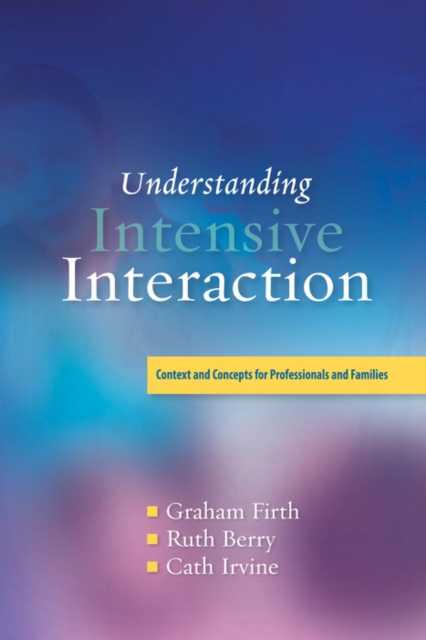
Understanding intensive interaction: contexts and concepts for professionals and families
Intensive interaction is a valuable approach, with the potential to radically enhance the well-being of difficult-to-reach individuals, such as those with profound and severe learning disabilities, autistic spectrum conditions and emotional problems. This highly accessible book will help families and professionals develop a deeper understanding of this highly-successful approach and its associated issues, resulting in improved communication opportunities within a variety of care, therapeutic and educational settings.This compendium offers a multidisciplinary perspective to intensive interaction, bringing together the authors' experience and research from different disciplines. A glossary format and thematic structure are employed to enable readers to quickly access topics of interest, and gradually build on their understanding of the approach. Each chapter is devoted to an over-arching concept - including psychological theories of human behaviour, relationship building and maintenance and social inclusion - and illustrated with case studies to support theoretical assertions and offer practical examples of useful techniques.A useful reference and reflective tool, this book will interest both family and professional carers, support staff, special education teachers, learning disability nurses, social services practitioners, speech and language therapists, clinical psychologists, occupational therapists, or anyone who is interested in intensive interaction and wants to learn more.
eBook