
Catalogue Search | MBRL


Are you sure you want to remove the book from the shelf?

{{itemTitle}}
87
result(s) for
"Beth Fowkes Tobin"
Sort by:

The Duchess's shells : natural history collecting in the age of Cook's voyages
\"Margaret Cavendish Bentinck, the 2nd Duchess of Portland (1715-1785), was one of the wealthiest women in eighteenth-century Britain. She collected fine and decorative arts (the Portland Vase was her most famous acquisition), but her great love was natural history, and shells in particular. Over the course of twenty years, she amassed the largest shell collection of her time, which was sold after her death in a spectacular auction. Beth Fowkes Tobin illuminates the interlocking issues surrounding the global circulation of natural resources, the commodification of nature, and the construction of scientific value through the lens of one woman's marvelous collection. This unique study tells the story of the collection's formation and dispersal-about the sailors and naturalists who ferried rare specimens across oceans and the dealers' shops and connoisseurs' cabinets on the other side of the world. Exquisitely illustrated, this book brings to life Enlightenment natural history and its cultures of collecting, scientific expeditions, and vibrant visual culture\"-- Provided by publisher.
Book

Colonizing Nature
With its control of sugar plantations in the Caribbean and tea, cotton, and indigo production in India, Britain in the eighteenth and nineteenth centuries dominated the global economy of tropical agriculture. InColonizing Nature, Beth Fowkes Tobin shows how dominion over \"the tropics\" as both a region and an idea became central to the way in which Britons imagined their role in the world.
Tobin examines georgic poetry, landscape portraiture, natural history writing, and botanical prints produced by Britons in the Caribbean, the South Pacific, and India to uncover how each played a crucial role in developing the belief that the tropics were simultaneously paradisiacal and in need of British intervention and management. Her study examines how slave garden portraits denied the horticultural expertise of the slaves, how the East India Company hired such artists as William Hodges to paint and thereby Anglicize the landscape and gardens of British-controlled India, and how writers from Captain James Cook to Sir James E. Smith depicted tropical lands and plants.
Just as mastery of tropical nature, and especially its potential for agricultural productivity, became key concepts in the formation of British imperial identity,Colonizing Naturesuggests that intellectual and visual mastery of the tropics-through the creation of art and literature-accompanied material appropriations of land, labor, and natural resources. Tobin convincingly argues that the depictions of tropical plants, gardens, and landscapes that circulated in the British imagination provide a key to understanding the forces that shaped the British Empire.
eBook

Picturing Imperial Power
This study of colonialism and art examines the intersection of visual culture and political power in late-eighteenth-century British painting. Focusing on paintings from British America, the West Indies, and India, Beth Fowkes Tobin investigates the role of art in creating and maintaining imperial ideologies and practices—as well as in resisting and complicating them.Informed by the varied perspectives of postcolonial theory, Tobin explores through close readings of colonial artwork the dynamic middle ground in which cultures meet. Linking specific colonial sites with larger patterns of imperial practice and policy, she examines paintings by William Hogarth, Benjamin West, Gilbert Stuart, Arthur William Devis, and Agostino Brunias, among others. These works include portraits of colonial officials, conversation pieces of British families and their servants, portraits of Native Americans and Anglo-Indians, and botanical illustrations produced by Calcutta artists for officials of the British Botanic Gardens. In addition to examining the strategies that colonizers employed to dominate and define their subjects, Tobin uncovers the tactics of negotiation, accommodation, and resistance that make up the colonized’s response to imperial authority. By focusing on the paintings’ cultural and political engagement with imperialism, she accounts for their ideological power and visual effect while arguing for their significance as agents in the colonial project.Pointing to the complexity, variety, and contradiction within colonial art, Picturing Imperial Power contributes to an understanding of colonialism as a collection of social, economic, political, and epistemological practices that were not monolithic and inevitable, but contradictory and contingent on various historical forces. It will interest students and scholars of colonialism, imperial history, postcolonial history, art history and theory, and cultural studies.
eBook

How seventeenth-century sisters broke the mould on scientific illustration
Beth Fowkes Tobin applauds a book on Martin Lister and his brilliant daughters Anna and Susanna.
Beth Fowkes Tobin applauds a book on Martin Lister and his brilliant daughters Anna and Susanna.
Shell engraving no.751 from the Historiae Conchyliorum
Journal Article
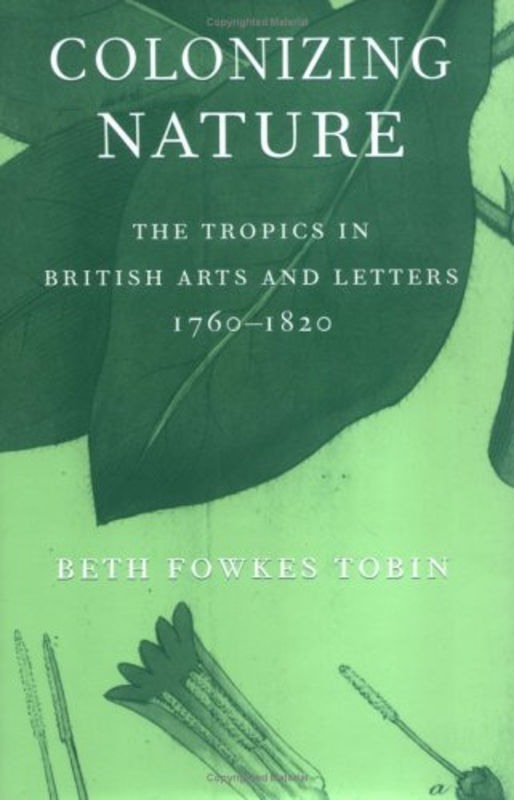
Colonizing Nature
With its control of sugar plantations in the Caribbean and tea, cotton, and indigo production in India, Britain in the eighteenth and nineteenth centuries dominated the global economy of tropical agriculture. In Colonizing Nature, Beth Fowkes Tobin shows how dominion over \"the tropics\" as both a region and an idea became central to the way in which Britons imagined their role in the world.Tobin examines georgic poetry, landscape portraiture, natural history writing, and botanical prints produced by Britons in the Caribbean, the South Pacific, and India to uncover how each played a crucial role in developing the belief that the tropics were simultaneously paradisiacal and in need of British intervention and management. Her study examines how slave garden portraits denied the horticultural expertise of the slaves, how the East India Company hired such artists as William Hodges to paint and thereby Anglicize the landscape and gardens of British-controlled India, and how writers from Captain James Cook to Sir James E. Smith depicted tropical lands and plants.Just as mastery of tropical nature, and especially its potential for agricultural productivity, became key concepts in the formation of British imperial identity, Colonizing Nature suggests that intellectual and visual mastery of the tropics—through the creation of art and literature—accompanied material appropriations of land, labor, and natural resources. Tobin convincingly argues that the depictions of tropical plants, gardens, and landscapes that circulated in the British imagination provide a key to understanding the forces that shaped the British Empire.
eBook

Picturing imperial power : colonial subjects in eighteenth-century British painting
This study of colonialism and art examines the intersection of visual culture and political power in late-eighteenth-century British painting. Focusing on paintings from British America, the West Indies, and India, Beth Fowkes Tobin investigates the role of art in creating and maintaining imperial ideologies and practices—as well as in resisting and complicating them. Informed by the varied perspectives of postcolonial theory, Tobin explores through close readings of colonial artwork the dynamic middle ground in which cultures meet. Linking specific colonial sites with larger patterns of imperial practice and policy, she examines paintings by William Hogarth, Benjamin West, Gilbert Stuart, Arthur William Devis, and Agostino Brunias, among others. These works include portraits of colonial officials, conversation pieces of British families and their servants, portraits of Native Americans and Anglo-Indians, and botanical illustrations produced by Calcutta artists for officials of the British Botanic Gardens. In addition to examining the strategies that colonizers employed to dominate and define their subjects, Tobin uncovers the tactics of negotiation, accommodation, and resistance that make up the colonized's response to imperial authority. By focusing on the paintings' cultural and political engagement with imperialism, she accounts for their ideological power and visual effect while arguing for their significance as agents in the colonial project. Pointing to the complexity, variety, and contradiction within colonial art, Picturing Imperial Power contributes to an understanding of colonialism as a collection of social, economic, political, and epistemological practices that were not monolithic and inevitable, but contradictory and contingent on various historical forces. It will interest students and scholars of colonialism, imperial history, postcolonial history, art history and theory, and cultural studies.
eBook

Drawing Insects
Enlightenment natural history with its collecting, describing, drawing, cataloging, and classifying of specimens has been critiqued within ecocriticism and environmental studies as naively empiricist, as part of an imperialist project, and as engaged in commoditization of the natural world. However, to brush aside natural history's practices of collection, representation, and classification is to dismiss the possibility that within these practices are ways of noticing the natural world that could contribute much to developing the attentiveness necessary to counter the political and economic forces bent on the unsustainable exploitation and consumption of the natural world. This essay offers the insect drawings of John Abbot (1751-1840) as an example of how the material practices of drawing, even those conjoined to Linnaean systematics, were deeply attentive ways of relating to the natural world. Abbot, an English naturalist artist, drew over 6,000 watercolor drawings of North American birds and insects, the majority of which are single sheet watercolors of moths, wasps, dragonflies, beetles, spiders, and other arthropods. These drawings, designed to aid in the identification and classification of insects, contain traces of Abbot's attentiveness, even respect for the otherness of these non-human subjects. Abbot's entomological portraits possess the hallmarks of the arts of noticing: an intense engagement and visual encounter with a chronically overlooked part of the natural world.
Journal Article
British Indians in the Eighteenth Century
Robbie Richardson's The Savage and Modern Self is a disciplined and rigorous exploration of the trope of the Indian as it appears in a wide range of British literary and cultural productions, and in the process, he has amassed a catalog of an astonishingly large number of texts that cite, circulate, augment, and amend this figure of the Indian. Documenting the plethora of \"Indians\" that appeared in British literary and sub-literary texts, this book demonstrates how British writers and the publishing apparatuses of the period peddled disinformation and propaganda not only for the purposes of a nation that waged nearly constant warfare in eighteenth-century North America, but also for the more amorphous and ultimately ambitious project of building the modern self.
Journal Article

Picturing Imperial Power
This study of colonialism and art examines the intersection of visual culture and political power in late-eighteenth-century British painting. Focusing on paintings from British America, the West Indies, and India, Beth Fowkes Tobin investigates the role of art in creating and maintaining imperial ideologies and practices-as well as in resisting and complicating them. Informed by the varied perspectives of postcolonial theory, Tobin explores through close readings of colonial artwork the dynamic middle ground in which cultures meet. Linking specific colonial sites with larger patterns of imperial practice and policy, she examines paintings by William Hogarth, Benjamin West, Gilbert Stuart, Arthur William Devis, and Agostino Brunias, among others. These works include portraits of colonial officials, conversation pieces of British families and their servants, portraits of Native Americans and Anglo-Indians, and botanical illustrations produced by Calcutta artists for officials of the British Botanic Gardens. In addition to examining the strategies that colonizers employed to dominate and define their subjects, Tobin uncovers the tactics of negotiation, accommodation, and resistance that make up the colonized's response to imperial authority. By focusing on the paintings' cultural and political engagement with imperialism, she accounts for their ideological power and visual effect while arguing for their significance as agents in the colonial project. Pointing to the complexity, variety, and contradiction within colonial art, Picturing Imperial Power contributes to an understanding of colonialism as a collection of social, economic, political, and epistemological practices that were not monolithic and inevitable, but contradictory and contingent on various historical forces. It will interest students and scholars of colonialism, imperial history, postcolonial history, art history and theory, and cultural studies.
eBook