
Catalogue Search | MBRL


Are you sure you want to remove the book from the shelf?

{{itemTitle}}
15
result(s) for
"Bhadwal, Suruchi"
Sort by:

Migration and Household Adaptation in Climate-Sensitive Hotspots in South Asia
Purpose of Review
South Asia is highly vulnerable to the impacts of climate change, owing to the high dependency on climate-sensitive livelihoods and recurrent extreme events. Consequently, an increasing number of households are adopting labour migration as a livelihood strategy to diversify incomes, spread risks, and meet aspirations. Under the Collaborative Adaptation Research Initiative in Africa and Asia (CARIAA) initiative, four research consortia have investigated migration patterns and their inherent linkages to adaptation to climate change in climate hotspots. This article synthesizes key findings in regional context of South Asia.
Recent Findings
The synthesis suggests that in climate-sensitive hotspots, migration is an important livelihood diversification strategy and a response to various risks, including climate change. Typically, one or more household members, often young men, migrated internally or internationally to work in predominantly informal sectors. Remittances helped spatially diversify household income, spread risks, and insure against external stressors. The outcomes of migration are often influenced by who moves, where to, and what capacities they possess.
Summary
Migration was found to help improve household adaptive capacity, albeit in a limited capacity. Migration was mainly used as a
response
to risk and uncertainty, but with potential to have positive adaptation co-benefits.
Journal Article

A global assessment of actors and their roles in climate change adaptation
An assessment of the global progress in climate change adaptation is urgently needed. Despite a rising awareness that adaptation should involve diverse societal actors and a shared sense of responsibility, little is known about the types of actors, such as state and non-state, and their roles in different types of adaptation responses as well as in different regions. Based on a large n-structured analysis of case studies, we show that, although individuals or households are the most prominent actors implementing adaptation, they are the least involved in institutional responses, particularly in the global south. Governments are most often involved in planning and civil society in coordinating responses. Adaptation of individuals or households is documented especially in rural areas, and governments in urban areas. Overall, understanding of institutional, multi-actor and transformational adaptation is still limited. These findings contribute to debates around ‘social contracts’ for adaptation, that is, an agreement on the distribution of roles and responsibilities, and inform future adaptation governance.For global adaptation effort, it is essential to understand which actors are participating and what their roles are. This Analysis, based on comparative case studies, displays the dominant actors in adaptation, and how the actor–role patterns vary across regions.
Journal Article

Dynamics of urban water supply management of two Himalayan towns in India
Many towns in the Indian Himalayan Region (IHR) are experiencing permanent water crises due to increasing population pressure, urbanization, and poor management of existing water sources. This paper focuses on two towns – Mussoorie and Devprayag in the western IHR – to understand various aspects of the growing water scarcity and urban water management. In the current scenario of a changing climate, natural springs, their main water resource, are drying up. Mussoorie experiences an acute shortage of water in summer, precisely when the town hosts numerous tourists. In Devprayag, religious tourism and in-migration from rural areas contribute to rising demand. The reduced discharge in nearby streams has widened the demand–supply gap. An integrated management of water sources is crucial to solving water problems in Mussoorie and Devprayag. In both towns, little effort has been made towards recharging existing water sources. Detailed planning of the water supply system while being mindful of the floating population, a proper sewage and storm water management system, and rainwater harvesting schemes, are absent. There is an urgent need to adopt a comprehensive approach to solving urban water issues, covering aspects of demand, supply and water resources management in these hill towns for adaptive water management.
Journal Article

Adaptation policy and practice in densely populated glacier-fed river basins of South Asia : a systematic review
This paper reviews literature for three major glacier-fed river systems of South Asia, the Brahmaputra, Ganga, and Indus, to understand governance mechanisms for climate adaptation in the region. A systematic review methodology is applied to examine adaptation responses in the riparian countries of these Himalayan river basins at three different levels: policy objectives, institutions, and practice. Using a systematic review methodology, it presents a comprehensive assessment of the state-of-knowledge as well as state-of-affairs with respect to climate change adaptation policy and practice in the South Asia region.
Journal Article
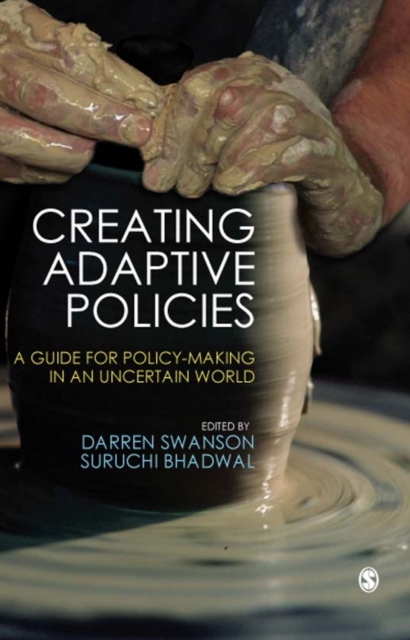
Creating Adaptive Policies
Todays policy-maker has a tough job to do. Policies that cannot perform effectively under todays complex, dynamic and uncertain conditions run the risk of not achieving their intended purpose. Instead of helping, they may actually hinder the ability of individuals, communities and businesses to cope with and adapt to change. Creating Adaptive Policies: A Guide for Policy-making in an Uncertain World is the very first book to distill the principles of complex adaptive systems and adaptive management into practical guidance for policy-makers. It describes the concept of adaptive policy-making and presents seven tools for developing such policies. Based on hundreds of interviews with people impacted by policy and research of over a dozen policy case studies, this book serves as a pragmatic guide for policy-makers by elaborating these seven tools. It will be an invaluable information resource for technical policy-makers, politicians and their advisors, as well as for those studying politics and international relations.
eBook

Creating adaptive policies : a guide for policy-making in an uncertain world
This is the very first book to distill the principles of complex adaptive systems and adaptive management into practical guidance for policymakers. It describes the concept of adaptive policymaking and presents seven tools for developing such policies. Based on hundreds of interviews with people impacted by policy and research of over a dozen policy case studies, this book serves as a pragmatic guide for policymakers by elaborating on these seven tools. It is an invaluable information resource for technical policymakers and politicians, as well as for those studying politics and international relations.
eBook

Carbon sequestration estimates for forestry options under different land-use scenarios in India
Land resources have been under tremendous pressure since the very beginning of civilization for food and forest products. For better land-use management, these resources must be used sustainably and in accordance with the demands of the masses. To manage the land resources effectively and for future food security we need to find out the demands and potential of our land. In this study, a comparative estimate of land-use and carbon sequestration potential of different forestry options has been done for India. This has been done using the Land Use and Carbon Sequestration (LUCS) model. This model systematically incorporates Indian agricultural and forest statistics with geographical and demographic data. Besides this, various pressures exerted on land-use system due to the existing growth rates of population, fuelwood requirements, export of agricultural commodities and probable transfer of lands from one category to the other, are also considered here. Three scenarios (LUCS-I, LUCS-II and LUCS-III) are generated with different land-use options following the demands and present land-use pattern prevailing in the country. The scenario LUCS-I puts maximum amount of land into the forestry sector and is an economically feasible scenario. The scenario LUCS-II is a 'business as usual' scenario, as it is projected according to the current five-year plan. The scenario LUCS-III puts maximum amount of land in the plantations category and is a potential scenario. These scenarios were generated for a time period of fifty years starting from the year 2000. The LUCS model estimates the amount of carbon sequestered by approximating land-use and relative biomass changes in the landscape over time. The amount of carbon sequestered in scenario LUCS-III is estimated to be 6.937 billion tonnes, which is the highest among those sequestered in all the three scenarios. According to this scenario, the carbon sequestered in aboveground vegetation of India will be more than double by the year 2050.
Journal Article

Examining adaptation and mitigation opportunities in the context of the integrated watershed management programme of the Government of India
India occupies 2.4% of the world's geographical area with a large percentage of its land under agriculture. About 228 Million hectares (Mha) of its geographical area (nearly 69%) fall within the dryland (arid, semi-arid and dry sub-humid) region. Of the total cultivated area of 142 Mha, major part of agriculture in the country is rainfed, extending to over 97 Mha and constituting nearly 68% of the net cultivated area, therefore making the agricultural sector vulnerable and exposed to the vagaries of weather conditions. Climate change adds to this dimension of stress. A strong need is felt for targeting programmes in these areas that address issues related to employing suitable soil and water conservation measures. In this context this paper seeks to examine the case for watershed development as an adaptive strategy. An examination of the possibility of fortifying the existing programme with a view to adapting to expected changes in climate in future is undertaken. Also, the possibility of watershed development integrating into a suitable mitigation strategy for the country is assessed.
Journal Article
Much ado at Durban
[...] while Durban has, as may reviews have argued, revived the Kyoto Protocol and further discussions on the shape of a climate regime of the future, a lot of the details still need to be sketched out.
Newspaper Article