
Catalogue Search | MBRL


Are you sure you want to remove the book from the shelf?

{{itemTitle}}
33
result(s) for
"Bielski, Roman"
Sort by:

Possible Enantioseparation of Racemic Ribose on Chiral Surface Formed by Adsorption of Nucleobases
The paper proposes a putative prebiotic scenario leading to homochirality in the RNA world. In this scenario, racemic ribose, the only chiral moiety in RNA, was enantioseparated (in its pyranose form) on a chiral surface formed by the adsorption of (prochiral) nucleobases (NBs) on a mineral or metal. Purine bases (adenine and guanine) are more likely candidates for this process than pyrimidine bases because they have more H-bond donors and acceptors. Another possible candidate surface for the enantioseparation of ribose would be formed by the adsorption of nucleobase pairs, e.g., guanine–cytosine (GC). Interactions of ribose molecules with hydrogen bond donors and acceptors of NBs or NB pairs (located on the surface) enforced the orientation of ribose molecules in two directions perpendicular to each other and parallel to the surface. Consequently, the energy of interactions of enantiomers of the sugar with the surface was not the same. Thus, a solvent moving along the surface caused the enantiomers of ribose to move with different rates, resulting in the enantioseparation of ribose in a chromatography-like process. The same process would also separate ribose from other monosaccharides in the mix. Hydrogen bonding between nucleobases was also pivotal in the formation of large homochiral domains on the surfaces.
Journal Article

Chemoselective Aza-Michael Addition of Enolizable Heterocyclic Imine-Thiols to Levoglucosenone
Heterocyclic sulfur and nitrogen containing compounds capable of forming an equilibrium: thiol/imine = thione/amine (N=C-S-H ⇌ H-N-C=S) were reacted with levoglucosenone (LG) in the presence of triethylamine. Unexpectedly, the only isolated products were the result of the aza-Michael addition. No S-adducts were detected. All products were crystalline with good to excellent yields. The structure of products was determined using NMR, MS, and single-crystal X-ray analysis.
Journal Article

Click Chemistry in Glycoscience
Lays the foundation for new methods and applications of carbohydrate click chemistry Introduced by K. Barry Sharpless of The Scripps Research Institute in 2001, click chemistry mimics nature, giving researchers the tools needed to generate new substances quickly and reliably by joining small units together. With contributions from more than thirty pioneering researchers in the field, this text explores the many promising applications of click chemistry in glycoscience. Readers will learn both the basic concepts of carbohydrate click chemistry as well as its many biomedical applications, including synthetic antigens, analogs of cell-surface receptors, immobilized enzymes, targeted drug delivery systems, and multivalent cancer vaccines. Click Chemistry in Glycoscience examines a broad range of methodologies and strategies that have emerged from this rapidly evolving field. Each chapter describes new approaches, ideas, consequences, and applications resulting from the introduction of click processes. Divided into four sections, the book covers: Click chemistry strategies and decoupling Thio-click chemistry of carbohydrates Carbohydrate click chemistry for novel synthetic targets Carbohydrate click chemistry in biomedical sciences Thoroughly researched, the book reflects the most recent findings published in the literature. Diagrams and figures throughout the book enable readers to more easily grasp complex concepts and reaction processes. At the end of each chapter, references lead to the primary literature for further investigation of individual topics. The application of click chemistry to carbohydrates has tremendous implications for research. With this book as their guide, researchers have a solid foundation from which they can develop new methods and applications of carbohydrate click chemistry, including new carbohydrate-based therapeutics.
eBook
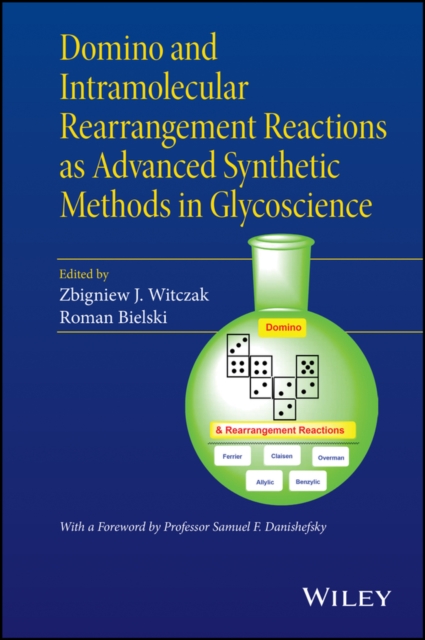
Domino and Intramolecular Rearrangement Reactions as Advanced Synthetic Methods in Glycoscience
The book consists of a brief introduction, a foreward provided by professor Danishefsky of Columbia University, and about 14 - 16 chapters, each written by one or two eminent scholars/authors describing their recent research in the area of either domino reactions or intramolecular rearrangements in carbohydrate chemistry. Three or four chapters will be reviews. The domino (cascade, tandem) reactions are always intramolecular. They are usually very fast, clean and offer highly complex structures in a one pot process. Intramolecular rearrangements offer very similar advantages and often lead to highly complex products as well. Although many recently isolated carbohydrates fulfill various sophisticated functions, their structures are often very complex. The editors cover the broadest scope of novel methodologies possible. All the synthetic and application aspects of domino/cascade reactions are explored in this book. A second theme that will be covered is intramolecular rearrangement, which is also fast, stereoselective, and often constitutes one or more steps of domino / cascade process. Selected examples of intramolecular rearrangements are presented. Together, both processes offer an elegant and convenient approach to the synthesis of many complex molecules, which are normally difficult to synthesize via alternative routes. It appears that domino and intramolecular rearrangements are ideally suited to synthesize certain specific modified monosaccharides. What is particularly important is that both processes are intermolecular and almost always yield products with very well-defined stereochemistry. This high definition is absolutely crucial when synthesizing advanced, modified mono and oligosaccharides. The choice of contributors reflects an emphasis on both therapeutic and pharmacological aspects of carbohydrate chemistry.
eBook


New IN/I-Adducts of Thiadiazole and Thiazoline with Levoglucosenone and Evaluation of Their Significant Cytotoxic Activity
The anticancer effects reported in several heterocyclic derivatives of thiadiazole and thiazoline prompted us to construct functionalized new carbohydrate heterocycle entities and investigate their potential anticancer effects on several cancer cells. Here, we show that two novel heterocyclic moieties linked to functionalized carbohydrate with an anhydro scaffold skeleton caused the death of the investigated cancer cells. Interestingly, both N-adducts augmented the cytostatic effect on several cancer cell lines with totally different mechanisms of action. The thiazoline derivative responds via apoptosis through caspase activation and the thiadiazole derivative responds through oxidative stress, DNA damage, and necrosis at the micromolecular level. The conjugate N-adducts of thio-1,3,4-diazole and 2-thiazoline with levoglucosenone were synthesized via a stereoselective, base-catalyzed conjugate N-Michael addition to levoglucosenone at C-4. Structural assignments were established using 1H and 13C NMR analysis, and X-ray single-crystal analysis for one of the compounds. The biological properties of the novel compounds were tested on a cell model. Cytotoxicity was analyzed via colorimetric assay. Two distinct types of cell death, apoptosis and necrosis, were analyzed by determining the phosphatidylserine levels from the outer leaflet of the plasma membrane, caspase activation, and lactate dehydrogenase release. We also evaluated DNA damage using an alkaline comet assay. The level of oxidative stress was measured with a modified comet assay and an H2DCFDA probe. The thio-1,3,4-diazole adduct (FCP23) and the 2-thiazoline adduct (FCP26) exhibit similar cytotoxicity values for cancer cells (ovarian (A2780), breast (MCF-7), cervix (HeLa), colon (LoVo), and brain (MO59J and MO59K)), but their mechanism of action is drastically different. While FCP23 induces oxidative stress, DNA damage, and necrosis, FCP26 induces apoptosis through caspase activation.
Journal Article
New N-Adducts of Thiadiazole and Thiazoline with Levoglucosenone and Evaluation of Their Significant Cytotoxic (Anti-Cancer) Activity
The conjugate N-adducts of thio-1,3,4-diazole and 2-thiazoline with levoglucosenone were synthesized via a stereoselective, base-catalyzed conjugate N-Michael addition to levoglucosenone at C-4. Structural assignments were established using 1H and 13C NMR analysis, and X-ray single-crystal analysis for one of the compounds. The biological properties of the novel compounds were tested on a cell model. Cytotoxicity was analyzed via colorimetric assay. Two distinct types of cell death, apoptosis and necrosis, were analyzed by determining the phosphatidylserine levels from the outer leaflet of the plasma membrane, caspase activation, and lactate dehydrogenase release. We also evaluated DNA damage using an alkaline comet assay. The level of oxidative stress was measured with a modified comet assay and an H2DCFDA probe. The thio-1,3,4-diazole adduct (FCP23) and the 2-thiazoline adduct (FCP26) exhibit similar cytotoxicity values for cancer cells (ovarian (A2780), breast (MCF-7), cervix (HeLa), colon (LoVo), and brain (MO59J and MO59K)), but their mechanism of action is drastically different. While FCP23 induces oxidative stress, DNA damage, and necrosis, FCP26 induces apoptosis through caspase activation.
Journal Article
