
Catalogue Search | MBRL


Are you sure you want to remove the book from the shelf?

{{itemTitle}}
13,978
result(s) for
"Binder, David"
Sort by:

Healthcare Hackathons Provide Educational and Innovation Opportunities: A Case Study and Best Practice Recommendations
Physicians and other healthcare professionals are often the end users of medical innovation; however, they are rarely involved in the beginning design stages. This often results in ineffective healthcare solutions with poor adoption rates. At the early design stage, innovation would benefit from input from healthcare professionals. This report describes the first-ever rehabilitation hackathon—an interdisciplinary and competitive team event aimed at accelerating and improving healthcare solutions and providing an educational experience for participants. Hackathons are gaining traction as a way to accelerate innovation by bringing together a diverse group of interdisciplinary professionals from different industries who work collaboratively in teams and learn from each other, focus on a specific problem (“pain point”), develop a solution using design thinking techniques, pitch the solution to participants, gather fast feedback and quickly alter the prototype design (“pivoting”). 102 hackers including 19 (18.6 %) physicians and other professionals participated, and over the course of 2 days worked in teams, pitched ideas and developed design prototypes. Three awards were given for prototypes that may improve function in persons with disabilities. 43 hackers were women (42.2 %) and 59 men (57.8 %); they ranged in age from 16 to 79 years old; and, of the 75 hackers who reported their age, 63 (84 %) were less than 40 years old and 12 (16 %) were 40 years or older. This report contributes to the emerging literature on healthcare hackathons as a means of providing interdisciplinary education and training and supporting innovation.
Journal Article

Study or Work? The Impact of Social Background and Unemployment Rates on the Decision of Vocational High School Graduates in Austria
Vocational high schools (BHS) constitute a popular school type in Austria and are particularly appealing to students from lower socio‐economic backgrounds. These five‐year schools provide an alternative pathway to a general higher education entrance qualification, combining academic schooling with the “safety net” of school‐based vocational training. Although BHS represent an important route into higher education, with approximately half of graduates entering higher education within three years, the other half do not, with many opting to enter the labour market directly. Drawing on rational action theory, this study examines the relationship between students’ social backgrounds (measured by parental education level), labour market prospects following graduation from BHS, and higher education enrolment. We analyse the further educational and labour market pathways of the entire 2016/17 cohort of Austrian BHS graduates, using unique data that combines several high‐quality administrative registers. Descriptive analysis shows that transition rates to higher education vary considerably according to parental education. We employ logistic regression models to demonstrate that higher regional unemployment rates for the particular vocational qualification of BHS are associated with increased transition rates to higher education. In contrast with the assumptions of the “diversion thesis,” findings indicate that this effect does not vary according to the education of students’ parents. Consequently, BHS graduates with lower levels of parental education are equally likely to be deterred from pursuing higher education by the prospect of employment as those with higher parental education.
Journal Article

Fare Well, Illyria
As a reporter for the prestigious New York Times the author interviewed many of the leading political figures of the Balkans (Illyria). He also sought out the area's intellectuals, many of them critical of their leaders, and everyday people who provide a sense of daily life. He devotes a chapter to each ethnic group from Vlachs to Serbs, talks about their differences and similarities, and does so without giving offense. He also provides a short historical account of the various places he visits, which deepens our understanding of the local cultures. The reader meets people from all walks of life: politicians, poets, literary and art critics, journalists, handymen, car mechanics, fishermen and farmers. From Milovan Djilas and Nicolae Ceausescu to Markos Vafiadis and Sali Berisha to the Serbian \"majstor\" Misha and an un-named Bosnian bar singer, Binder's book features a remarkable gallery of people whose presence contributes authenticity and human warmth to the narrative.
eBook

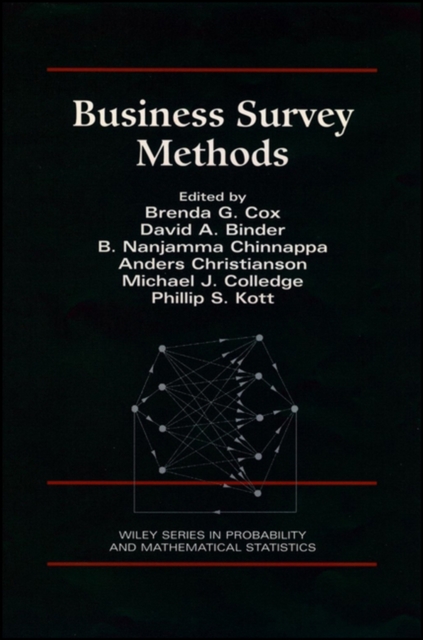
Business survey methods (Wiley series in probability and mathematical statistics)
Consists of invited papers, from internationally recognized researchers, chosen for their quality as well as their overall unity. Describes current methods along with innovative research and presents new technologies for solving problems unique to establishment surveys. Stages of the survey process are addressed in the first five parts with cross-cutting topics in the last section.
eBook

Cytosolic group IVa phospholipase A2 mediates IL-8/CXCL8-induced transmigration of human polymorphonuclear leukocytes in vitro
Background
Cytosolic gIVaPLA
2
is a critical enzyme in the generation of arachidonate metabolites and in induction of β
2
-integrin adhesion in granulocytes. We hypothesized that gIVaPLA
2
activation also is an essential downstream step for
post adhesive
migration of PMN
in vitro
.
Methods
Migration of PMNs caused by IL-8/CXCL8 was assessed using a transwell migration chamber. PMNs were pretreated with two structurally unrelated inhibitors of gIVaPLA
2
, arachidonyl trifluoromethylketone (TFMK) or pyrrophenone, prior to IL-8/CXCL8 exposure. The fraction of migrated PMNs present in the lower chamber was measured as total myeloperoxidase content. GIVaPLA
2
enzyme activity was analyzed using [
14
C-PAPC] as specific substrate F-actin polymerization and cell structure were examined after rhodamine-phalloidin staining.
Results
IL-8/CXCL8-induced migration of PMNs was elicited in concentration- and time-dependent manner. Time-related phosphorylation and translocation of cytosolic gIVaPLA
2
to the nucleus was observed for PMNs stimulated with IL-8/CXCL8 in concentration sufficient to cause upstream phosphorylation of MAPKs (ERK-1/2 and p38) and Akt/PKB. Inhibition of gIVaPLA
2
corresponded to the magnitude of blockade of PMN migration. Neither AA nor LTB
4
secretion was elicited following IL-8/CXCL8 activation. In unstimulated PMNs, F-actin was located diffusely in the cytosol; however, a clear polarized morphology with F-actin-rich ruffles around the edges of the cell was observed after activation with IL-8/CXCL8. Inhibition of gIVaPLA
2
blocked change in cell shape and migration caused by IL-8/CXCL8 but did not cause F-actin polymerization or translocation of cytosolic F-actin to inner leaflet of the PMN membrane.
Conclusion
We demonstrate that IL-8/CXCL8 causes a) phosphorylation and translocation of cytosolic gIVaPLA
2
to the nucleus, b) change in cell shape, c) polymerization of F-actin, and d) chemoattractant/migration of PMN in vitro. Inhibition of gIVaPLA
2
blocks the deformability and subsequent migration of PMNs caused by IL-8/CXCL8. Our data suggest that activation of gIVaPLA
2
is an essential step in PMN migration
in vitro
.
Journal Article

Physician in triage improves emergency department patient throughput
To determine if a physician in triage (PIT) improves Emergency Department (ED) patient flow in a community teaching hospital. This is an interventional study comparing patient flow parameters for the 3-month periods before and after implementation of a PIT model. During the interventional time an additional attending physician was assigned to triage from 1 p.m. to 9 p.m. daily. Outcome measures were median time to attending physician evaluation, median length of stay (LOS), number of patients who left without being seen (LWBS), and total time and number of days on ambulance diversion. Non-normally distributed values were compared with the Wilcoxon rank sum test. Proportions were compared with Chi-square test. Outcome measures were available for 17,631 patients, of whom 8,620 were seen before the initiation of PIT, and 9,011 were seen after PIT was implemented. For all patients, the median time from registration to attending physician evaluation was reduced by 36 min (1:41 to 1:05,
p
< 0.01) while the median LOS for all patients was reduced by 12 min (3:51 to 3:39,
p
< 0.01) after the intervention. Both the number of days on diversion (24 vs. 9 days) and total time on diversion (68 h 25 min vs. 26 h 7 min) were decreased,
p
< 0.01. Finally, there was a slight reduction in the number of patients who LWBS from 1.5 to 1.3 %, but this was not statistically significant (
p
= 0.36). Patient flow parameters in a community teaching hospital were modestly improved as a result of PIT implementation.
Journal Article
Cytosolic group IVa phospholipase A.sub.2 mediates IL-8/CXCL8-induced transmigration of human polymorphonuclear leukocytes in vitro
Cytosolic gIVaPLA.sub.2 is a critical enzyme in the generation of arachidonate metabolites and in induction of [beta].sub.2 -integrin adhesion in granulocytes. We hypothesized that gIVaPLA.sub.2 activation also is an essential downstream step for post adhesive migration of PMN in vitro. Migration of PMNs caused by IL-8/CXCL8 was assessed using a transwell migration chamber. PMNs were pretreated with two structurally unrelated inhibitors of gIVaPLA.sub.2 , arachidonyl trifluoromethylketone (TFMK) or pyrrophenone, prior to IL-8/CXCL8 exposure. The fraction of migrated PMNs present in the lower chamber was measured as total myeloperoxidase content. GIVaPLA.sub.2 enzyme activity was analyzed using [.sup.14.sup.C-PAPC] as specific substrate F-actin polymerization and cell structure were examined after rhodamine-phalloidin staining. IL-8/CXCL8-induced migration of PMNs was elicited in concentration- and time-dependent manner. Time-related phosphorylation and translocation of cytosolic gIVaPLA.sub.2 to the nucleus was observed for PMNs stimulated with IL-8/CXCL8 in concentration sufficient to cause upstream phosphorylation of MAPKs (ERK-1/2 and p38) and Akt/PKB. Inhibition of gIVaPLA.sub.2 corresponded to the magnitude of blockade of PMN migration. Neither AA nor LTB.sub.4 secretion was elicited following IL-8/CXCL8 activation. In unstimulated PMNs, F-actin was located diffusely in the cytosol; however, a clear polarized morphology with F-actin-rich ruffles around the edges of the cell was observed after activation with IL-8/CXCL8. Inhibition of gIVaPLA.sub.2 blocked change in cell shape and migration caused by IL-8/CXCL8 but did not cause F-actin polymerization or translocation of cytosolic F-actin to inner leaflet of the PMN membrane. We demonstrate that IL-8/CXCL8 causes a) phosphorylation and translocation of cytosolic gIVaPLA.sub.2 to the nucleus, b) change in cell shape, c) polymerization of F-actin, and d) chemoattractant/migration of PMN in vitro. Inhibition of gIVaPLA.sub.2 blocks the deformability and subsequent migration of PMNs caused by IL-8/CXCL8. Our data suggest that activation of gIVaPLA.sub.2 is an essential step in PMN migration in vitro.
Journal Article

Approaching Albania
To enter almost hermetically sealed Albania was all but unthinkable in 1963 when I began seeking a visa. Perhaps there could be some consolation in the fact that it was nothing personal.
Isolation gave substance to the broadening siege mentality of its despot, Enver Hoxha (1908–1985). He had begun with trenchant hostility toward “imperialist” Britain and America in 1945, then expanded that to “revisionist” Yugoslavia in 1948, beyond to “revisionist” Russia after 1959, and ultimately to “revisionist” China after 1976. (“Revisionist” was any teaching interpreted by Hoxha as straying from the path of Stalinist orthodoxy.) Each of these countries
Book Chapter