
Catalogue Search | MBRL


Are you sure you want to remove the book from the shelf?

{{itemTitle}}
2
result(s) for
"Bird, Tim, 1962- author"
Sort by:
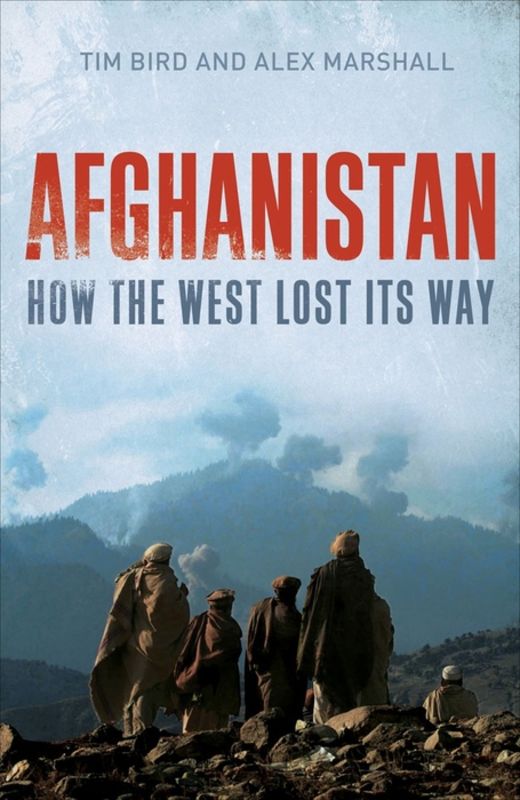
Afghanistan
In October 2001, NATO forces invaded Afghanistan. Their initial aim, to topple the Taliban regime and replace it with a more democratic government aligned to Western interests, was swiftly achieved. However, stabilizing the country in the ensuing years has proven much more difficult. Despite billions of dollars in aid and military expenditure, Afghanistan remains a nation riddled with warlords, the world's major heroin producer, and the site of a seemingly endless conflict between Islamist militants and NATO forces.
In this timely and important book, Tim Bird and Alex Marshall offer a panoramic view of international involvement in Afghanistan from 2001 to 2011. Tackling the subject matter as a whole, Bird and Marshall weave together analysis of military strategy, regional context, aid policy, the Afghan government, and the many disagreements between and within the Western powers involved in the intervention. Given the complicating factors of the heroin trade, unwelcoming terrain, and precarious relations with Pakistan, the authors acknowledge the ways in which Afghanistan has presented unique challenges for its foreign invaders. Ultimately, however, they argue that the international community has failed in its self-imposed effort to solve Afghanistan's problems and that there are broader lessons to be learned from their struggle, particularly in terms of counterinsurgency and the ever-complicated work of \"nation-building.\" The overarching feature of the intervention, they argue, has been an absence of strategic clarity and coherence.
eBook