
Catalogue Search | MBRL


Are you sure you want to remove the book from the shelf?

{{itemTitle}}
16
result(s) for
"Blackford, Holly Virginia"
Sort by:

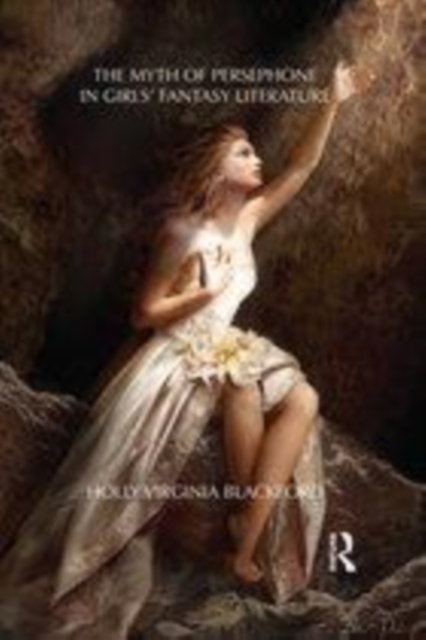
The Myth of Persephone in Girls' Fantasy Literature
In this book, Blackford historicizes the appeal of the Persephone myth in the nineteenth century and traces figurations of Persephone, Demeter, and Hades throughout girls' literature of the nineteenth and twentieth centuries. She illuminates developmental patterns and anxieties in E. T. A. Hoffmann's Nutcracker and Mouse King, Louisa May Alcott's Little Women, Emily Brontë's Wuthering Heights, J. M. Barrie's Peter and Wendy, Frances Hodgson Burnett's The Secret Garden, E. B. White's Charlotte's Web, J. K. Rowling's Harry Potter and the Chamber of Secrets, Stephenie Meyer's Twilight, and Neil Gaiman's Coraline. The story of the young goddess's separation from her mother and abduction into the underworld is, at root, an expression of ambivalence about female development, expressed in the various Neverlands through which female protagonists cycle and negotiate a partial return to earth. The myth conveys the role of female development in the perpetuation and renewal of humankind, coordinating natural and cultural orders through a hieros gamos (fertility coupling) rite. Meanwhile, popular novels such as Twilight and Coraline are paradoxically fresh because they recycle goddesses from myths as old as the seasons. With this book, Blackford offers a consideration of how literature for the young squares with broader canons, how classics flexibly and uniquely speak through novels that enjoy broad appeal, and how female traditions are embedded in novels by both men and women.
eBook

Mockingbird Passing
How often does a novel earn its author both the Presidential
Medal of Freedom, awarded to Harper Lee by George W. Bush in
2007, and a spot on a list of “100 best gay and lesbian
novels”? Clearly,
To Kill a Mockingbird , Lee’s Pulitzer
Prize–winning tale of race relations and coming of age in
Depression-era Alabama, means many different things to many
different people. In
Mockingbird Passing , Holly Blackford invites the
reader to view Lee’s beloved novel in parallel with works
by other iconic American writers—from Emerson, Whitman,
Stowe, and Twain to James, Wharton, McCullers, Capote, and
others. In the process, she locates the book amid contesting
literary traditions while simultaneously exploring the rich
ambiguities that define its characters. Blackford finds the
basis of
Mockingbird’s broad appeal in its ability to
embody the mainstream culture of romantics like Emerson and
social reform writers like Stowe, even as alternative
canons—southern gothic, deadpan humor, queer literatures,
regional women’s novels—lurk in its subtexts.
Central to her argument is the notion of “passing”:
establishing an identity that conceals the inner self so that
one can function within a closed social order. For example, the
novel’s narrator, Scout, must suppress her natural
tomboyishness to become a “lady.” Meanwhile,
Scout’s father, Atticus Finch, must contend with
competing demands of thoughtfulness, self-reliance, and
masculinity that ultimately stunt his effectiveness within an
unjust society. Blackford charts the identity dilemmas of other
key characters—the mysterious Boo Radley, the young
outsider Dill (modeled on Lee’s lifelong friend Truman
Capote), the oppressed victim Tom Robinson— in similarly
intriguing ways. Queer characters cannot pass unless, like the
narrator, Miss Maudie, and Cal, they split into the
“modest double life.” In uncovering
To Kill a Mockingbird ’s lively conversation with
a diversity of nineteenth- and twentieth-century writers and
tracing the equally diverse journeys of its characters,
Blackford offers a myriad of fresh insights into why the novel
has retained its appeal for so many readers for over fifty
years. At once Victorian, modern, and postmodern, Mockingbird
passes in many canons.
eBook

The Byronic Woman
E. B. White wrote his opening frame of the Arable family only after he had conceived of the story of his inspiring spider named Charlotte, because of whom \"a pig shall be saved,\" said White. Consciously writing in a classical tradition, as signified by Homer Zuckerman and language such as \"darkness settled over everything,\" White in letters called his work \"a hymn to the barn\" (Neumeyer, \"Charlotte Vive\" 61-62, 67). A \"hymn to Demeter\" would be equally appropriate; the novel cycles from spring to late summer's agricultural gifts to death and the mythic renewal of spring. As Karen Coats (\"Lacan\") and Helene Solheim articulate, the thread of Fern's development in Charlotte's Web defines the novel's meaning. Like Barrie and Burnett, White created a Persephone tale, complete with the anxious cry of Demeter at her daughter's descent into the underworld, in this case the manure-infused barn, where Fern is a shadow of her former self. Just as Wendy flies and \"falls\" to become queen of the underworld, Fern makes an initial stand against her parents by selecting Wilbur as her narcissus, and thereby finds herself in the bowels of patriarchal farm life where she ponders the role of underworld queen in the form of Charlotte: woman writer, predator, and maternal life force.
Book Chapter
Toying with Persephone
German romantic writer E. T. A. Hoffmann knew what it meant to cycle between worlds. He was first and foremost a musician and composer. He wished to make music his exclusive career, but he trained as a lawyer and served for most of his career as a Prussian judiciary (McGlathery, Mysticism 40-41). When Napoleon defeated Prussia in 1806 and Hoffmann lost his position, he achieved moderate success supporting himself through the arts, serving for a short time as music director and conductor of Joseph Seconda's opera company and supplementing his income through teaching music. He returned to government service after Napoleon's defeat in 1814, spending many years as a jurist and well-respected judge. His thriving creative life was his other world, possibly even his \"real\" self. In a letter dated 23 January 1796 to his friend Theodor Gottlieb von Hippel, he described his double life: \"On weekdays I am a jurist and at most a bit of a musician, during the day on Sundays I draw and in the evenings I am a very witty author until late into the night\" (McGlathery, Mysticism 64).
Book Chapter
Divorce and Other Mothers
In Twilight, Stephenie Meyer provides an inner glimpse of Persephone psychology. Bella epitomizes the lost girl, forever fated to cycle between worlds. Her favorite novel is Wuthering Heights, placing Twilight in a long line of homage to the Brontës. Her appreciation for the novel is distinctly gendered; her lover, Edward Cullen, does not appreciate the book. A man who has lived nearly one hundred years without satisfactory relationships and full acceptance in communities does not find flattering the implicit parallel Bella draws between him and Heathcliff. The creature of twilight and exile presents a beautiful narcissus object for Bella; he offers the same paradoxical fantasy of development and escape from the conditions of Bella's existence, which, like Mary's of The Secret Garden, are difficult indeed. They drive Bella's creation of a soul-mate in darkness, her pleasure in abduction by chariot, and her internal poetics of guilt, despair, and lamentation, akin to the elegiac, passionate monologues of Brontë's Catherine.
Book Chapter
Introduction: Reaching for the Narcissus
The myth of Persephone and Demeter has been re-imagined throughout time, but it especially attracted artists and writers in the romantic, Victorian, and modern periods. Whereas traditional retellings of the myth focused on the plight of Demeter, romantics and Victorians began to explore the subjectivity of Persephone as she separates from her mother. This historical shift coincided with the inauguration of fantastic literature capturing the emotional realities of the young, which reveals an emergent congruence between the myth and ideas about children, especially girls, in relation to society and cycles of development. In poetry, women writers began to use the myth to explore the agony and ecstasy of female development, conveying a profound ambivalence about growing up in patriarchal cultures. Yet Persephone remained open to reflection in the work of both male and female writers. As a uniquely indeterminate and homeless girl, fated forever to cycle between worlds, she inspired paradoxical symbolism of growth and escape. Her launch into the underworld became the perfect muse for writers who would focus on the journeys of girls; imaginative literature for the young also paradoxically embraces and resists child development. The repetition of Persephone's fertile journey is the subject of this book.
Book Chapter
The Riddle of Féminine Écriture in J. K. Rowling's Harry Potter and the Chamber of Secrets (1998)
The second novel of the Harry Potter series, Harry Potter and the Chamber of Secrets is a transitional novel. The heroic quest structure of the first novel reflects male rites of passage as Harry receives his summons from the magic world to enter school, when he also enters the wider world of capitalism (money, trading cards, the best broomstick, etc.), peers and sports, and the lineage of his parents. By the third book of the series, adolescent concerns begin to predominate (Trites, \"Harry Potter\"). Whereas Books 1 and 3 concern Harry's relationship with male mentors, Chamber of Secrets brings Harry face to face with an unknown force that critic Alice Mills, in \"Harry Potter and the Terrors of the Toilet,\" says is less tamable than the dark lord. Tellingly accessed through the girls' bathroom, the chamber of secrets reflects the unknown depths of adolescent girls, one of whom has opened the chamber with her féminine écriture. New to Hogwarts, Ginny Weasley reaches out for a narcissus in the form of an old yet interactive diary; her confessional writing crosses worlds, just as Charlotte's liminal web writing has the uncanny ability to give life. In Chamber, however, Ginny's ability to give birth with her writing is dangerous. It awakens the Byronic character Tom Riddle, giving him more and more power as her diary moans birth him.
Book Chapter
Lost Girls, Underworld Queens in J. M. Barrie's Peter and Wendy (1911) and Emily Brontë's Wuthering Heights (1847)
All rites of passage are paradoxical. On the one hand, there's the opportunity for personal growth, the promise of transcendence. But there is terror and disintegration, too-deep blows to the ego. No wonder that the day a mother hands off her daughter to Pan is unquestionably her worst... . From this moment on, they will fly on their own fuel and eat from the tree of imaginary fruit. They no longer need their mothers, all of whom have taken a bad fall and make their peace with gravity.
Book Chapter