
Catalogue Search | MBRL


Are you sure you want to remove the book from the shelf?

{{itemTitle}}
188
result(s) for
"Blake, Marc"
Sort by:

How not to write a sitcom : 100 mistakes to avoid if you ever want to get produced
\"A troubleshooting guide aimed at both the novice and the practising sitcom writer ... [illustrating] and [explaining] the many pitfalls in concept, characterisation, plotting, and dramatic/comedic writing which pepper the hundreds of scripts submitted every year\"--P. [4] of cover.
Book

How to Be a Comedy Writer
Think you're funny? Writing successful comedy isn't just about having a gift for gags; you need to hone your talent and polish your humour to earn a living from making people laugh. If you want to write stand-up comedy, sketches, sitcoms or even a comic novel or film, How to be a Comedy Writer tells you all you need to know and more about the business, the structure of jokes and the nuts and bolts of a craft that can be learnt. This new ebook edition has been specially formatted for today's e-readers.
eBook

Writing the comedy movie
\"It is often suggested that there are 'secrets' to comedy or that it is 'lightning in a bottle', but the craft of comedy writing can be taught. While comedic tastes change, over time and from person to person, the core underpinning still depends on the comedic geniuses that have paved the way. Great comedy is built upon a strong foundation. In Writing the Comedy Movie, Marc Blake lays out - in an entertainingly readable style - the nuts and bolts of comedy screenwriting. His objective is to clarify the 'rules' of comedy: to contextualize comedy staples such as the double act, slapstick, gross-out, rom com, screwball, satire and parody and to introduce new ones such as the bromance or stoner comedy. He explains the underlying principles of comedy and comedy writing for the screen, along with providing analysis of leading examples of each subgenre\"-- Provided by publisher.
Book

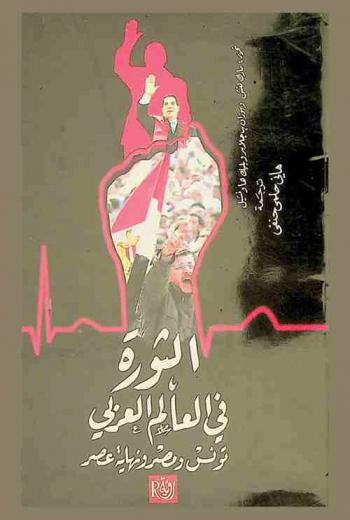
الثورة في العالم العربي : تونس ومصر ونهاية عصر
يتناول كتاب (الثورة في العالم العربي تونس ومصر ونهاية عصر) والذي قام بتأليفه (مارك لينش) في حوالي (304) صفحة من القطع المتوسط موضوع (ثورات البلاد العربية) مستعرضا المحتويات التالية : الفصل الأول : هدير الثورة.-الفصل الثاني : تونس شرارة مفاجئة-الفصل الثالث : 18 يوما هزت العالم من شوارع القاهرة-الفصل الرابع : صانعو الثورة-الفصل الخامس : باراك أوباما والشرق الأوسط الجديد-الفصل السادس : وماذا بعد ؟ الثورة والساخطون عليها.
Book
In hard times, it's the Gavin and Staceys we want to snuggle up to
Some say it is not real sitcom. True, the characters are not tied to a single location. They have now moved from Essex to South Wales, in what is either a bizarre act of downwardly mobility or the inevitable consequence of the credit crunch. Nor has their situation remained the same. [Gavin] (Mathew Horne) and Stacey (Joanna Page) at first conducted a long-distance relationship by phone, then met, then got together and then married. As a TV couple, they are insipid and ordinary and, almost unforgivably, they are happy. Not for them the will-they-won't-they-get-together, which is a staple trope of sitcom - Niles and Daphne (Frasier), Tony and Debs (Men Behaving Badly) or Tim and Dawn (The Office). This function is instead left to their corpulent echo couple, Smithy and Nessa, played ably by James Corden and Ruth Jones, also the creators of the show. Lastly, there is a narrative drive in Gavin and Stacey that takes us on a journey instead of keeping the characters trapped in stasis. There are real dramatic issues, such as what will happen to Nessa and Smithy's child (a plot device now firmly at the centre of the show), and the questions over Gavin's relocation to Barry and the sustainability of his friendship to Smithy. These issues will have to be resolved. The characters will have to compromise and make decisions and therefore mature and change - which lifts them out of this genre. However, for now, it works, and we're glued to the Shipmans and the Wests. Gavin and Stacey has bedded into the public consciousness more quickly than most sitcoms, which tend to survive despite critics and commissioners. Fawlty Towers took four years to get re-commissioned; likewise Only Fools and Horses and Dad's Army were panned by critics. The recent ubiquity of Horne and Corden in their puerile self-penned sketch show series (Horne & Corden) and their crass horror comedy film (Lesbian Vampire Killers) were unlikely to attract more viewers, so what brought the audience in? I believe it is love - not for their cod Laurel and Hardy act, but the love written through the middle of this sitcom like a stick of rock. It's the love between Gavin and Stacey and the love of Gavin for best mate Smithy; the love within the Shipman clan and the Wests, and even Bryn, who is a lovely man. Just as with its natural predecessor, The Royle Family, these feelings are familial, non-judgemental, caring and forgiving. Of course, because we are British, they must be hidden under layers of sniping and bitching and only truly expressed in the briefest of glances or exchanges. It is here where the writing reaches the heights of Alan Ayckbourn and Alan Bennett, or the genius of Galton and Simpson.
Newspaper Article
