
Catalogue Search | MBRL


Are you sure you want to remove the book from the shelf?

{{itemTitle}}
16
result(s) for
"Blanton, Dennis B"
Sort by:

A SOUTHEASTERN NORTH AMERICA RIVER COMMUNITY FORTY-THOUSAND YEARS AGO
Understanding how past communities have been shaped by environmental alterations can provide insight into the impacts of future climate change. Local climate and river systems have changed significantly over the last glacial maximum, but little is known about the communities of the Georgian Coastal Plain earlier in the period. Plant fossils from Coffee Bluff, a Quaternary organic river deposit of the Ocmulgee River in southeastern Georgia, were used to determine past environmental and climatic conditions. The paleoflora were found imbedded in a mud matrix and were removed by a slaking method; they were later identified and separated to respective ecological environments. Of the eleven species identified, one was a wetland species (marsh sedges), while the remaining ten were woodland species. From using the coexistence approach with the plant fossils and aligning their growing conditions, we suggest that Coffee Bluff was a stream/riverine habitat with loamy and well-drained soils; local climate was humid, with temperatures and annual precipitation ranging from 10 to 21[degrees]C and 1016 to 1524 mm, respectively. Few gymnosperm specimens were recovered in the material, though groups like conifers were dominant in the coastal plain environment during the late Pleistocene. It is most likely that there were fewer conifer trees near the collection area.
Journal Article

An Appraisal of the Indigenous Acquisition of Contact-Era European Metal Objects in Southeastern North America
Investigations at two sites in southeastern North America have yielded an unanticipated abundance of European artifacts that largely date to the sixteenth and early seventeenth centuries CE. On other sites in the region, such objects have been documented in mortuary and special-use contexts. However, the volume and provenience of these recent finds, many of which were recovered in apparently domestic loci, are suggestive of a more secular context than is typical. These assemblages indicate that, even in the early era of Contact, Native Americans had developed a variety of ways to obtain European goods that were equally important as gifting. Despite strides that are being made in research on European commodities in Indigenous contexts, comparative studies continue to be hampered by lack of consistency in recovery techniques.
Journal Article

The Lost Colony and Jamestown Droughts
Tree-ring data from Virginia indicate that the Lost Colony of Roanoke Island disappeared during the most extreme drought in 800 years (1587-1589) and that the alarming mortality and the near abandonment of Jamestown Colony occurred during the driest 7-year episode in 770 years (1606-1612). These extraordinary droughts can now be implicated in the fate of the Lost Colony and in the appalling death rate during the early occupations at Jamestown, the first permanent English settlement in America.
Journal Article

Architectural Variability in the Southeast
Some of the most visible expressions of human culture are illustrated architecturally. Unfortunately for archaeologists, the architecture being studied is not always visible and must be inferred from soil inconsistencies or charred remains. This study deals with research into roughly a millennium of Native American architecture in the Southeast and includes research on the variation of construction techniques employed both above and below ground. Most of the architecture discussed is that of domestic houses with some emphasis on large public buildings and sweat lodges. The authors use an array of methods and techniques in examining native architecture including experimental archaeology, ethnohistory, ethnography, multi-variant analysis, structural engineering, and wood science technology. A major portion of the work, and probably the most important in terms of overall significance, is that it addresses the debate of early Mississippian houses and what they looked like above ground and the changes that occurred both before and after the arrival of Europeans. Contributors : Dennis B. Blanton Tamira K. Brennan Ramie A. Gougeon Tom H. Gresham Vernon J. Knight Jr. Cameron H. Lacquement Robert H. Lafferty, III Mark A. McConaughy Nelson A. Reed Robert J. Scott Lynne P. Sullivan
eBook

Drought as a Factor in the Jamestown Colony, 1607-1612
Landscape reconstructions are now common in historical archaeology but climatic reconstructions are still infrequent. Period accounts of the Jamestown colony's first decade indicate considerable stress that has begged satisfactory explanation. A baldcypress tree-ring study was initiated as an independent means of climatic reconstruction in the lower Chesapeake region. The findings clearly document severe drought during the first years of the Jamestown colony. The implications of these findings enrich and clarify the first-person accounts of stress due to famine, poor water quality, intercultural hostility, and extreme mortality. The results also demonstrate the value of interdisciplinary studies in historical archaeology and should encourage more routine consideration of climate as a significant factor in the historical events of the United States.
Journal Article

The Factors of Climate and Weather in Sixteenth-Century La Florida
While the Southeastern United States does not share the reputation of the arid Southwest as a place of climatic extremes, recent experience in the region reminds us that historical averages do not imply a steady state. Severe drought in the last few years has sorely tested the sustainability of modern human systems in the Southeast, and with the benefit of a paleoclimatic record extending many centuries back, it is amply clear that periodic, extended deviations from the average condition are the norm (Cook et al. 2007; Seager et al. 2009). Moreover, it is evident from historical and archaeological sources that
Book Chapter
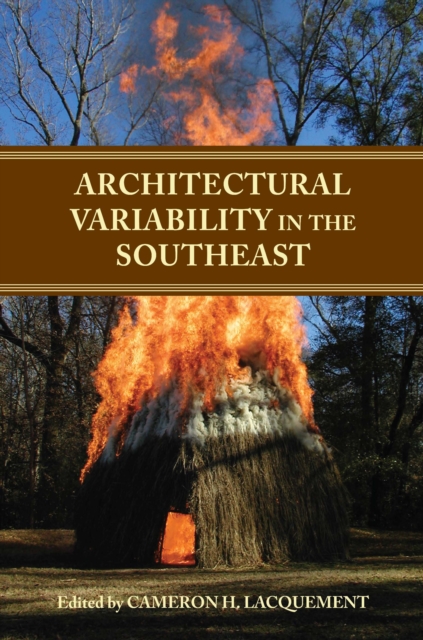
Architectural variability in the Southeast
Some of the most visible expressions of human culture are illustrated architecturally. Unfortunately for archaeologists, the architecture being studied is not always visible and must be inferred from soil inconsistencies or charred remains. This study deals with research into roughly a millennium of Native American architecture in the Southeast and includes research on the variation of construction techniques employed both above and below ground. Most of the architecture discussed is that of domestic houses with some emphasis on large public buildings and sweat lodges. The authors use an array of methods and techniques in examining native architecture including experimental archaeology, ethnohistory, ethnography, multi-variant analysis, structural engineering, and wood science technology. A major portion of the work, and probably the most important in terms of overall significance, is that it addresses the debate of early Mississippian houses and what they looked like above ground and the changes that occurred both before and after the arrival of Europeans. Contributors:Dennis B. BlantonTamira K. Brennan Ramie A. GougeonTom H. GreshamVernon J. Knight Jr. Cameron H. Lacquement Robert H. Lafferty, IIIMark A. McConaughyNelson A. Reed Robert J. ScottLynne P. Sullivan
eBook

Archaeological Adaptation: Case Studies of Cultural Transformation from the Southeast and Caribbean. C. CLIFFORD BOYD JR., editor. University of Tennessee Press, Knoxville. xxix + 359 pp. $80.00 (hardcover), ISBN 978-1-6219-0522-6
OSL dating of ceramics and considerations of alternative theoretical approaches lead to new conclusions about the occupational history of the site, as well as the way local, indigenous groups developed largely in place, with changes in pottery reflecting developments in regional communities of practice. Through analyses of ceramic and glass assemblages, the authors identify contrasting expressions of social identity linked with different kinds of consumer behavior. In summary, Archaeological Adaptation: Case Studies of Cultural Transformation from the Southeast and Caribbean is a model tribute for a deserving scholar, and younger generations of archaeologists will find Schroedl's story worthy of emulation.
Book Review

Lowcountry Hurricanes: Three Centuries of Storms at Sea and Ashore
In this book, Walter Fraser has given us a thorough and useful chronicle of tropical storms recorded along the Atlantic, \"Lowcountry\" coast of Georgia and South Carolina since the latter decades of the seventeenth century. The book opens with a short preface that situates the study area in space and time, and offers uniformed readers with some basics of a hurricane's life cycle and contemporary measures of intensity.
Book Review

Eastern Shore Indians of Virginia and Maryland
\"Eastern Shore Indians of Virginia and Maryland\" by Helen C. Rountree and Thomas E. Davidson is reviewed.
Book Review