
Catalogue Search | MBRL


Are you sure you want to remove the book from the shelf?

{{itemTitle}}
5
result(s) for
"Boardman, John, 1927- author"
Sort by:

Masterpieces in miniature : engraved gems from prehistory to the present
The creation of miniature intaglios - or incised carvings - which could be impressed on clay or wax was one of the earliest crafts of civilisation. To this the Greeks added relief cameos, while comparable skills were lavished on the decoration of metal finger rings. These artefacts record subjects of significance for their period and place but are also the direct expression of an artist's skills and imagination. Engraved gems were collected first by the ancient Romans and then throughout the Renaissance were a source for knowledge of 'classical' subjects and styles, when they were copied - from Michelangelo to Rubens - by the foremost artists of the day. The gemstones explored here are from a distinguished collection made in the earlier twentieth century by a notable connoisseur of ancient art. Many originate from named older European collections and were previously unknown to scholars and collectors. The authors have sought to offer a balanced selection of earlier eastern and Greek stones, alongside others from the neo-classical era. The book offers a survey of the finest products of the gems craft over millennia.
Book
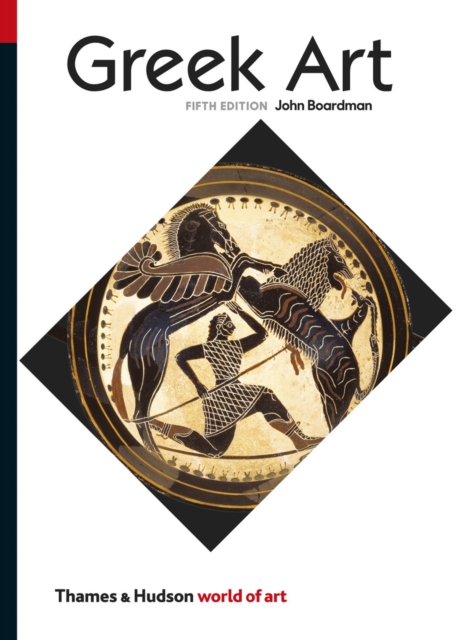
Greek art
John Boardman has updated his classic account of one of the most popular historic artistic traditions among Western audiences. In the twenty years since the last edition was released, valuable evidence has come to light which has dramatically enhanced our understanding of the art of this ancient civilization. We now know conclusively that Greeks in fact lavished their sculptures with realistic colour paint, and also worked with a wealth of other materials on a major scale, including wood and precious metals, proving that our view of 'classic' pure white marble of the age is a Renaissance construction. We can identify the work of individual artists, and schools of artists, and have a clearer picture than ever of how art and artistic ideas travelled throughout the Greek world. Boardman encourages the reader to consider the beautiful pieces that have been preserved in their original context, rather than as the isolated installations of our modern galleries, weaving into the discussion of the art objects insights into the society that produced them. Illustrated in full colour throughout for the first time, this fifth edition showcases more vividly than ever the artistic endeavours of the ancient Greeks.
eBook


On the Fascination of Objects
The Shefton Collection in Newcastle upon Tyne contains a fine array of Greek and Etruscan objects and takes its name from its founder Professor Brian Shefton (1919 – 2012). In spite of the importance of this collection it has not been widely published and remains something of a hidden gem. Brian Shefton was an insightful collector, as well as a distinguished scholar of Greek and Etruscan archaeology, and the 14 papers presented here reflect the broad scope of the collection; ranging across pottery, jewelery, terracottas and metalwork. The contributions, written by leading experts in the field, focus on specific objects or groups of objects in the Collection, providing new interpretations and bringing previously unpublished items to light. The history of the Shefton Collection is explored. Together these contributions provide a tribute to a remarkable individual who made a substantial and notable contribution to his discipline.
eBook

The Beverley Collection of gems at Alnwick Castle
The Collection was begun by the First Duchess of Northumberland in the early eighteenth century; but the greater part of it was made later in the century by Algernon Percy, First Earl of Beverley, during a tour of Europe while in the company of his mentor, Louis Dutens. Their success in France and Italy was such that it incited the jealousy of the Empress Catherine of Russia, herself a passionate collector. The range of objects - cameos, intaglios and finger rings of the highest quality - is considerable: Greek, Roman and Etruscan, as well as a notable assemblage of neoclassical signed gems by British artists. One jewel clearly provided inspiration for Michelangelo's painting of Adam on the Sistine Chapel ceiling. The Collection is little known, except by connoisseurs, but this volume brings to the attention of a broader audience many of the finest products of one of the oldest arts of the western world.
Book