
Catalogue Search | MBRL


Are you sure you want to remove the book from the shelf?

{{itemTitle}}
125
result(s) for
"Bond, Emma"
Sort by:


Health literacy in childhood and youth: a systematic review of definitions and models
Background
Children and young people constitute a core target group for health literacy research and practice: during childhood and youth, fundamental cognitive, physical and emotional development processes take place and health-related behaviours and skills develop. However, there is limited knowledge and academic consensus regarding the abilities and knowledge a child or young person should possess for making sound health decisions. The research presented in this review addresses this gap by providing an overview and synthesis of current understandings of health literacy in childhood and youth. Furthermore, the authors aim to understand to what extent available models capture the unique needs and characteristics of children and young people.
Method
Six databases were systematically searched with relevant search terms in English and German. Of the
n
= 1492 publications identified,
N
= 1021 entered the abstract screening and
N
= 340 full-texts were screened for eligibility. A total of 30 articles, which defined or conceptualized generic health literacy for a target population of 18 years or younger, were selected for a four-step inductive content analysis.
Results
The systematic review of the literature identified 12 definitions and 21 models that have been specifically developed for children and young people. In the literature, health literacy in children and young people is described as comprising variable sets of key dimensions, each appearing as a cluster of related abilities, skills, commitments, and knowledge that enable a person to approach health information competently and effectively and to derive at health-promoting decisions and actions.
Discussion
Identified definitions and models are very heterogeneous, depicting health literacy as multidimensional, complex construct. Moreover, health literacy is conceptualized as an action competence, with a strong focus on personal attributes, while also recognising its interrelatedness with social and contextual determinants. Life phase specificities are mainly considered from a cognitive and developmental perspective, leaving children’s and young people’s specific needs, vulnerabilities, and social structures poorly incorporated within most models. While a critical number of definitions and models were identified for youth or secondary school students, similar findings are lacking for children under the age of ten or within a primary school context.
Journal Article
Generic health literacy measurement instruments for children and adolescents: a systematic review of the literature
Background
Health literacy is an important health promotion concern and recently children and adolescents have been the focus of increased academic attention. To assess the health literacy of this population, researchers have been focussing on developing instruments to measure their health literacy. Compared to the wider availability of instruments for adults, only a few tools are known for younger age groups. The objective of this study is to systematically review the field of generic child and adolescent health literacy measurement instruments that are currently available.
Method
A systematic literature search was undertaken in five databases (PubMed, CINAHL, PsycNET, ERIC, and FIS) on articles published between January 1990 and July 2015, addressing children and adolescents ≤18 years old. Eligible articles were analysed, data was extracted, and synthesised according to review objectives.
Results
Fifteen generic health literacy measurement instruments for children and adolescents were identified. All, except two, are self-administered instruments. Seven are objective measures (performance-based tests), seven are subjective measures (self-reporting), and one uses a mixed-method measurement. Most instruments applied a broad and multidimensional understanding of health literacy. The instruments were developed in eight different countries, with most tools originating in the United States (
n
= 6). Among the instruments, 31 different components related to health literacy were identified. Accordingly, the studies exhibit a variety of implicit or explicit conceptual and operational definitions, and most instruments have been used in schools and other educational contexts. While the youngest age group studied was 7-year-old children within a parent-child study, there is only one instrument specifically designed for primary school children and none for early years.
Conclusions
Despite the reported paucity of health literacy research involving children and adolescents, an unexpected number of health literacy measurement studies in children’s populations was found. Most instruments tend to measure their own specific understanding of health literacy and not all provide sufficient conceptual information. To advance health literacy instruments, a much more standardised approach is necessary including improved reporting on the development and validation processes. Further research is required to improve health literacy instruments for children and adolescents and to provide knowledge to inform effective interventions.
Journal Article

‘Intoxicated Geographies’: Sites of Refraction and Fragmentation in Scipio Slataper's Il mio Carso and Hermann Hesse's Der Steppenwolf
Il mio Carso
and
Der Steppenwolf
both portray drinking scenes that make their protagonists reconsider their standing in relation to an increasingly fragmented modern world. Using Hubbard's ‘intoxicated geographies’ as an interpretative hinge, this article charts the effects of this embodied experience on the two texts. In both, the drinking lens functions as a revelatory device which highlights the transcendent liminality of modernist consciousness in various ways. By blurring the boundaries of social interaction, muddling awareness of time, and complicating notions of consciousness, the two drinking scenes allow a widening of perception that demands an analogous narrative repositioning in response.
Journal Article

Senior Associate Fellowship: Museum practices in world literature: postcolonial objects in care at the Museo Italo Africano ‘Ilaria Alpi’
My research in Rome formed part of my third book project, entitled Curating Worlds: Museum Practices in World Literature. The project identifies the collection, curation and display of objects as a site for the radical retelling of histories of empire, war, borders and mobility, using acclaimed world literature novels by Daša Drndić (Trieste), Valeria Luiselli (Lost Children Archive), Maaza Mengiste (The Shadow King), Orhan Pamuk (The Museum of Innocence), Maria Stepanova (In Memory of Memory) and Olga Tokarczuk (Flights) to form a primary corpus of what I term ‘museum-novels’. Individual chapters in the book focus on key museum practices (such as collecting, curation, storage, display, conservation and deaccession) as they are articulated in literary form in the museum-novels under examination. The book manuscript is now complete and under contract with Northwestern University Press, where it is scheduled for publication in autumn 2024.
Journal Article

An Evaluation of an Inter-Disciplinary Training Programme for Professionals to Support Children and Their Families Who Have Been Sexually Abused Online
The psychological consequences of child sexual abuse on children’s mental health and emotional well-being are well documented, and the importance of safeguarding training for professionals working with children and young people unequivocal. Effective support for children who have been sexually abused online is essential to enable them to progress towards recovery. Yet many professionals feel they lack knowledge and understanding of how best to work with children who have been sexually abused online. This study therefore evaluates the outcomes of a short inter-professional training course designed to develop professionals’ competence and confidence when responding to the needs of children and their families after online sexual abuse. Participants (n = 114) were recruited on a voluntary basis from a range of professional backgrounds, including some teaching and social work students in England, Wales and Northern Ireland. The questionnaire collected both quantitative and qualitative data. There were consistent, statistically significant improvements in the professionals’ views on their knowledge of the subject, their ability to assess online risk and their confidence levels after completing the training course. The feedback from the participants suggested that the learning tools adopted in the training were highly appropriate and that the inter-professional delivery was a key aspect to the positive learning experience. This study suggests that multidisciplinary training, combined with real-life case studies, can be highly effective in improving knowledge and understanding of online Child Sexual Exploitation and Abuse (CSEA), thereby improving professionals’ confidence in supporting children, young people and their families. The need for and the importance of inter-professional training are highlighted.
Journal Article

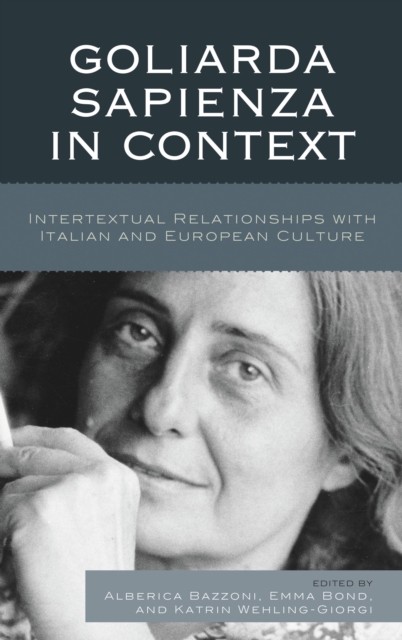
Goliarda Sapienza in context
The present edited collection of essays on the Sicilian author Goliarda Sapienza includes contributions from established and emerging scholars working in the field of contemporary women's writing. Essays in this volume examine Sapienza through multiple perspectives, taking into account the articulation of subjectivity through autobiographical writing and the complex representation of gender and sexual identities. Also considered here is Sapienza's oblique position within the Italian literary canon, with contributions moving beyond isolated textual analyses whilst attempting to situate the author's works within a framework of intertextual and contextual cultural references. Exploring the fertile network of explicit and implicit intersections with Italian and European literature (English and French in particular), as well as with Western philosophical thought in which Sapienza's texts are embedded, this volume will provide an overdue contribution to the belated appraisal of an author whose due recognition is, in Cesare Garboli's words, only a matter of time: \"Time will work in favour of Goliarda Sapienza's works. And this is not a wish; it is a certainty.\"
eBook