
Catalogue Search | MBRL


Are you sure you want to remove the book from the shelf?

{{itemTitle}}
677
result(s) for
"Boslaugh, Sarah"
Sort by:


The SAGE encyclopedia of pharmacology and society
The SAGE Encyclopedia of Pharmacology and Society is an authoritative and rigorous source addressing the pharmacology industry and how it influences society, making it a must-have reference for all academic libraries as a source for both students and researchers to utilize.
eBook
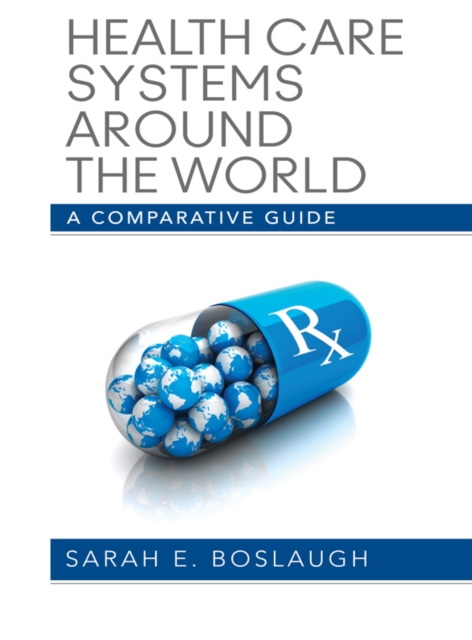
Health care systems around the world : a comparative guide
This concise reference provides a one-stop point of research that examines major aspects of health care systems for over 190 countries worldwide. In a consistent format, ten major health care categories are systematically examined for each country: 1. Emergency Health Services; 2. Costs of Hospitalization; 3. Costs of Drugs; 4. Major Health Issues; 5. Government Role in Health Care; 6. Insurance; 7. Access to Health Care; 8. Health Care Facilities; 9. Health Care Personnel (doctor level of training, etc.); and 10. Public Health Programs. The volume is organized in alphabetical order of country names. Each country is presented on a two- or three-page spread with the same descriptive and statistical content, allowing readers to compare health care systems from country to country. For example, a reader may compare costs of drugs in France versus the United States versus Canada. Each country spread will feature short entries on the ten health care categories accompanied by charts, table, and photos as appropriate. The work culminates as a unique and essential resource for pre-med and medical students, as well as researchers in sociology, economics, and the health management fields.
eBook

Comparing demographic, health status and psychosocial strategies of audience segmentation to promote physical activity
The goal of audience segmentation is to identify population subgroups that are homogeneous with respect to certain variables associated with a given outcome or behavior. When such groups are identified and understood, targeted intervention strategies can be developed to address their unique characteristics and needs. This study compares the results of audience segmentation for physical activity that is based on either demographic, health status or psychosocial variables alone, or a combination of all three types of variables. Participants were 1090 African-American and White adults from two public health centers in St Louis, MO. Using a classification-tree algorithm to form homogeneous groups, analyses showed that more segments with greater variability in physical activity were created using psychosocial versus health status or demographic variables and that a combination of the three outperformed any individual set of variables. Simple segmentation strategies such as those relying on demographic variables alone provided little improvement over no segmentation at all. Audience segmentation appears to yield more homogeneous subgroups when psychosocial and health status factors are combined with demographic variables.
Journal Article

Perceptions of Neighborhood Environment for Physical Activity: Is It \Who You Are\ or \Where You Live\?
Lack of physical activity among American adults is a serious public health concern. Many factors influence activity levels, and most research has focused on either individual factors, such as race and income, or on characteristics of the physical environment, such as the availability of parks. Our study used a cross-sectional multilevel design to examine the influences of individual- and neighborhood-level characteristics on participant's perceptions of their neighborhood as an appropriate venue for physical activity. Study participants were 1,073 African American and white adults living in the St. Louis, Missouri, metropolitan area. Individual-level information was gathered from self-administered questionnaires; neighborhood-level data for these same individuals were obtained from the 2000 US Census. We found that both individual and neighborhood characteristics were significant predictors of how individuals perceived physical activity opportunities in their neighborhood, and that African Americans perceived their neighborhoods as less safe and less pleasant for physical activity than did whites, regardless of the racial composition of the neighborhood. We suggest that any evaluation of opportunities for physical activity within a neighborhood should include consideration of resident's perceptions of the safety and pleasantness of using them, and that the role of perceived and actual neighborhood conditions in explaining disparities in physical activity between African American and other populations should be examined further.
Journal Article


Encyclopedia of epidemiology / editor, Sarah Boslaugh ; associate editor, Louise-Anne McNutt
Presents information from the field of epidemiology in a less technical and accessible style and format. Over 600 entries cover every major facet of epidemiology, from risk ratios to case-control studies to mediating and moderating variables, and much more. Relevant topics from related fields such as biostatistics and health economics are also included.
eBook

Encyclopedia of epidemiology
The Encyclopedia of Epidemiology presents state-of-the-art information from the field of epidemiology in a less technical and accessible style and format. With more than 600 entries, no single reference provides as comprehensive a resource in as focused and appropriate manner. The entries cover every major facet of epidemiology, from risk ratios to case-control studies to mediating and moderating variables, and much more. Relevant topics from related fields such as biostatistics and health economics are also included.
eBook

How Patient Reactions to Hospital Care Attributes Affect the Evaluation of Overall Quality of Care, Willingness to Recommend, and Willingness to Return
Patient satisfaction is a critical part of the quality outcomes of healthcare. Every industry is interested in customer satisfaction because satisfied customers are loyal customers. Healthcare is no exception. Many research studies assume that satisfied patients are more likely to recommend their providers to their friends and to return when they need care again. Although this assumption sounds logical, we argue that three dependent variables-the Evaluation of Overall Quality of Care, Willingness to Recommend, and Willingness to Return-are unique constructs. Thus, we examine how patient reactions (experiences) to different hospital care attributes (factors or dimensions) influence these dependent variables. Our study analyzed a comprehensive patient satisfaction data set collected by BJC HealthCare. We used a multiple linear regression model with a scatter term to analyze 14,432 cases. In Evaluation of Overall Quality of Care model, we found that the nursing care attribute showed the strongest influence, followed by staff care. In assessing the other two models-Willingness to Recommend and Willingness to Return-we found that staff care showed the strongest influence, followed by nursing care. Patients put a different emphasis or a different priority on their reactions to hospital care attributes, depending on which outcome they arrive at. In addition, we found that patients are disproportionately influenced by a weak or poor attribute reaction, which is a conjunctive strategy (risk averse). In general, nursing care and staff care should be the first priority for improvement. This may be good news because these areas are under the control of hospital managers.
Journal Article
