
Catalogue Search | MBRL


Are you sure you want to remove the book from the shelf?

{{itemTitle}}
89
result(s) for
"Botwinick, Aryeh"
Sort by:

Machiavelli’s Theorizing of Power Juxtaposed to the Negative Theological Conceptualization of God: Implications for Mideast Peace
I begin this essay with a mini-genealogy of Maimonidess negative theology (which declares that we can only endlessly say what God is not, but not what God is), which traces it to a specific and recurring talmudic source. I then argue that Machiavelli, one of the great theorists of power in the Western intellectual tradition, structured his argument about power in a manner that was directly analogous to Maimonidess argument about God. I will draw the practical implications of this association throughout the essay. My starting point for the development of this argument is arbitrary. One can trace the argument of negative theology to numerous Greek, Islamic, and rabbinic sources. However, the vein of interpretation that I am mining here is relatively underdeveloped, so I think that it deserves special attention.
Journal Article
Theological and Political Postscript to Presentations at the Haifa Conference: The Faith of Skepticism and the Skepticism of Faith in St. Augustine, Avicenna, Judah Halevi, Friedrich Nietzsche, and Jacques Derrida
Just as in the case of monotheism, the very application of its doctrine construed negatively theologically (that we can only say what God is not, but not what God is) leading to a de-literalizing of God's attributes constitutes a contradiction-applying the doctrine is already to violate it and to reduce it to incoherence because then God ceases to be unique and singular and becomes knowable to the extent that God is deprived of literal attributes-so, too, a consistent application of skepticism leads to an immobilizing of the whole doctrine. If one skeptically interrogates skepticism, this would conjure up the prospect that the external targets that skepticism had been invoked to question could be rehabilitated or sustained in their pristine form. This suggests that to apply skepticism consistently leads to rendering skepticism inert-just as to construe monotheism consistently means that one can say nothing about God (neither about what God is nor about what God is not). A mystical silence overwhelms both the monotheistic believer and the philosophical skeptic. When rationalism and skepticism collapse, they both yield (or eventuate in) mysticism. It would seem that the distance between the faith of skepticism and the skepticism of faith turns out to be much closer than the proponents of either side of the official Great Divide would have us believe.
Journal Article
Contra Fundamentalism: Negative Theology, Skepticism, and Infinity
Religious fundamentalism is a major source of political instability in the world. The literalizing of God and religious texts infuses followers of the three Western monotheistic religions with an impetus to fight to the death any nation or group that they feel opposes their understanding of what God demands of them. From even before the era of the official promulgation of monotheistic doctrine, an alternative reading of the supreme Power in the universe has been available. This alternative reading has been officially canonized in Western religious thought as negative theology. Negative theology states that we can only know what God is not-but not what God is. Since God brings the explanatory quest to a halt, God can only be infinite. It is a contention of this essay that the structure of negative theology duplicates the structure of skeptical argument-and they both issue forth in incoherence. The only mode of relationship to God that is available to us is a mystical one, which means that no person can base their relationship to God on the premise of certainty. Fundamentalism then rests on a vulnerable set of rational arguments, which the essay seeks to explore and expose.
Journal Article

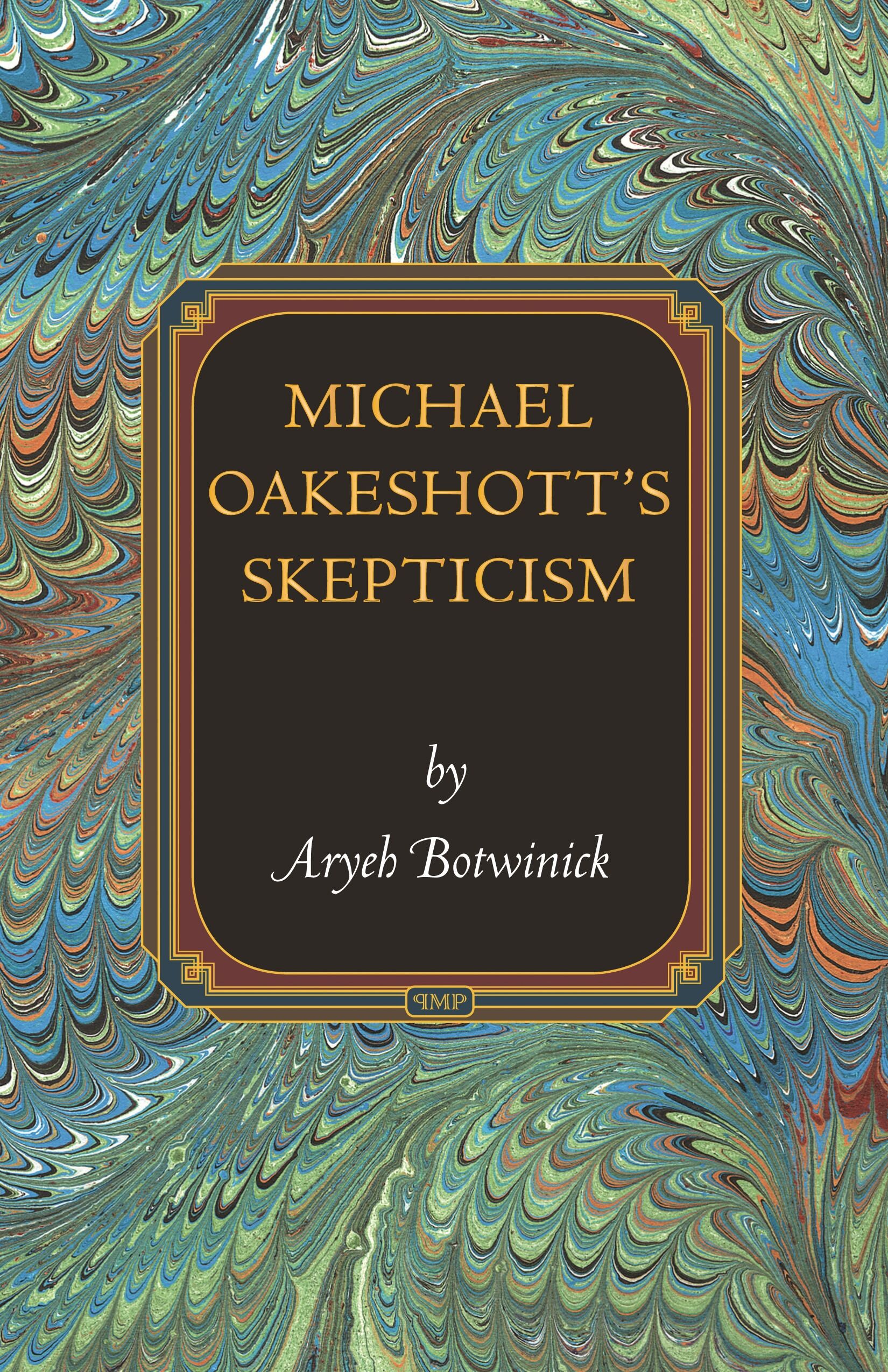
Michael Oakeshott's Skepticism
The English philosopher Michael Oakeshott (1901-1990) is known as a conservative who rejected philosophically ambitious rationalism and the grand political ideologies of the twentieth century on the grounds that no human ideas have ultimately reliable foundations. Instead, he embraced tradition and habit as the guides to moral and political life. In this book, Aryeh Botwinick presents an original account of Oakeshott's skepticism about foundations, an account that newly reveals the unity of his thought.
Botwinick argues that, despite Oakeshott's pragmatic conservatism, his rejection of all-embracing intellectual projects made him a friend to liberal individualism and an ally of what would become postmodern antifoundationalism. Oakeshott's skepticism even extended paradoxically to skepticism about skepticism itself and is better described as a \"generalized agnosticism.\" Properly conceived and translated, this agnosticism ultimately evolves into mysticism, which becomes a bridge linking philosophy and religion. Botwinick explains and develops this strategy of interpretation and then shows how it illuminates and unifies the diverse strands of Oakeshott's thought in the philosophy of religion, metaphysics, epistemology, political theory, philosophy of personal identity, philosophy of law, and philosophy of history.
eBook


Theories of Power, Poverty, and Law: In Commemoration of the Contributions of Peter Bachrach
When I reflect upon Peter Bachrach's political theorizing from the perspective of the heated primary battles of 2008, I am struck by the unusual character of his political insights and commitments—and of how relevant and compelling they are in the current political climate. Peter might be appropriately considered a radical liberal democrat—who focused very sharply on the tensions between radicalism and liberalism as political ideologies, but sought to maintain a close and continually flowing circuit between radicalism and liberalism as bodies of philosophical understanding that could mutually nurture and sustain each other. Under his hermeneutical gaze, Hobbes was not only the father of modern philosophical liberalism but the theorist who instigated the formation of participatory democracy. By clarifying for us the extent to which we lacked foursquare rational props to support our judgments across a whole spectrum of human experience from everyday practical affairs to science, religion, and metaphysics, he cleared a tremendous space for human beings to actively participate in structuring their own lives and shaping their own destinies. In addition to his explicit statements concerning human equality (whose political payoffs would be mostly unusable by a contemporary democrat), there was implicit in Hobbesian theorizing a massive re-inflection of human limitation and possibility that could make participation seem like a plausible complement to his theorizing.
Journal Article