
Catalogue Search | MBRL


Are you sure you want to remove the book from the shelf?

{{itemTitle}}
171
result(s) for
"Bourgois, Philippe"
Sort by:


Righteous dopefiend
This powerful work of gonzo journalism, predating the widespread acknowledgement of the opioid epidemic as such, immerses the reader in the world of homelessness and drug and alcohol abuse in the contemporary United States. For over a decade Philippe Bourgois and Jeff Schonberg followed a social network of two dozen heroin injectors and crack smokers in the San Francisco drug scene, accompanying them as they scrambled to generate income through burglary, larceny, panhandling, recycling, and day labor. Righteous Dopefiend interweaves stunning black-and-white photography with vivid dialogue, oral biography, detailed field notes, and critical theoretical analysis to viscerally illustrate the life of a drug addict. Its gripping narrative develops a cast of characters around the themes of violence, racism and race relations, sexuality, trauma, embodied suffering, social inequality, and power relations. The result is a dispassionate chronicle of fixes and overdoses; of survival, loss, caring, and hope rooted in the drug abusers' determination to hang on for one more day, through a \"moral economy of sharing\" that precariously balances mutual solidarity and interpersonal betrayal.
eBook

Citywide cluster randomized trial to restore blighted vacant land and its effects on violence, crime, and fear
Vacant and blighted urban land is a widespread and potentially risky environmental condition encountered by millions of people on a daily basis. About 15% of the land in US cities is deemed vacant or abandoned, an area roughly the size of Switzerland. In a citywide cluster randomized controlled trial, we investigated the effects of standardized, reproducible interventions that restore vacant land on the commission of violence, crime, and the perceptions of fear and safety. Quantitative and ethnographic analyses were included in a mixed-methods approach to more fully test and explicate our findings. A total of 541 randomly sampled vacant lots were randomly assigned into treatment and control study arms; outcomes from police and 445 randomly sampled participants were analyzed over a 38-month study period. Participants living near treated vacant lots reported significantly reduced perceptions of crime (−36.8%, P < 0.05), vandalism (−39.3%, P < 0.05), and safety concerns when going outside their homes (−57.8%, P < 0.05), as well as significantly increased use of outside spaces for relaxing and socializing (75.7%, P < 0.01). Significant reductions in crime overall (−13.3%, P < 0.01), gun violence (−29.1%, P < 0.001), burglary (−21.9%, P < 0.001), and nuisances (−30.3%, P < 0.05) were also found after the treatment of vacant lots in neighborhoods below the poverty line. Blighted and vacant urban land affects people’s perceptions of safety, and their actual, physical safety. Restoration of this land can be an effective and scalable infrastructure intervention for gun violence, crime, and fear in urban neighborhoods.
Journal Article

The Structural Violence of Hyperincarceration — A 44-Year-Old Man with Back Pain
After an uninsured Puerto Rican man with back pain, other chronic conditions, and a history of incarceration admits to a doctor at a free clinic that he’s bought oxycodone illegally, he refrains from filling his prescription or returning to the clinic, fearing rearrest.
Journal Article
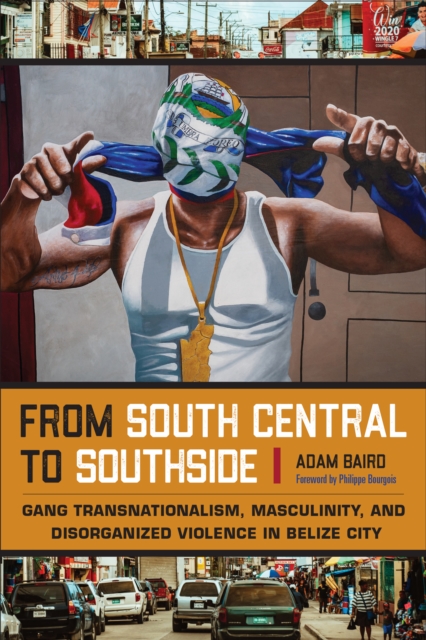
From South Central to Southside
When he visited in 2011, sociologist Adam Baird wondered what the Bloods and Crips were doing in Southside Belize City.He soon discovered that migrant Belizean members of colors gangs from South Central Los Angeles were deported there in the 1980s.
eBook

Structural vulnerability to narcotics-driven firearm violence: An ethnographic and epidemiological study of Philadelphia’s Puerto Rican inner-city
The United States is experiencing a continuing crisis of gun violence, and economically marginalized and racially segregated inner-city areas are among the most affected. To decrease this violence, public health interventions must engage with the complex social factors and structural drivers-especially with regard to the clandestine sale of narcotics-that have turned the neighborhood streets of specific vulnerable subgroups into concrete killing fields. Here we present a mixed-methods ethnographic and epidemiological assessment of narcotics-driven firearm violence in Philadelphia's impoverished, majority Puerto Rican neighborhoods.
Using an exploratory sequential study design, we formulated hypotheses about ethnic/racial vulnerability to violence, based on half a dozen years of intensive participant-observation ethnographic fieldwork. We subsequently tested them statistically, by combining geo-referenced incidents of narcotics- and firearm-related crime from the Philadelphia police department with census information representing race and poverty levels. We explored the racialized relationships between poverty, narcotics, and violence, melding ethnography, graphing, and Poisson regression.
Even controlling for poverty levels, impoverished majority-Puerto Rican areas in Philadelphia are exposed to significantly higher levels of gun violence than majority-white or black neighborhoods. Our mixed methods data suggest that this reflects the unique social position of these neighborhoods as a racial meeting ground in deeply segregated Philadelphia, which has converted them into a retail endpoint for the sale of astronomical levels of narcotics.
We document racial/ethnic and economic disparities in exposure to firearm violence and contextualize them ethnographically in the lived experience of community members. The exceptionally concentrated and high-volume retail narcotics trade, and the violence it generates in Philadelphia's poor Puerto Rican neighborhoods, reflect unique structural vulnerability and cultural factors. For most young people in these areas, the narcotics economy is the most readily accessible form of employment and social mobility. The performance of violence is an implicit part of survival in these lucrative, illegal narcotics markets, as well as in the overcrowded jails and prisons through which entry-level sellers cycle chronically. To address the structural drivers of violence, an inner-city Marshall Plan is needed that should include well-funded formal employment programs, gun control, re-training police officers to curb the routinization of brutality, reform of criminal justice to prioritize rehabilitation over punishment, and decriminalization of narcotics possession and low-level sales.
Journal Article

Hepatitis C Virus Seroconversion among Young Injection Drug Users: Relationships and Risks
The present study examined reasons for the high incidence of hepatitis C virus (HCV) infection among young injection drug users (IDUs). IDUs <30 years old who tested negative for HCV antibody were enrolled in a prospective cohort. Risk factors for seroconversion were examined using time-dependent regression analyses: 48 of 195 IDUs seroconverted to HCV, for an incidence rate of 25.1/100 person-years (95% confidence interval, 18.7–32.9/100 person-years). Independent risk factors included sharing needles with an HCV-infected sex partner (borderline statistical significance, P=.11) or a person who was not a sex partner, sharing nonsterile drug-preparation equipment, pooling money with another IDU to buy drugs, and exchanging sex for money. Ubiquitous behaviors among young IDUs, such as the forming of injecting or sexual partnerships and consequent sharing of needles and drug preparation equipment, are risk factors for HCV. Interventions to reduce HCV transmission must recognize the importance of relationships on injecting risk
Journal Article

Decolonising drug studies in an era of predatory accumulation
The cultural and political-economic valences of psychoactive drugs in the Global South offer critical insights on local and international fault lines of social inequality and profiteering. Historically, in a classic primitive accumulation process the trafficking of industrially produced euphoric substances across the globe have wreaked havoc among vulnerable populations while extracting profit for the powerful. The complex flows of capital generated both by illegal addiction markets and also by the mobilisation of licit public funds to manage their mayhem, however, suggest the contemporary utility of the concept of 'predatory accumulation'. The Enlightenment-era concept of 'primitive accumulation' usefully highlighted state violence and forcible dispossession in the consolidation of European capitalism. A contemporary reframing of these processes as predatory accumulation, however, highlights contradictory, nonlinear relationships between the artificially high profits of illegal drug sales, repressive governmentality and corporate greed. It sets these patterns of destructive profiteering in the context of our moment in history.
Journal Article

My Child's Journey Home
This article explores family separation and reunification of the disappeared Salvadoran children separated from their families during El Salvador's civil war (1980–1992) from the perspectives of adult relatives. During separation, adult relatives experienced an \"unresolvable loss.\" Following reunion, families experienced an immediate relief that was often accompanied by an \"ambiguous reunification.\" Emotions were especially complicated and painful when the separation had been a \"forced choice\" by the parent under coercive wartime political conditions. Adoptive parents strongly influenced reunification. Findings suggest that disappeared children and biological and adoptive family members need psycho-social support throughout separation and reunification.
Journal Article

Social Context of Work Injury Among Undocumented Day Laborers in San Francisco
OBJECTIVE: To identify ways in which undocumented day laborers' social context affects their risk for occupational injury, and to characterize the ways in which these workers' social context influences their experience of disability. DESIGN: Qualitative study employing ethnographic techniques of participant‐observation, supplemented by semistructured in‐depth interviews. SETTINGS: Street corners in San Francisco's Mission District, a homeless shelter, and a nonprofit day labor hiring hall. PARTICIPANTS: Thirty‐eight Mexican and Central American male day laborers, 11 of whom had been injured. PRIMARY THEMES: Anxiety over the potential for work injury is omnipresent for day laborers. They work in dangerous settings, and a variety of factors such as lack of training, inadequate safety equipment, and economic pressures further increase their risk for work injury. The day laborers are isolated from family and community support, living in a local context of homelessness, competition, and violence. Injuries tend to have severe emotional, social, and economic ramifications. Day laborers frequently perceive injury as a personal failure that threatens their masculinity and their status as patriarch of the family. Their shame and disappointment at failing to fulfill culturally defined masculine responsibilities leads to intense personal stress and can break family bonds. Despite the high incidence of work injuries and prevalence of work‐related health conditions, day laborers are frequently reluctant to use health services due to anxiety regarding immigration status, communication barriers, and economic pressure. IMPLICATIONS: On the basis of these ethnographic data, we recommend strategies to improve ambulatory care services to day laborers in 3 areas: structural changes in ambulatory care delivery, clinical interactions with individual day laborers, and policymaking around immigration and health care issues.
Journal Article