
Catalogue Search | MBRL


Are you sure you want to remove the book from the shelf?

{{itemTitle}}
3
result(s) for
"Bouverie, Tim, 1987- author"
Sort by:
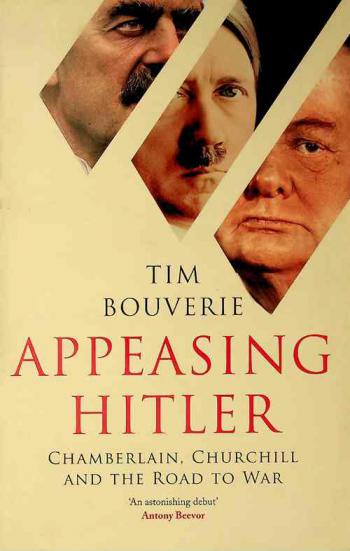
Appeasing Hitler : Chamberlain, Churchill and the road to war
On a wet afternoon in September 1938, Neville Chamberlain stepped off an aeroplane and announced that his visit to Hitler had averted the greatest crisis in recent memory. It was, he later assured the crowd in Downing Street, 'peace for our time' a moment of theatre that was the culmination of over five years of drama. Less than a year later, Germany invaded Poland and the Second World War began. Beginning with the advent of Hitler in 1933, Appeasing Hitler sweeps from the early days of the Third Reich to the beaches of Dunkirk. We enter the 10 Downing Street of Stanley Baldwin and Chamberlain, and the backrooms of Parliament where an unusual coalition of MPs including the indomitable Winston Churchill were among the few to realise that the only real choice was between 'war now or war later.' And as German troops enter the demilitarised Rhineland, march into Austria and threaten to invade Czechoslovakia, Bouverie takes us into the drawing rooms and dining clubs of fading imperial Britain, where Hitler enjoyed surprising support among the ruling class and even members of the Royal Family. Drawing on deep archival research, this is an unforgettable portrait of the ministers, aristocrats and amateur diplomats who, through their actions and inaction, shaped their country's policy and determined the fate of Europe.

Appeasement : Chamberlain, Hitler, Churchill, and the road to war
\"A new history of the British appeasement of the Third Reich on the eve of World War II\"-- Provided by publisher.
BOOK

Allies at war : the politics of defeating hitler
After the fall of France in June 1940, only Britain stood between Hitler and total victory. Desperate for allies, Winston Churchill did everything he could to bring the United States into the conflict, drive the Soviet Union and Nazi Germany apart and persuade neutral countries to resist German domination. By 1942, after the German invasion of Russia and the Japanese attack on Pearl Harbor, the British-Soviet-American alliance was in place. Yet it was an improbable and incongruous coalition, divided by ideology and politics and riven with mistrust and deceit. Churchill, Roosevelt and Stalin were partners in the fight to defeat Hitler, yet they were also rivals who disagreed on strategy, imperialism and the future of liberated Europe. Only by looking at their points of conflict, as well as of co-operation, are we able to understand the course of the war and world that developed in its aftermath.
BOOK