
Catalogue Search | MBRL


Are you sure you want to remove the book from the shelf?

{{itemTitle}}
52
result(s) for
"Braester, Yomi"
Sort by:
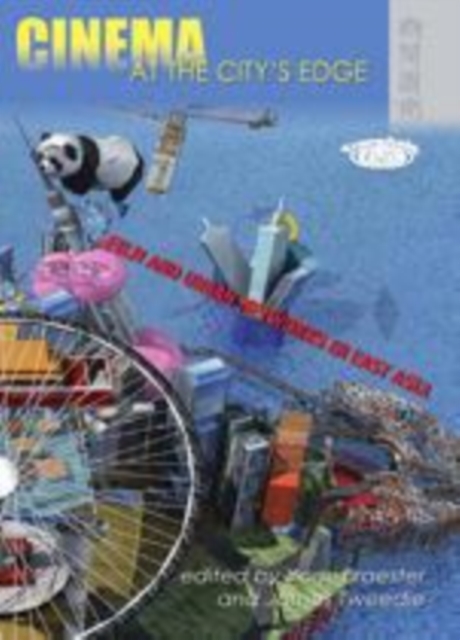
Cinema at the City's Edge
This anthology presents a number of leading voices on contemporary Asian cinema studies, including Ackbar Abbas, Chris Berry, Emilie Yueh-yu Yeh, Darrell William Davis, Dudley Andrew, Yomi Braester, Susie Jie Young Kim, Akira Mizuta Lippit, James Tweedie, Yiman Wang and Zhang Zhen. Through a range of interdisciplinary responses that simultaneously investigate film practices and technologies, the contributors offer a timely look at the ever-shifting cities in East Asia and their portrayal in cinema.
eBook

chinese cinema in the age of advertisement: the filmmaker as a cultural broker
the article looks at a model of filmmaking that has emerged since the rise of “cultural economy” in the mid-1990s. directors have collaborated with real estate developers and other entrepreneurs and become cultural brokers. they use the prestige, access and popular appeal of the cinema to establish a stronger connection between film and market forces. as filmmakers become trendsetters, their films aim not only at box office success but also at shaping economic agendas and visual experience, social networks and the aesthetic environment. filmmaking as cultural brokering has been practised by directors as disparate as the market-oriented feng xiaogang, the neorealist ning ying and the documentary producer wu wenguang.
Journal Article

Cinema at the City's Edge
This anthology presents a number of leading voices on contemporary Asian cinema studies, including Ackbar Abbas, Chris Berry, Emilie Yueh-yu Yeh, Darrell William Davis, Dudley Andrew, Yomi Braester, Susie Jie Young Kim, Akira Mizuta Lippit, James Tweedie, Yiman Wang and Zhang Zhen. Through a range of interdisciplinary responses that simultaneously investigate film practices and technologies, the contributors offer a timely look at the ever-shifting cities in East Asia and their portrayal in cinema.
eBook

The Architecture of Utopia: From Rem Koolhaas' Scale Models to RMB City
Scale models are the architectural equivalent of science fiction: they seem to relocate the viewer immediately into a better future. Their utopian claims are compounded by the fact that Plexiglas-and-Styrene models are giving way to computer-generated 3D simulations, and the digital image is fashioned as a vehicle of social transformation. Lev Manovich writes: 'new media technology acts as the most perfect realisation of the utopia of an ideal society composed from unique individuals' (2001: 61).
1
In the face of such hyperbole it is worth exploring how architectural practices, and digital technology in particular, can facilitate the representation of utopia or, conversely, allude to its breakdown. This chapter looks at a pivotal moment in the history of architectural simulation, namely the introduction of Rem Koolhaas' practices and thoughts in the People's Republic of China (PRC). I compare the work of international architects and government-supported planners with indigenous responses in installations, film, and digital art that use scale models and digital imaging to advance and critique utopian visions.
4.1
Models of the cctv tower, at content exhibition. Courtesey: Rory Hyde under Creative Commons.
Models of CCTV towers at a content exhibition. The photo shows various structures resembling network towers and other components. The main focus is on a large model with illuminated figures inside, depicting a scene with a person sitting and another figure in mid-air. Surrounding the main model are smaller structures and objects arranged neatly.
Book Chapter

Excuse Me, Your Camera Is in My Face
The title of this chapter may be taken as a polite rendering of the answer given by an interviewee in There Is a Strong Wind in Beijing (1999, henceforth Strong Wind). The filmmakers intrude on a man in a public toilet, literally caught with his pants down, direct the camera and boom at him, and ask, “Is the wind in Beijing strong?” to which he answers, “Damn! I’m squatting here and you’re still fuckin’ asking?!” (Wo cao! Zhe’r dunzhe, ni ye tamade wen ya!). Strong Wind is an exceptional documentary by any standards, yet the scene exemplifies the approach of
Book Chapter

\A Big Dying Vat\: The Vilifying of Shanghai during the Good Eighth Company Campaign
This article demonstrates how the popular perception of Shanghai as a decadent city was heightened during the campaign for Emulating the Good Eighth Company of Nanjing Road and argues for the central role of cinema in shaping the symbolism of Shanghai's locales. The campaign, which peaked in 1963, was linked to the Lei Feng campaign and was an important preamble to the Cultural Revolution. The Good Eighth Company campaign shifted the emphasis from Shanghai's image as a revolutionary bastion to that of a reactionary stronghold, a \"big dying vat\" that might contaminate the revolutionary forces and that needed to be brought back into the socialist fold. Using internal Party documents, the author maps out the campaign; by examining films, culminating in \"Sentinels under the Neon Lights\" (1964), the author also traces the dynamics that made Nanjing Road into a metonym of Shanghai's depravity and redefined the city's revolutionary status.
Journal Article

In the Name of the City
Many movies include city names in their titles. The gesture of declaring an identity between the film and the city not only grounds the film but also shackles it to its location. Understanding the film, it is implied, requires intimate knowledge of the locales it describes.
A symbiosis emerges in which the film and the city market each other. The touristy pitch in films such as Roman Holiday (1953) has been further accentuated since the rise of branding as an advertisement strategy in the 1990s. The city itself has become a brand name, promoted by a skyline that functions as
Book Chapter

The Spectral Return of Cinema: Globalization and Cinephilia in Contemporary Chinese Film
The article traces the responses of Chinese directors, industry policy makers, and critics to film's globalization and digitization. The debate in China foregrounds how the endorsement and repudiation of the CGI-rich blockbuster are based not only on aesthetic taste and concern about film's indexicality but also on an ethical engagement with the ideological consequences of globalization. Supporters of the blockbuster model have invoked the urgency to catch up with Hollywood. Those seeking an alternative have relied on cinephiliac sentiments, insisting on the specificity of cinematic traditions. Jia Zhangke's I Wish I Knew (2010) in particular calls for a reassessment of the relationship between the profilmic event and its cinematic record, underlining the ethical stakes in contemporary debates on visual memory.
Journal Article
