
Catalogue Search | MBRL


Are you sure you want to remove the book from the shelf?

{{itemTitle}}
47
result(s) for
"Brando, Marlon"
Sort by:
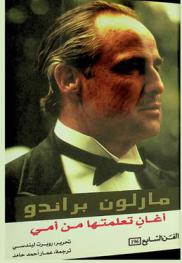
أغان تعلمتها من أمي
يتناول الكتاب صورة ذاتية صادقة وكاشفة للممثل مارلون براندو صاحب الشخصية الجذابة والفريدة من نوعها والمحبوب والأفلام القوية الرائعة، فنال بها استحسان النقاد. والتي حارب من خلالها أفكار العنصرية بصرامة، وظهر ذلك من خلال تناوله محنة الهنود الحمر. ويكشف الكتاب أسرار حياته المبكرة، ومهنته وأسفاره حول العالم ونشاطه الاجتماعي، فكانت شخصيته قريبة من الشجاعة والتواطؤ وحتى القسوة في آن واحد، فكان يحمل شخصية معقدة للغاية. بها الكثير من المشكلات النفسية مع النساء فكان لديه عدد لا يحصى منهن يتغزلن به، ولكن لسبب ما لا يعاملهن جيدا، فكانت هذه المشكلات جعلته يشعر بالضجر ولم تسمح له بالوقوع في الحب، فاضطر إلى محاربة الوحدة التي شعر بها عندما كان طفلا، وكيف أثرت تربيته في الصغر وعلاقاته المشوشة مع والديه المدمنين على الخمر وأخوته على شخصيته في ذلك الأمر. وعلاقاته المتعددة.
BOOK

Hydrothermal liquefaction of cellulose and lignin: a new approach on the investigation of chemical reaction networks
Hydrothermal liquefaction is one of the most promising technologies to convert high moisture biomass into biofuels. However, understanding the liquefaction mechanism of different biomass fractions is still a challenge. The liquefaction of both lignin and cellulose is frequently studied, but the high diversity of biomass and processes used to generate these fractions makes the direct comparison difficult. In this work, one studies the liquefaction of lignin which has been generated in the process of lignocellulosic ethanol production employing acidic steam explosion. Results are compared with the liquefaction of commercial cellulose. The results have shown that this kind of lignin could produce higher amounts of bio-oil. Moreover, a model to quantify the contribution of the main kinds of reactions to the liquefaction mechanism was proposed. Dehydration was the main reaction observed for both raw materials, however decarboxylation plays a more relevant role in lignin liquefaction, accounting for near 37% of reactions in liquefaction pathway, whereas for cellulose it represents only 13% of reactions.
Journal Article

Production of lignocellulosic gasoline using fast pyrolysis of biomass and a conventional refining scheme
This paper shows how some existing refining technologies such as fluid catalytic cracking (FCC) can be modified to process bio-oil, derived from agricultural lignocellulosic wastes such as the sugar cane straw. Tests carried out in demonstration scale (150 kg/h) show the potential of these alternative materials to produce lignocellulosic gasoline or aromatic compounds, suitable to the petrochemical industry.
Journal Article

BECOMING BRANDO THE ACTOR RECALLS HIS EARLY YEARS HERE: HIS MOTHER DRANK, HIS FATHER BULLIED HIM AND HE LOST HIS FIRST JOB IN THE MOVIES
I have been told that I was born one hour before midnight, April 3, 1924, in the Omaha Maternity Hospital. It was a breech birth but otherwise unremarkable. My family had lived for generations in Nebraska and was mostly of Irish ancestry. My mother, Dorothy Pennebaker Brando, was 27; my father, Marlon Brando Sr., was 29. I rounded out the family and made it complete: My sister Jocelyn was almost 5 when I was born, my other sister Frances almost 2. Each of us had nicknames: My mother's was Dodie; my father's Bowie, although he was Pop to me and Poppa to my sisters; Jocelyn was Tiddy; Frances was Frannie; and I was Bud. Most of my childhood memories of my father are of being ignored. I was his namesake, but nothing I did ever pleased or even interested him. He enjoyed telling me I couldn't do anything right. He had a habit of telling me I would never amount to anything. He was far more emotionally destructive than he realized. I was never rewarded by him with a comment, a look or a hug. His mother deserted him when he was 4 years old-just disappeared, ran off someplace-and he was shunted from one spinster aunt to another. I think he deeply resented women because of that experience. I loved him and hated him at the same time. He was a frightening, silent, brooding, angry, hard-drinking, rude man, a bully who loved to give orders and issue ultimatums-and he was just as tough as he talked. Perhaps that's why I've had a lifelong aversion to authority. Some of my earliest and best memories of childhood are of Ermi and of moonlight cascading through the window of my bedroom late at night. I was 3 or 4 when Ermi came to live with us in Omaha as my governess, and I see her as vividly now as I did then; she was 18 years old, sightly cross-eyed and had fine, silky dark hair. She was Danish, but a touch of Indonesian blood gave her skin a slightly dusky, smoky patina. Her laugh I will always remember. When she entered a room, I knew it without seeing or hearing her because she had a fragrant breath that was extraordinary. I don't know its chemical composition, but her breath was sweet, like crushed and slightly fermented fruit. At night, we slept together. She was nude, and so was I, and it was a lovely experience. She was a deep sleeper, and I can visualize her now lying in our bed while the moonlight burst through my window and illuminated her skin with a soft, magical amber glow.
Newspaper Article


Becoming Brando
I have been told that I was born one hour before midnight, April 3, 1924, in the Omaha Maternity Hospital. It was a breech birth but otherwise unremarkable. My family had lived for generations in Nebraska and was mostly of Irish ancestry. My mother, Dorothy Pennebaker Brando, was 27; my father...
Newspaper Article
Brando: My own story: A drink with JFK In part six of our week-long exclusive serialisation on his autobiography, Marlon Brando recalls a drunken evening with JFK
[Kennedy] said he weighed a lot less than I did, and I said, \"No, you don't.\" So we headed for the bathroom, both of us weaving, and I got on the scale. I can't remember what my weight was, but when he got on it I put my toe on the corner and made him heavier by about 25lbs, so that he weighed more than I did. I said, \"Let's go, Fatso. You lost.\" Kennedy was very Irish, unbridled, spirited and full of zest and curiosity about the women I knew in Hollywood. Then he changed the subject, looked at me suspiciously and said, \"We know what you've been doing with the American Indians,\" wagging a finger.
Newspaper Article
Brando: My own story: Into the darkest heart In part six of our week-long exclusive serialisation of his autobiography, Marlon Brando reveals how he created Colonel Kurtz in Apocalypse Now and recalls a drunken evening with JFK. Plus his most embarrassing moment in movies
\"In Heart Of Darkness,\" I told [Francis Coppola], \"[Joseph Conrad] uses this guy [Walter Kurtz] almost as a mythological figure, a man who is much larger than life. Don't misuse him in the film. Make him mysterious, distant and invisible for most of the picture except for in our minds. What makes Conrad's story so powerful is that people talk about Kurtz and readers wonder about him. They never see him, but he is part of the atmosphere. It is an odyssey and he is the heart of the Heart Of Darkness. Conrad described Kurtz as \"impressively bald. The wilderness had patted him on the head; and behold, it was like a ball - an ivory ball.\" Without informing Francis, I shaved my head, found some black clothing and tested some ideas I had with a cameraman and the lighting crew. I had them photograph me under eccentric lighting while I spoke half in darkness with a disembodied voice; then I showed the results to Francis. Based on these tests, I asked the crew to show Kurtz in shadow. The first time the audience hears his voice it comes out of the darkness. After several long moments, he makes an entrance in which only his bald head is visible; then a small part of his face is lit before he returns to the shadows.
Newspaper Article