
Catalogue Search | MBRL


Are you sure you want to remove the book from the shelf?

{{itemTitle}}
60
result(s) for
"Brandon, Pepijn"
Sort by:


De betekenis van de Atlantische slavernij voor de Nederlandse economie in de tweede helft van de achttiende eeuw
Dit artikel presenteert de eerste methodologisch onderbouwde berekening van het gewicht van op Atlantische slavernij gebaseerde activiteiten in de Nederlandse economie in de tweede helft van de achttiende eeuw. De Nederlandse Republiek was in deze periode één van de meest ontwikkelde commerciële samenlevingen in Europa. In deze economie speelde de import, verwerking en export van door slaven geproduceerde artikelen zoals suiker, koffie en tabak een belangrijke rol. Maar liefst 5,2 procent van het Nederlandse Bruto Binnenlands Product, en zelfs 10,36 procent van het BBP van Nederlands rijkste provincie Holland, was in 1770 op slavernij gebaseerd. In de onderzochte periode bestond de Nederlandse handel voor 19 procent uit producten die geteeld werden door slaven in het Atlantische gebied. De genoemde hoge percentages waren het gevolg van de vooraanstaande rol die Nederland – en Holland in het bijzonder – speelde in de distributieketen van door slaven geproduceerde goederen. Deze keten liep vanaf de bevoorrading van slavenschepen in Nederland, via de slavenhandel, de plantages, het vervoer van tropische producten naar Europa en de verwerking ervan in Nederland, tot aan de export naar het Europese achterland. Deze keten verbond Nederland niet alleen met Nederlandse koloniën zoals Suriname maar ook met andere plantagekoloniën zoals de Franse kolonie Saint Domingue. In totaal representeert de enorme stroom door slaven geproduceerde koffie, suiker en tabak ongeveer 120.000 mensjaren aan gedwongen werk op plantages in de Atlantische wereld. Dit in een tijd waarin de beroepsbevolking in Nederland zelf niet groter was dan een miljoen mensen. De groei van deze handel opende de Rijnhandel met het Duitse achterland en ondersteunde Holland in een economisch moeilijke tweede helft van de achttiende eeuw. Daarnaast profiteerden ook de scheepsbouw en de verwerkingsindustrie. Maar liefst 40 procent van de totale groei van de economie van de provincie Holland in deze periode was terug te voeren tot de slavernij.
Journal Article

War, Capital, and the Dutch State (1588-1795)
In War, Capital, and the Dutch State (1588-1795), Pepijn Brandon provides a sweeping new interpretation of the rise and fall of the Dutch Republic, focusing on the interaction between state and capital in the organisation of warfare.
eBook

‘The whole art of war is reduced to money’: remittances, short-term credit and financial intermediation in Anglo-Dutch military finance, 1688–1713
The literature on the financial revolution and the rise of the English fiscal-military state frequently gives the impression that a singular set of reforms emanating from the Glorious Revolution of 1688 changed the entire landscape of English army finances, allowing a fundamental shift from patchwork solutions based on short-term credit and managed through a system of wholesale venality to a solid system of long-term funded loans raised on an impersonal market. This article focuses on the crucial role that merchant networks and the personal connections of financial intermediaries continued to play in international troop payments arranged by the English state through the Dutch Republic. Even when the English or Dutch treasuries could find the necessary money to pay and provision the troops in time, getting the money to the military commanders in the field or to their distant suppliers often depended on long and complex credit lines. Short-term loans acquired in making military expenditure – consisting of unpaid bills to suppliers, payments advanced by officials and officers, and temporary loans contracted by financial intermediaries – as well as the widespread reliance on commercial credit in the form of bills of exchange as a way to transfer funds effectively formed the life thread of army finance. The ability to finance the military in times of exploding costs and permanent emergencies without defaulting rested not only on the capacity to draw on financial resources at home, but also on the strength of commercial and financial networks abroad. In doing so, closeness to the centres of emerging international financial capitalism seems to have been of greater importance than a specific set of institutional innovations.
Journal Article

Between the Plantation and the Port: Racialization and Social Control in Eighteenth-Century Paramaribo
Starting from an incident in the colonial port city of Paramaribo in the autumn of 1750 in which, according to the Dutch governor Mauricius, many of the proper barriers separating rich and poor, men and women, adults and children, white citizens and black slaves were crossed, this article traces some of the complexities of everyday social control in colonial Suriname. As gateways for the trade in commodities and the movement of people, meeting points for free and unfree labourers, and administrative centres for emerging colonial settlements, early modern port cities became focal points for policing interaction across racial and social boundaries. Much of the literature on the relationship between slavery and race focuses on the plantation as “race-making institution” and the planter class as the immediate progenitors of “racial capitalism”. Studies of urban slavery, on the other hand, have emphasized the greater possibilities of social contact between blacks, mestizos, and whites of various social status in the bustling port cities of the Atlantic. This article attempts to understand practices of racialization and control in the port city of Paramaribo not by contrasting the city with its plantation environment, but by underlining the connections between the two social settings that together shaped colonial geography. The article focuses on everyday activities in Paramaribo (dancing, working, drinking, arguing) that reveal the extent of contact between slaves and non-slaves. The imposition of racialized forms of repression that set one group against the other, frequently understood primarily as a means to justify the apparent stasis of the plantation system with its rigid internal divisions, in practice often functioned precisely to fight the pernicious effects of mobility in mixed social contexts.
Journal Article
Labour History and the Case against Colonialism
The controversy around Bruce Gilley's article “The Case for Colonialism” has drawn global attention to a stream of revisionist claims and visions on the history of colonialism that has emerged in academia and in the media in recent years. Authors such as Nigel Biggar in the UK, Niall Ferguson in the USA, and Pieter Emmer in the Netherlands, have all published similarly revisionist claims about colonialism, arguing that postcolonial guilt and political correctness blind the majority of their colleagues to the positive side of the colonial project. Their argument chimes with wider societal trends, transforming the revisionist defenders of empire into heroes of a reinvigorated nationalist right within and beyond academia. The public influence attained by these approaches to colonialism requires historians to expose the deep methodological flaws, misreading of historical facts, and misrepresentations of prior scholarship that characterize the writings of this emerging revisionist trend. It is for this reason that the Editorial Committee of the International Review of Social History (IRSH) has decided to devote its first ever Virtual Special Issue to labour history's case against colonialism. This article, also an introduction to the Virtual Special Issue, sifts through the logical implications of the claims made by Gilley and like-minded scholars, providing both a contextualization and a rebuttal of their arguments. After assessing the long absence of colonial labour relations from the field of interest of labour historians and the pages of the IRSH itself, this article shows the centrality of a critique of colonialism to labour history's global turn in the 1990s. Using a selection of articles on colonial labour history from the IRSH's own archive, the article not only reconstructs “labour history's case against colonialism”, but also shows why labour history's critical insights into the nature of colonialism should be deepened and extended, not discarded. La controverse autour de l'article de Bruce Gilley, “The Case for Colonialism” a attiré l'attention mondiale vers un courant de revendications et de vues révisionnistes sur l'histoire du colonialisme, né ces dernières années dans le monde universitaire et les médias. Des auteurs tels que Niger Biggar au R.U., Niall Ferguson aux E.U. et Piet Emmer aux Pays-Bas ont tous publié des revendications semblablement révisionnistes sur le colonialisme, soutenant que la culpabilité postcoloniale et le “politiquement correct” aveuglent la majorité de leurs collègues quant au côté positif du projet colonial. Leur argument fait écho à des tendances sociétales plus larges, transformant les défenseurs révisionnistes de l'empire en héros d'un droit nationaliste revigoré dans le monde universitaire et au-delà de ce dernier. L'influence publique que ces approches du colonialisme ont atteinte contraint les historiens à dénoncer les graves erreurs méthodologiques, la mauvaise lecture de faits historiques et les fausses représentations de connaissances antérieures qui caractérisent les écrits de cette tendance révisionniste émergente. C'est pour cette raison que le Comité éditorial de l’International Review of Social History (IRSH) a décidé de consacrer son tout premier Virtual Special Issue aux accusations de l'histoire du travail contre le colonialisme. Cet article, qui est également une introduction au Virtual Special Issue, examine minutieusement les implications logiques des revendications de Gilley et des érudits du même courant de pensées, en contextualisant et réfutant leurs arguments. Après avoir évalué la longue absence de la relation de travail colonial dans le champ d'intérêt des historiens du travail, et des pages de l'IRSH elle-même, cet article montre qu'une critique du colonialisme est au centre du tournant mondial de l'histoire du travail dans les années 1990. En utilisant un choix d'articles sur l'histoire du travail colonial provenant des propres archives de l'IRSH, l'article construit non seulement “l'histoire du travail contre le colonialisme”, mais montre aussi pourquoi il conviendrait d'approfondir et d’élargir les aperçus critiques de l'histoire du travail concernant la nature du colonialisme. Traduction: Christine Plard Die Kontroverse um Bruce Gilleys Aufsatz »The Case for Colonialism« (»Argumente zugunsten des Kolonialismus«) hat weltweit Aufmerksamkeit auf die stete Folge revisionistischer Aussagen und Sichtweisen auf die Kolonialgeschichte gezogen, die in den vergangenen Jahren sowohl im akademischen Bereich als auch in den Medien zu verzeichnen gewesen ist. Autoren wie Nigel Biggar aus Großbritannien, Niall Ferguson aus den USA und Piet Emmer aus den Niederlanden sind sämtlich mit vergleichbar revisionistischen Aussagen über den Kolonialismus an die Öffentlichkeit gegangen und haben dahingehend argumentiert, postkoloniale Schuldgefühle und political correctness würden der Mehrheit ihrer Kollegen die Sicht auf die positiven Aspekte des kolonialen Projekts verstellen. Diese These stößt aufgrund allgemeinerer gesellschaftlicher Entwicklungen auf Anklang, sodass die revisionistischen Fürsprecher imperialer Politik zu den Helden einer innerhalb wie außerhalb des akademischen Bereichs neu erstarkenden nationalistischen Rechten werden. Der öffentliche Einfluss, den diese Herangehensweisen an den Kolonialismus mittlerweile entfalten, verlangt von Historikern, dass sie die gravierenden methodologischen Fehler, die Fehldeutung historischer Tatsachen und die verzerrte Darstellung früherer Forschungsarbeiten aufdecken, durch die sich die Schriften dieser erstarkenden revisionistischen Tendenz auszeichnen. Aus diesem Grund hat sich der Redaktionsausschuss der International Review of Social History (IRSH) entschlossen, erstmalig eine virtuelle Sonderausgabe herauszugegeben, die arbeitshistorischen Argumenten gegen den Kolonialismus gewidmet ist. Der Beitrag, der zugleich die Einleitung zur virtuellen Sonderausgabe ist, erkundet die logischen Implikationen der von Gilley und vergleichbar gesinnten Forschern getätigten Behauptungen und arbeitet zugleich auf eine Kontextualisierung sowie auf eine Widerlegung ihrer Argumente hin. Nach einer Auseinandersetzung mit dem langjährigen arbeitshistorischen Desinteresse an kolonialen Arbeitsverhältnissen, wie es sich auch in der Themenwahl der Zeitschrift IRSH niedergeschlagen hat, arbeitet der Beitrag die zentrale Rolle heraus, die die Kritik am Kolonialismus beim global turn der Arbeitsgeschichte in den 1990er Jahren gespielt hat. Unter Rückgriff auf ausgewählte Untersuchungen zur kolonialen Arbeitsgeschichte aus dem IRSH-Archiv formuliert der Beitrag nicht nur »Argumente gegen den Kolonialismus«, sondern zeigt darüber hinaus auch die Gründe auf, aus denen es die kritischen Einsichten der Arbeitsgeschichte in das Wesen des Kolonialismus zu vertiefen und auszuweiten gilt. Übersetzung: Max Henninger La controversia suscitada por el artículo de Bruce Gilley “The Case for Colonialism” ha generado una atención generalizada hacia una corriente de planteamientos revisionistas y de visiones de la historia del colonialismo que emergió en el ámbito académico y en los medios de comunicación a lo largo de los últimos años. Autores como Nigel Biggar en el Reino Unido, Niall Ferguson en los Estados Unidos y Piet Emmer en los Países Bajos han publicado tetos revisionistas sobre la cuestión del colonialismo desde perspectivas muy semejantes sosteniendo que la culpa postcolonial y la corrección política han hecho que la mayoría de sus colegas no vean el lado positivo del proyecto colonial. Sus argumentos enlazan con tendencias sociales muchos más amplias transformando a estos revisionistas defensores del imperio en heroes de una derecha nacionalista revigorizada dentro y fuera del mundo académico. La influencia pública alcanzada por estas perspectivas sobre el colonialismo obliga a quienes nos dedicamos a la historia a poner al descubierto los graves defectos metodológicos, la interpretación errónea de hechos históricos y la tergiversación de propuestas previas que caracterizan los escritos de esta corriente revisionista emergente. Precisamente por esta razón el Comité Editorial de la International Review of Social History (IRSH) ha decidido dedicar su primer número especial virtual a la cuestión del proceso de la historia del trabajo contra el conlonialismo. En este artículo, que sirve de introducción a este número virtual especial, hace un repaso de las implicaciones lógicas de las propuestas realizadas por Gilley y otros académicos que secundan esta corriente, elaborando tanto una contetualización de estas propuestas como una refutación de los argumentos que presentan. Después de realizar un análisis de la larga ausencia de la cuestión de las relaciones laborales coloniales como ámbito de interés de los historiadores/as del trabajo, incluso en las propias páginas de la IRSH, en este artículo se demuestra la centralidad de una crítica al colonialismo en el giro global que se tuvo lugar en la historia del trabajo en la década de 1990. Haciendo uso de una selección de textos sobre la historia del trabajo colonial existentes en el archivo de la IRSH no sólo se construye un proceso de la historia del trabajo contra el colonialismo sino que también demuestra porqué debe de seguir profundizándose y extenderse la perspectiva crítica de la historia del trabajo sobre la naturaleza del colonialismo. Traducción: Vicent Sanz Rozalén
Journal Article
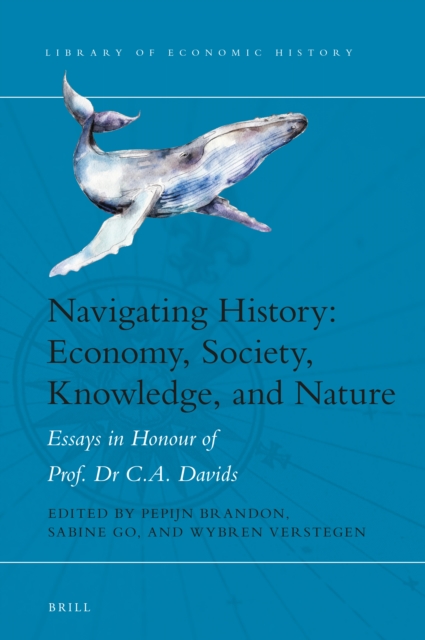
Navigating History: Economy, Society, Knowledge, and Nature
In Navigating History: Economy, Society, Knowledge, and Nature the contributors present new research that touches on the core themes developed in Karel Davids's work. The book reflects Davids's omnivorous character as a scholar. Nevertheless, there are common strands that run throughout the introduction and fourteen chapters gathered here. Major themes include resources of knowledge, cultures of learning, and humans and their natural environment. Together, these fourteen essays provide a fascinating panorama of social, economic, and environmental history of the past millennium. The book seeks to bring back the different levels of geographical scope, fusing the local, the national and the global. Contributors are: Ulbe Bosma, Pepijn Brandon, Jaap Bruijn, Petra van Dam, Victor Enthoven, Sabine Go, Marjolein 't Hart, Raoul De Kerf, Jan Lucassen, Karin Lurvink, Joel Mokyr, Marijn Molema, Bert de Munck, Pál Nyiri, Harm Pieters, Matthias van Rossum, Joost Schokkenbroek, Jeroen Touwen, Wybren Verstegen, and Jan Luiten van Zanden.
eBook