
Catalogue Search | MBRL


Are you sure you want to remove the book from the shelf?

{{itemTitle}}
8
result(s) for
"Brater, Enoch, editor"
Sort by:


The Stage Life of Props
InThe Stage Life of Props,Andrew Sofer aims to restore to certain props the performance dimensions that literary critics are trained not to see, then to show that these props are not just accessories, but time machines of the theater.Using case studies that explore the Eucharistic wafer on the medieval stage, the bloody handkerchief on the Elizabethan stage, the skull on the Jacobean stage, the fan on the Restoration and early eighteenth-century stage, and the gun on the modern stage, Andrew Sofer reveals how stage props repeatedly thwart dramatic convention and reinvigorate theatrical practice.While the focus is on specific objects, Sofer also gives us a sweeping history of half a millennium of stage history as seen through the device of the prop, revealing that as material ghosts, stage props are a way for playwrights to animate stage action, question theatrical practice, and revitalize dramatic form.Andrew Sofer is Assistant Professor of English, Boston College. He was previously a stage director.
eBook

All my sons
A searing exposure of war profiteering and the awful price paid by self-interest and greed, 'All My Sons' represented Miller's first Broadway success in 1947.
Book

Illusive utopia
No nation stages massive parades and collective performances on the scale of North Korea. Even amid a series of intense political/economic crises and international conflicts, the financially troubled country continues to invest massive amounts of resources to sponsor unflinching displays of patriotism, glorifying its leaders and revolutionary history through state rituals that can involve hundreds of thousands of performers. Author Suk-Young Kim explores how sixty years of state-sponsored propaganda performances—including public spectacles, theater, film, and other visual media such as posters—shape everyday practice such as education, the mobilization of labor, the gendering of social interactions, the organization of national space, tourism, and transnational human rights. Equal parts fascinating and disturbing, Illusive Utopia shows how the country's visual culture and performing arts set the course for the illusionary formation of a distinctive national identity and state legitimacy, illuminating deep-rooted cultural explanations as to why socialism has survived in North Korea despite the fall of the Berlin Wall, the collapse of the Soviet Union, and China's continuing march toward economic prosperity. With over fifty striking color illustrations, Illusive Utopia captures the spectacular illusion within a country where the arts are not only a means of entertainment but also a forceful institution used to regulate, educate, and mobilize the population.
eBook


A Beckett canon
A Beckett Canon by renowned theater scholar Ruby Cohn is an indispensable guide to the complete works of Samuel Beckett. Beginning in 1929 with Beckett's earliest work, the book examines the variety of genres in which he worked: poems, short stories, novels, plays, radio pieces, teleplays, reviews, and criticism. Cohn grapples with the difficulties in Beckett's work, including the opaque erudition of the early English verse and fiction, and the searching depths and syntactical ellipsis of the late works. Intended as a resource to accompany the reading of Beckett's writing—in English or French, published or unpublished, in part or as a whole—the book offers context, information, and interpretation of the work of one of the last century's most important writers.
eBook
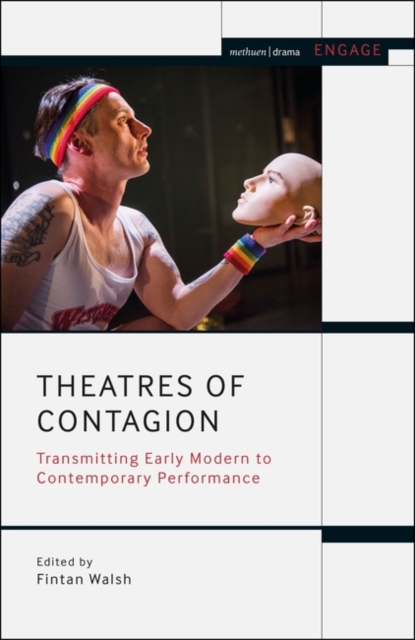
Theatres of Contagion
To what extent is theatre a contagious practice, capable of undoing and enlivening people and cultures?Theatres of Contagion responds to some of the anxieties of our current political and cultural climate by exploring theatre's status as a contagious cultural force, questioning its role in the spread or control of medical, psychological and.
eBook

Rethinking the Theatre of the Absurd
Rethinking the Theatre of the Absurd is an innovative collection of essays, written by leading scholars in the fields of theatre, performance and eco-criticism, which reconfigures absurdist theatre through the optics of ecology and environment. As well as offering strikingly new interpretations of the work of canonical playwrights such as Beckett, Genet, Ionesco, Adamov, Albee, Kafka, Pinter, Shephard and Churchill, the book playfully mimics the structure of Martin Esslin's classic text The Theatre of the Absurd, which is commonly recognised as one of the most important scholarly publications of the 20th century. By reading absurdist drama, for the first time, as an emergent form of ecological theatre, Rethinking the Theatre of the Absurd interrogates afresh the very meaning of absurdism for 21st-century audiences, while at the same time making a significant contribution to the development of theatre and performance studies as a whole. The collection's interdisciplinary approach, accessibility, and ecological focus will appeal to students and academics in a number of different fields, including theatre, performance, English, French, geography and philosophy. It will also have a major impact on the new cross disciplinary paradigm of eco-criticism.
eBook