
Catalogue Search | MBRL


Are you sure you want to remove the book from the shelf?

{{itemTitle}}
3,386
result(s) for
"Bray, Joe"
Sort by:

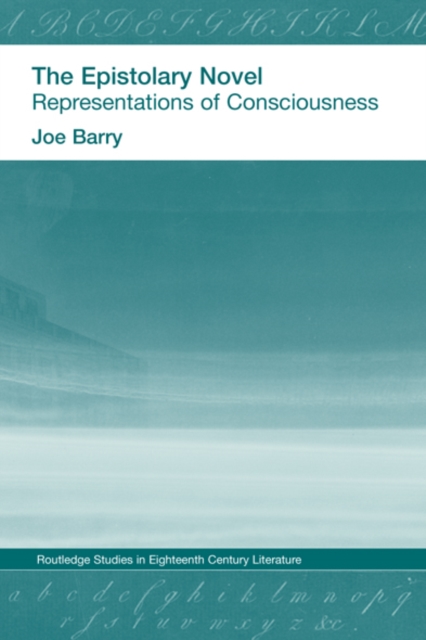
The Epistolary Novel
The epistolary novel is a form which has been neglected in most accounts of the development of the novel. This book argues that the way that the eighteenth-century epistolary novel represented consciousness had a significant influence on the later novel. Critics have drawn a distinction between the self at the time of writing and the self at the time at which events or emotions were experienced. This book demonstrates that the tensions within consciousness are the result of a continual interaction between the two selves of the letter-writer and charts the oscillation between these two selves in the epistolary novels of, amongst others, Aphra Behn, Eliza Haywood, Samuel Richardson, Fanny Burney and Charlotte Smith.
Joe Bray lectures in Literary Stylistics at the University of Stirling, having previously held positions at the Universities of Strathclyde, Cambridge and Luton. He has published on Samuel Richardson and Jane Austen and is co-editor of Ma(r)king the Text: The Presentation of Meaning on the Literary Page (Ashgate, 2000).
eBook

The Routledge Companion to Experimental Literature
What is experimental literature? How has experimentation affected the course of literary history, and how is it shaping literary expression today? Literary experiment has always been diverse and challenging, but never more so than in our age of digital media and social networking, when the very category of the literary is coming under intense pressure. How will literature reconfigure itself in the future?
The Routledge Companion to Experimental Literature maps this expansive and multifaceted field, with essays on:
the history of literary experiment from the beginning of the twentieth century to the present
the impact of new media on literature, including multimodal literature, digital fiction and code poetry
the development of experimental genres from graphic narratives and found poetry through to gaming and interactive fiction
experimental movements from Futurism and Surrealism to Postmodernism, Avant-Pop and Flarf.
Shedding new light on often critically neglected terrain, the contributors introduce this vibrant area, define its current state, and offer exciting new perspectives on its future.
This volume is the ideal introduction for those approaching the study of experimental literature for the first time or looking to further their knowledge.
eBook

Come brother Opie!
Joe Bray, “‘Come brother Opie!’: Amelia Opie and the Courtroom” (pp. 137–162) This essay examines how Amelia Opie’s lifelong fascination with the human drama of the courtroom is reflected in her fiction, specifically in her tales that revolve around trial scenes. Focusing on three examples in particular, “Henry Woodville” (1818), “The Robber” (1806), and “The Mysterious Stranger” (1813), it argues that Opie’s fictional courtrooms encourage an emotional engagement on the part of both characters and narrators, which in turn can be extended to that of the reader. In the case of “The Mysterious Stranger,” a character is on figurative trial throughout, with both narrator and reader frequently in the dark as to her motives. As a result, judgment is both hazardous and uncertain. Through a sympathetic representation of the passions and vicissitudes experienced by all those in the courtroom context, whether real or metaphorical, Opie’s fiction develops a model of readerly participation that adds a new, affective dimension to traditional accounts of the relationship between early-nineteenth-century literature and the law.
Journal Article
Come brother Opie!
This essay examines how Amelia Opie’s lifelong fascination with the human drama of the courtroom is reflected in her fiction, specifically in her tales that revolve around trial scenes. Focusing on three examples in particular, “Henry Woodville” (1818), “The Robber” (1806), and “The Mysterious Stranger” (1813), it argues that Opie’s fictional courtrooms encourage an emotional engagement on the part of both characters and narrators, which in turn can be extended to that of the reader. In the case of “The Mysterious Stranger,” a character is on figurative trial throughout, with both narrator and reader frequently in the dark as to her motives. As a result, judgment is both hazardous and uncertain. Through a sympathetic representation of the passions and vicissitudes experienced by all those in the courtroom context, whether real or meta-phorical, Opie’s fiction develops a model of readerly participation that adds a new, affective dimension to traditional accounts of the relationship between early-nineteenth-century literature and the law.
Journal Article
The epistolary novel: representation of consciousness
The epistolary novel is a form which has been neglected in most accounts of the development of the novel. This book argues that the way that the eighteenth-century epistolary novel represented consciousness had a significant influence on the later novel. Critics have drawn a distinction between the self at the time of writing and the self at the time at which events or emotions were experienced. This book demonstrates that the tensions within consciousness are the result of a continual interaction between the two selves of the letter-writer and charts the oscillation between these two selves in the epistolary novels of, amongst others, Aphra Behn, Eliza Haywood, Samuel Richardson, Fanny Burney and Charlotte Smith.
eBook

