
Catalogue Search | MBRL


Are you sure you want to remove the book from the shelf?

{{itemTitle}}
35
result(s) for
"Brendecke, Arndt"
Sort by:

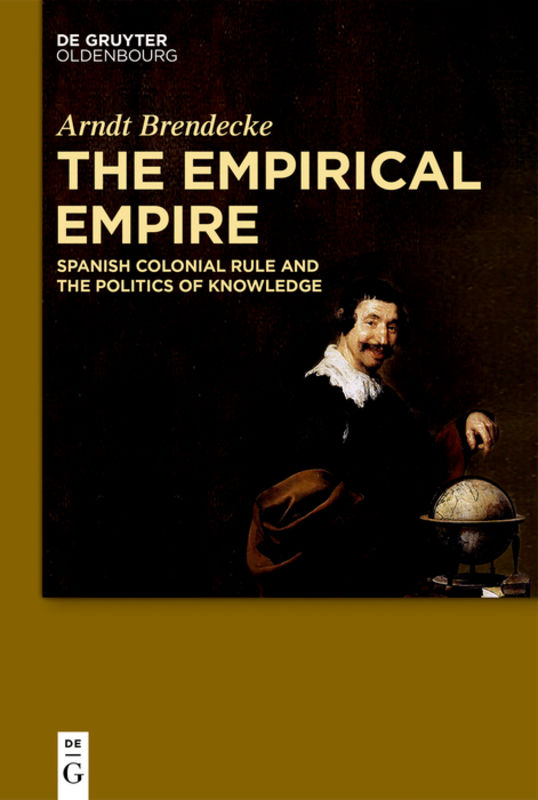
The empirical empire : Spanish colonial rule and the politics of knowledge
How was Spain able to govern its enormous colonial territories?In 1573 the king decreed that his councilors should acquire \"complete knowledge\" about the empire they were running from out of Madrid, and he initiated an impressive program for the systematic collection of empirical knowledge.
eBook
The End of Fortuna and the Rise of Modernity
The late 16th century and the first half of the 17th century saw a final resurgence of the concept of Fortuna.Shortly thereafter, this goddess of chance and luck, who had survived for millennia, rapidly lost her cultural and intellectual relevance.This volume explores the late heyday and subsequent erasure of Fortuna.
eBook
The end of Fortuna and the rise of modernity: contingency and certainty in early modern history
The late 16th century and the first half of the 17th century saw a final resurgence of the concept of Fortuna. Shortly thereafter, this goddess of chance and luck, who had survived for millennia, rapidly lost her cultural and intellectual relevance. This volume explores the late heyday and subsequent erasure of Fortuna. It examines vernacular traditions and confessional differences, analyses how the iconography and semantics of Fortuna motifs transformed, and traces the rise of complementary concepts such as those of probability, risk, fate and contingency. Thus, a multidisciplinary team of contributors sheds light on the surprising ways in which the end of Fortuna intersected with the rise of modernity.
eBook

Transformations of Knowledge in Dutch Expansion
In the seventeenth and eighteenth centuries, objects, texts and people travelled around the world on board Dutch ships. The essays in this book explore how these circulations transformed knowledge in Asian and European societies. They concentrate on epistemic consequences in the fields of historiography, geography, natural history, religion and philosophy, as well as in everyday life. Emphasizing transformations, the volume reconstructs small semantic shifts of knowledge and tentative adjustments to new cultural contexts. It unfolds the often conflict-ridden, complex and largely global history of specific pieces of knowledge as well as of generally-shared contemporary understandings regarding what could or could not be considered true. The book contributes to current debates about how to conceptualize the unsettled epistemologies of the early modern world.
eBook

Monitor Yourself!« The Controlled Emotions of Spanish Office Holders in the Early Modern Period
The essay is dedicated to the idealized emotionlessness of early modern Spanish office holders. It focuses on the so called corregidores, which represented the king and administered justice in major Spanish cities. Their instructions often idealized the total lack of pasiones or at least their complete invisibility. Such a discarding of all affects echoed the ideals of impartial judges, just kings and uninterested clerics and had specific functions, especially in cities with their high density of mutual observation. To live accordingly, that is, with one’s own emotions permanently held in check, required personal aptitude, appropriate age and a process of education and study which should convert certain habits into a ›second nature‹ and thus distinguish the corregidor significantly from the society over which he was to judge. Constantly checked by society however, this second nature would corrupt, if not protected by a rigid and permanent »vigilance over oneself«.
Journal Article

‘Arca, archivillo, archivo’: the keeping, use and status of historical documents about the Spanish Conquista
Developing a relativistic concept of the pre-modern archive, this article considers the relationship between knowledge inside and outside the archive to determine how Spain’s historical documents about its new American territories were kept and used. The starting assumption is that collections of documents about the Spanish
Conquista
circulated among people and were not permanently stored within fixed archival spaces, such as small lockable cases (
arcas
), private collections of documents (
archivillos
), or the actual state archives (
archivos
). This article thus re-evaluates the state of knowledge about the new American territories of Spain and its distribution across various archives and collections. It draws particular attention to the use of historical documents by official chroniclers of Spain and historians of the
Conquista
of the Spanish Americas.
Journal Article


El «habitus» del oficial real: ideal, percepción y ejercicio del cargo en la monarquía hispánica (siglos XV-XVIII)
Tomando como clave interpretativa y metodológica el concepto del habitus, se propone una aproximación a los oficiales hispánicos, no solo como grupo o segmento social, o en función de la evolución institucional de sus figuras y atribuciones, sino particularmente en la medida en que desarrollaron y pusieron en práctica una serie de cualidades especiales que su carácter como oficiales les conferiría. Se parte de dos presupuestos: en primer lugar, que a lo largo de la Edad Moderna se produce una suerte de profesionalización de los oficiales que va más allá del desarrollo de un nuevo ideal desgajado de la práctica cotidiana. En segundo lugar, que la única forma de conocer el alcance de dicho ideal y del proceso de profesionalización es analizar las prácticas que la encarnación del oficio exigía y la medida en que el ejercicio del mismo fue modelando el comportamiento de los individuos en el cargo e incluso desarrollando una identidad específicamente asociada a este. Dicha identidad se construiría en torno a una serie de hábitos y pautas de comportamiento que les señalarían como adecuados para el cargo, les identificarían con el estatus y las características propias del mismo y les proporcionarían una serie de herramientas de negociación que facilitarían su ejercicio.
Journal Article

Informing the Council. Central Institutions and Local Knowledge in the Spanish Empire
The chapter focuses on the historical relation between idealizations and practices of the 'informed centre' in early modern times. Contrasting the absolutist ideal of the omniscient king and historical practices of political communication from below, it tries to analyse the inherent role of local knowledge within the central administration of the Spanish Council of the Indies. Despite the council's political goal of disposing of full knowledge (entera noticia) and the advanced techniques applied (questionnaires, written reports), local knowledge turns out to be inescapably involved in the ways the council, the cosmographer and the king acquired their knowledge. This is not only ascribable to the initiative of locals writing to the court, but to 'trust' as a methodically inevitable component of every kind of information and its relation to local authorities and eye-witnesses.
Book Chapter