
Catalogue Search | MBRL


Are you sure you want to remove the book from the shelf?

{{itemTitle}}
43
result(s) for
"Brennan, Elliot"
Sort by:

The impact of decentralisation on health systems in fragile and post-conflict countries: a narrative synthesis of six case studies in the Indo-Pacific
A health system has three key stakeholders, the State—at national and subnational levels—the health service providers and the citizens. In most settings and especially in peacetime, these stakeholders are typically well-defined. In contrast, during conflict and crisis as well as during ceasefire and post-conflict peacebuilding, stakeholders in the health system are often more diverse and contested. Health systems in such settings tend to be more decentralised, de facto—often in addition to de jure decentralisation. Despite much debate on the potential benefits of decentralisation, assessing its impact on health system performance remains difficult and its effect is open to dispute in the literature. This narrative synthesis aims to support efforts to assess and make sense of how decentralisation impacts health system performance in fragile and post-conflict countries—by synthesising evidence on the impact of decentralisation on health system performance from six country case studies: Papua New Guinea, the Philippines, Indonesia, Pakistan, Myanmar and Nepal. The impact of decentralisation on health system performance is optimised when combining centralisation (e.g., the benefits of central coordination in improving efficiency) with decentralisation (e.g., the benefits of local decision making in improving equity and resilience). The findings may inform efforts to think through what to centralise or decentralise, the impacts of those choices, and how the impact may change over time as countries go through and emerge from conflict—and as they go through and recover from the Covid-19 pandemic and prepare for future pandemics.
Journal Article

Building resilient health systems through simulation exercises to strengthen emergency preparedness and response
Keywords: health emergency, health system, preparedness, response, simulation exercise, Eastern Mediterranean
Journal Article

Understanding and progressing health system decentralisation in Myanmar
Despite much lauded change in recent years, Myanmar's national health system still lags behind its regional counterparts. Decades of civil war and military rule have created, at the national level, a 'centralisation by fiat'. This was most recently consolidated prior to the beginning of the country's transition to democracy through the military-drafted 2008 constitution, which centralises power in the military. In part, Myanmar's experience is also one of 'decentralisation by default'. Civil war as well as the country's geographic and demographic circumstances led to greater independence of well over a dozen territories and varying degrees of strength in sub-national structures. In the current period of relative de-confliction and political dialogue, discussions of decentralisation and federalism have never been so important - not the least within political dialogue following the nationwide ceasefire agreement. Moreover, several recent studies have found that public health was a top tier indicator of how Myanmar people of all ethnicities perceive the country's progress. Decentralisation of the health system, as well as some centralisation or convergence of previously separate health systems in terms of information sharing and resource sharing, will be crucial to consolidate the progress made in the peace and democratisation processes. Indeed, the establishment of a decentralised and equitable public health system should be a leading priority for stabilising the country and ensuring its future prosperity. This paper explores decentralisation in Myanmar's health system through current theoretical frameworks. It suggests that Myanmar's experience of 'decentralisation by default' may find similarities in other post-conflict and conflict states.
Journal Article

A conceptual learning analysis of paired after action and intra action reviews for health emergencies
Background Processes of self‐reflection and the learning they allow are crucial before, during, and after acute emergencies, including infectious disease outbreaks. Tools—such as Action Reviews—offer World Health Organization (WHO) member states a platform to enhance learning. We sought to better understand the value of these tools and how they may be further refined and better used. Methods We searched the publicly available WHO Strategic Partnership for Health Security website for paired reports of Action Reviews, that is, reports with a comparable follow‐up report. We complemented the paired action reviews, with a literature search, including the gray literature. The paired action reviews were analyzed using the “Learning Health Systems” framework. Results We identified three paired action reviews: Lassa Fever After Action Reviews (AARs) in Nigeria (2017 and 2018), COVID‐19 Intra‐Action Reviews (IARs) in Botswana (2020 and 2021), and COVID‐19 IARs in South Sudan (2020 and 2021). Action Reviews allowed for surfacing relevant knowledge and, by engaging the right (in different contexts) actors, asking “are we doing things right?” (single loop learning) was evident in all the reports. Single loop learning is often embedded within examples of double loop learning (“are we doing the right things?”), providing a more transformative basis for policy change. Triple loop learning (“are we learning right”?) was evident in AARs, and less in IARs. The range of participants involved, the level of concentrated focus on specific issues, the duration available for follow through, and the pressures on the health system to respond influenced the type (i.e., loop) and the effectiveness of learning. Conclusion Action Reviews, by design, surface knowledge. With favorable contextual conditions, this knowledge can then be applied and lead to corrective and innovative actions to improve health system performance, and in exceptional cases, continuous learning.
Journal Article
Provision of Massive Open Online Courses in Just‐in‐Time Modalities: Experience Report of the OpenWHO.org Platform's 7 Years of Learning Response to Health Emergencies
Introduction A learning health system requires infrastructure to support its learning community. The World Health Organization's OpenWHO.org, launched in 2017, aimed to provide such infrastructure through a learning platform to equip emergency responders, health workers, and other stakeholders with critical knowledge and skills to manage health crises effectively. The free, open‐access, self‐paced learning platform addressed a wide range of public health topics. This experience report summarizes OpenWHO's impact over its 7 years as a cornerstone platform for just‐in‐time online learning in health emergencies. Methods A descriptive review of practice‐led literature at WHO was used to report on the lessons learned to prepare for the next pandemic. The research focused on the design, development, and delivery of online courses via the platform. Our analysis comprises insights gathered from 32 studies. Results Over 7 years, OpenWHO reached 9.2 million enrolments globally, delivering over 315 public health courses across 75 languages with use cases in all countries and territories. The platform has been instrumental in enhancing global health capacity, disseminating knowledge, and improving preparedness for health crises, including major outbreaks such as COVID‐19. Key lessons learned include providing learning content in just‐in‐time modalities, addressing digital divides, and adapting content for diverse cultural and linguistic contexts with an endeavor to ensure equity, inclusivity, and scalability in global health learning. Conclusion OpenWHO has significantly contributed to empowering the global health workforce, driving low‐bandwidth innovation in online education, and ensuring equitable access to critical knowledge during emergencies. Beyond documenting OpenWHO's outcomes, this experience report provides a transferable framework that can guide future Massive Open Online Courses initiatives in delivering equitable, just‐in‐time learning during public health emergencies.
Journal Article

Drugs, Guns and Rebellion: A Comparative Analysis of the Arms Procurement of Insurgent Groups in Colombia and Myanmar
Several insurgent groups have financed their arms procurement through drug trafficking, explaining in part the long duration of conflicts in drug producing countries. Incomes generated from this trade do
not
however automatically translate into improved military capabilities, since access to military-grade weapons typically requires tacit or active state support. Hence, two groups with similar types of funding can still have access to very different types of armaments, impacting their operational capability. This paper compares the arms procurement of the Fuerzas Armadas Revolucionarias de Colombia (FARC) and the United Wa State Army (UWSA) in Myanmar. Both insurgent groups have procured arms through networks and with finances from the drug trade. The UWSA's 20,000-strong force and significant armaments, including Man-portable air defense systems (MANPADS) believed to be provided by China, is largely supported by these illicit activities and the networks they provide. FARC has ample access to small arms, the acquisition of which has been financed by taxation of the drug trade. In spite of significant incomes, FARC however until very recently lacked access to MANPADS, a fact which has significantly hampered its ability to withstand the Colombian counterinsurgency campaign, specifically targeted aerial assaults. The exploratory comparisons drawn in this paper offer insights into how insurgent groups can pass a crucial threshold of arms procurement, funded by illicit activities, that renders their dissolution far more difficult, while also highlighting the continued importance of state support in explaining rebel group resilience.
Journal Article

Rare earth diplomacy
This conclusion presents some closing thoughts on the key concepts discussed in the preceding chapters of this book. The book contributes to the convergence thesis, which stipulates the consolidation of different positions in the debate around scarcity of natural resources. What should be very apparent at this point is that the availability of resources is a topic that attracts the attention of a wide range of professionals, scholars and activists. In the resulting discourse, global resource scarcity is often regarded as a catalyst for conflict. Scarcity enters the conceptualisation of resource exploitation as a confounding factor. Implicit in the dominant treatment of scarcity is the expectation that increasing demand for resources will outpace supply and generate tensions around access to, and availability of, resources. The interventions of the contributors suggest, however, that the collaboration can perform a broader and at the same time deeper role of realigning society's apparent infatuation with scarcity.
Book Chapter
Rare Earth Elements: A Critical Strategic Resource in Asia
Rare Earth Elements (REE) are increasingly a critical strategic resource in Asia. These 17 elements are used in the production of most high-tech products from advanced military technology to mobile phones. China currently holds claim to over 90 percent of the world's production. Chinese export reductions in 2012 forced high-tech firms to relocate to China and forced other governments, particularly in the developed world, to pour money into their exploration and production. In 2010, China temporarily halted shipments of REEs to Japan following a diplomatic crisis. In October 2012, after much instability in Sino-Japanese relations, India agreed to start exporting to Japan to support Tokyo's REE-intensive tech industry. Today, greater resource sharing and cooperation between India, South Korea and Japan aim to offset the production monopoly of China. However, with the bulk of production still centered in China, Beijing maintains a significant influence over high-tech manufacturing in Asia. Further diplomatic crises, such as that between China and Japan in 2010, cannot be ruled out. This paper builds on research in the field of critical resources in Asia. It explores regional security vis-à-vis the use of natural resources as an instrument of foreign policy in Asia.
Journal Article
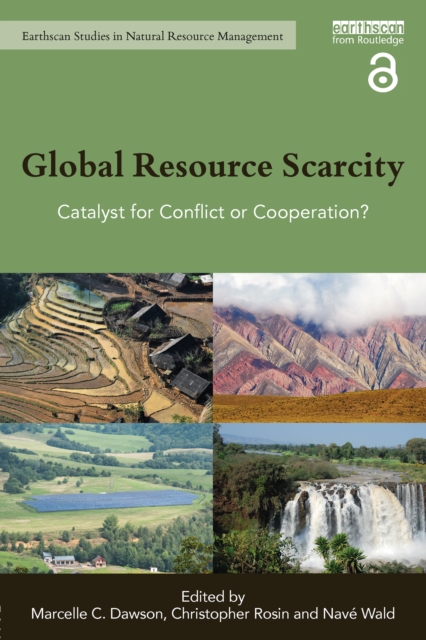
Global Resource Scarcity
A common perception of global resource scarcity holds that it is inevitably a catalyst for conflict among nations; yet, paradoxically, incidents of such scarcity underlie some of the most important examples of international cooperation. This volume examines the wider potential for the experience of scarcity to promote cooperation in international relations and diplomacy beyond the traditional bounds of the interests of competitive nation states. The interdisciplinary background of the book’s contributors shifts the focus of the analysis beyond narrow theoretical treatments of international relations and resource diplomacy to broader examinations of the practicalities of cooperation in the context of competition and scarcity. Combining the insights of a range of social scientists with those of experts in the natural and bio-sciences—many of whom work as ‘resource practitioners’ outside the context of universities—the book works through the tensions between ‘thinking/theory’ and ‘doing/practice’, which so often plague the process of social change. These encounters with scarcity draw attention away from the myopic focus on market forces and allocation, and encourage us to recognise more fully the social nature of the tensions and opportunities that are associated with our shared dependence on resources that are not readily accessible to all. The book brings together experts on theorising scarcity and those on the scarcity of specific resources. It begins with a theoretical reframing of both the contested concept of scarcity and the underlying dynamics of resource diplomacy. The authors then outline the current tensions around resource scarcity or degradation and examine existing progress towards cooperative international management of resources. These include food and water scarcity, mineral exploration and exploitation of the oceans. Overall, the contributors propose a more hopeful and positive engagement among the world’s nations as they pursue the economic and social benefits derived from natural resources, while maintaining the ecological processes on which they depend.
eBook
Journalist Grant Wahl Has Died While Covering the World Cup in Qatar; Trump Faces String of Legal Troubles Even as President Biden Celebrates Key Victories; Lawsuit Seeks to End New York Ban on Convicted Felons Serving on Juries; A Texas Family Deprived of Justice; Double Standard in Every Justice System. Aired 10-11p ET
Federal judge declines to hold Trump in contempt of court overclassified docs, presses Trump team and DOJ to work together. January6th committee considers criminal referrals for at least four othersbesides Trump. The parents of Bakari Henderson continue to findjustice for him five years after he was killed in Greece whilevisiting with friends; The panel weighed in on why people of colorwere not given justice unlike with white people. GUESTS: Nayyera Haq, Joe Walsh, Daudi Justin, Phil Henderson, JillHenderson
Transcript