
Catalogue Search | MBRL


Are you sure you want to remove the book from the shelf?

{{itemTitle}}
95
result(s) for
"Briere, John"
Sort by:


CHILDHOOD MALTREATMENT, INTERVENING VARIABLES, AND ADULT PSYCHOLOGICAL DIFFICULTIES IN WOMEN: An overview
This article reviews the complex relationship between child maltreatment and later psychosocial difficulties among adult women. Specifically addressed are (a) the various forms of childhood maltreatment, (b) the range of potential long-term psychological outcomes, and (c) important contextual variables that mediate or add to these maltreatment–symptom relationships. Among the latter are characteristics of the abuse and/or neglect; effects of impaired parental functioning; premaltreatment and postmaltreatment psychobiology; qualities of the parent–child attachment; abuse and/or neglect-related affect dysregulation that may lead to further symptomatology; the extent to which the child responds with significant emotional or behavioral avoidance; and whether later traumas are also present. Also relevant are sociocultural contributors to both child maltreatment and maltreatment effects, especially poverty and marginalization. Clinical and research implications are considered.
Journal Article
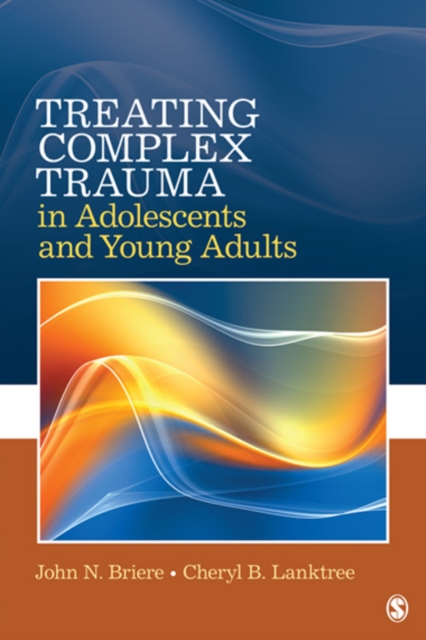
Treating complex trauma in adolescents and young adults
Treating Complex Trauma in Adolescents and Young Adults is the first empirically-validated, multi-component manual to guide practitioners and students in the treatment of multi-traumatized adolescents and young adults. Best-selling author, John Briere, and renowned clinician, Cheryl Lanktree, outline a hands-on, culturally-sensitive approach to the most challenging of young clients: those suffering from complex trauma histories, multiple symptoms, and, in many cases, involvement in a range of problematic behaviors. This model, Integrated Treatment of Complex Trauma for Adolescents (ITCT-A), integrates a series of approaches and techniques, which are adapted according to the youth’s specific symptoms, culture, and age. Components include relationship-building, psychoeducation, affect regulation training, trigger identification, cognitive processing, titrated emotional processing, mindfulness training, collateral treatments with parents and families, group therapy, and system-level advocacy.
eBook

Immediate and Long-Term Impacts of Child Sexual Abuse
Research conducted over the past decade indicates that a wide range of psychological and interpersonal problems are more prevalent among those who have been sexually abused than among individuals with no such experiences. Although a definitive causal relationship between such difficulties and sexual abuse cannot be established using current retrospective research methodologies, the aggregate of consistent findings in this literature has led many to conclude that childhood sexual abuse is a major risk factor for a variety of problems. This article summarizes what is currently known about these potential impacts of child sexual abuse. The various problems and symptoms described in the literature on child sexual abuse are reviewed in a series of broad categories including posttraumatic stress, cognitive distortions, emotional pain, avoidance, an impaired sense of self, and interpersonal difficulties. Research has demonstrated that the extent to which a given individual manifests abuse-related distress is a function of an undetermined number of abuse-specific variables, as well as individual and environmental factors that existed prior to, or occurred subsequent to, the incidents of sexual abuse.
Journal Article


Intimate Partner Violence in Male Survivors of Child Maltreatment
Intimate partner violence (IPV) is a major public health concern. Yet, despite an increasingly extensive literature on interpersonal violence, research on male victims of IPV remains sparse and the associations between different forms of child maltreatment (CM) and IPV victimization and perpetration in men remains unclear. The present meta-analysis evaluated five different forms of CM (sexual, physical, and psychological abuses, neglect, and witnessing IPV) as they predicted sexual, psychological, and physical IPV perpetration and victimization in men. Overall, most available studies examined men as perpetrators of IPV, whereas studies of victimization in men were relatively scarce. Results reveal an overall significant association (r = .19) between CM and IPV. The magnitude of this effect did not vary as a function of type (perpetration vs. victimization) or form (sexual, psychological, or physical) of IPV. Although all forms of CM were related to IPV, with effect sizes ranging from .05 (neglect and IPV victimization) to .26 (psychological abuse and IPV victimization), these associations varied in magnitude according to the type of CM. Findings suggest the importance of expanding research on CM and IPV to include a range of different kinds of abuse and neglect and to raise concerns about the experience of men as both victims and perpetrators of IPV.
Journal Article