
Catalogue Search | MBRL


Are you sure you want to remove the book from the shelf?

{{itemTitle}}
1,313
result(s) for
"Brinkley, Douglas"
Sort by:


The prognostic value of the relationship between right atrial and pulmonary capillary wedge pressure in diverse cardiovascular conditions
Physical examination of jugular venous pressure is used to estimate right atrial (RA) pressure and infer left-sided filling pressure to assist volume management. Previous studies in advanced heart failure patients showed about 75% concordance between RA and pulmonary capillary wedge (PCW) pressures. We sought to determine the relationship between mean RA and mean PCW pressure and assess the clinical significance in a broad population of patients undergoing invasive right heart catheterization (RHC).
We examined 4135 RHC cases at a single academic medical center from February 2007 to December 2014, analyzing baseline variables, hemodynamic data, and in-hospital mortality.
The overall Pearson correlation for mean RA and PCW pressures was 0.68 with 70% concordance between dichotomized pressures (RA ≥10 and PCW ≥22 mmHg). Results were similar in subgroups with heart failure (r=0.67, 72%), STEMI/NSTEMI (r=0.60, 69%), unstable angina (r=0.78, 69%), stable/no angina (r=0.72, 67%), and valvular disease (r=0.61, 72%; Chi-square P=.15). Mean RA pressure was independently associated with in-hospital mortality in multivariate analysis (OR 1.12 [95% CI 1.081-1.157] per 1 mmHg increase, P<.001). The RA/PCW ratio was not independently associated with in-hospital mortality. Mean RA pressure was also weakly associated with worse renal function (rho=−0.16, P<.001).
In patients undergoing right catheterization for diverse indications, the mean RA and PCW pressures correlated moderately well, but there was discordance in a sizable minority, in whom assessment of left-sided filling pressures using estimated jugular venous pressure may be misleading. Elevated right atrial pressure is a marker for in-hospital mortality.
Journal Article


Dynamic responses to rejection in the transplanted human heart revealed through spatial transcriptomics
Allograft rejection following solid-organ transplantation is a major cause of graft dysfunction and mortality. Current approaches to diagnosis rely on histology, which exhibits wide diagnostic variability and lacks access to molecular phenotypes that may stratify therapeutic response. Here, we leverage image-based spatial transcriptomics at sub-cellular resolution in longitudinal human cardiac biopsies to characterize transcriptional heterogeneity in 62 adult and pediatric heart transplant (HT) recipients during and following histologically-diagnosed rejection. Across 28 cell types, we identified significant differences in abundance in
+ and
+ T cells, fibroblasts, and endothelial cells across different biological classes of rejection (cellular, mixed, antibody-mediated). We observed a broad overlap in cellular transcriptional states across histologic rejection severity and biological class and significant heterogeneity within rejection severity grades that would qualify for immunomodulatory treatment. Individuals who had resolved rejection after therapy had a distinct transcriptomic profile relative to those with persistent rejection, including 216 genes across 6 cell types along pathways of inflammation, IL6-JAK-STAT3 signaling, IFNα/IFNγ response, and TNFα signaling. Spatial transcriptomics also identified genes linked to long-term prognostic outcomes post-HT. These results underscore importance of subtyping immunologic states during rejection to stratify immune-cardiac interactions following HT that are therapeutically relevant to short- and long-term rejection-related outcomes.
Journal Article

American moonshot : John F. Kennedy and the great space race
\"July 20, 1969. It's a day that has earned a spot in history. It's the day that America was the first nation to succeed in sending two astronauts--Buzz Aldrin and Neil Armstrong--to the moon. But what led to this unforgettable event? What were the stakes riding on the Apollo 11's safe landing? In acclaimed author Douglas Brinkley's first young readers' edition, space fans will get the riveting and factual backstory of arguably the most significant achievement of the 20th century.\"-- Publisher's website.
Book

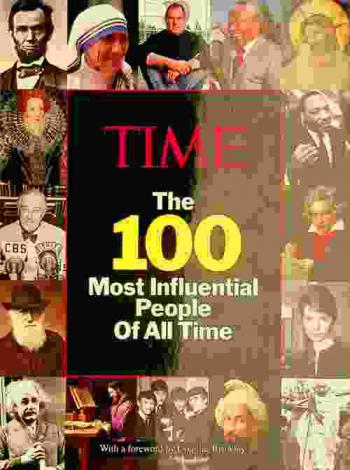
The 100 most influential people of all time
Books includes beacons of the spirit, explorers and visionaries, leaders of the people, and architects of culture.
Book
Sunday morning. Opinion : Douglas Brinkley on Reagan
In this segment, Douglas Brinkley honors Ronald Reagan.
Streaming Video