
Catalogue Search | MBRL


Are you sure you want to remove the book from the shelf?

{{itemTitle}}
15
result(s) for
"Britten, Shona"
Sort by:
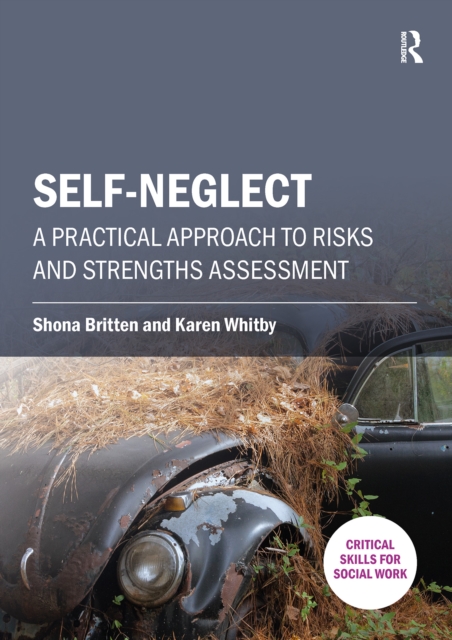
Self-neglect
Self-neglect covers a wide range of behaviours, from neglecting to care for one's personal hygiene and health to one's surroundings; this can include behaviours such as hoarding of objects and/or animals. As presentation of self-neglect cases vary greatly, assessment and support planning should be made on an individualised case by case basis. Self-neglect describes a Risks and Strengths assessment model which has been developed by practitioners as an aid to frontline workers across all sectors, as well as agencies holding responsibilities in Safeguarding Adults. It aims to support and structure the effective, timely and consistent assessment of risk in relation to key social and healthcare factors of self-neglect both on an individual case level and at a strategic level in contributing to community/locality needs analysis and reporting mechanisms; including annual Safeguarding Adults Board Reports.
eBook

Introduction
Over recent years the world of social care, particularly in relation to work with adults, has changed dramatically. These changes have seen a shift from a focus upon social workers as the commissioners of packages of care, to more full re-engagement with the professional values of empowerment, autonomy, and person-centred control. Social workers are viewed as enabling and supportive agents of change, with interventions centred upon the achievement of the priorities and outcomes that people themselves identify and want to achieve.
Book Chapter
The Care Act (2014) and safeguarding adults at risk
This chapter gives an overview of the Care Act (2014) ' well-being' principle and considers how this interacts and focuses social work practice in cases of self-neglect and safeguarding adults interventions. The SnapShots included in this chapter are:
»
balancing attitudes and values in person-centred safeguarding;
»
the Care Act (2014) and supporting carers;
»
a person in a position of trust.
Book Chapter
Case studies
This chapter looks at illustrative case scenarios using the risks and strengths assessment model framework and associated example documentation. A descriptive 'volcano effect' graphic (Figures 4.1 and 4.2) is included with each case study as a visual learning tool. These illustrations are designed to reflect the multi-faceted and complex nature of self-neglect in adults, and offer example support planning elements. The analogy of a volcano was created as an aid for representing how key factors of self-neglect interact and can contribute to situations which require the supportive intervention of others, these being:
»
Mental Health;
»
Physical Health;
»
Environment;
»
Exploitation/Abuse;
»
Social Network;
»
Attachment.
Book Chapter
Community strength and resilience
This chapter suggests an approach, developed by the authors, to building sustainable community strength and resilience. This model directly relates to and interfaces with the role of agencies represented on locality Safeguarding Adults Boards (SAB), in addressing self-neglect and the people who are at risk of self-neglect living in their area. The SnapShot in this chapter describes a suggested personalised community consolidation model of practice which places the person at the centre of all interventions from the individual through to multi-agency planning and decision-making.
Book Chapter
A model intervention framework in self-neglect cases
In this chapter we introduce and describe a practical model intervention framework for use in self-neglect cases, which is supported by illustrative examples and sample document formats. This framework format has developed over our years of social work practice with adults of all ages and has supported us to take a structured approach in our work, which we have found to be both logical and most importantly supportive. We have strengthened our suggested model with simple guidance notes and a set of SnapShots which describe several important areas of practice.
»
Decision-making and disengagement
»
Information-sharing
»
Equality and diversity
»
Fluctuating mental capacity
»
Lasting Power of Attorney (LPA)
»
Independent advocacy
»
Co-production
»
Advance support planning
Book Chapter
Risks and Strengths Assessment Model
In this chapter we detail our model for risks and strengths assessment in self-neglect. This is supported by full guidance notes, illustrative examples and sample document formats, including SnapShots that summarise some key areas for consideration which build on those given in previous chapters:
»
driving and restraining forces to consider when utilising a conceptual risk assessment model - a human perspective;
»
criminal offences and safeguarding adults;
»
domestic abuse;
»
The Modern Slavery Act (2015);
»
exploitation and illegal drug use;
»
grooming;
»
mate crime.
Figure 3.1
The Risks and Strengths Balance
Book Chapter
The concept of self-neglect and multi-agency considerations
This chapter discusses the concept and context of issues associated with people who self-neglect. It includes:
»
examples of behaviours we have identified through our work with adults of all ages who self-neglect and are those which practitioners may come across in their work;
»
what the Care and Support Statutory Guidance says about responses to self-neglect;
»
multi-agency considerations in this complex area of work;
»
a table outlining five Safeguarding Adults Reviews where self-neglecting behaviours were a factor;
»
SnapShots on:
»
clutter and extreme hoarding;
»
Diogenes and Noah Syndromes.
Book Chapter