
Catalogue Search | MBRL


Are you sure you want to remove the book from the shelf?

{{itemTitle}}
218
result(s) for
"Brookfield, Stephen"
Sort by:

Teaching for critical thinking : tools and techniques to help students question their assumptions
\"In Teaching for Critical Thinking, Stephen Brookfield builds on his last three decades of experience running workshops and teaching courses on critical thinking to explore how student learn to think this way, and what teachers can do the help students develop this capacity. He outlines a basic protocol of critical thinking as a learning process that focuses on uncovering and checking assumptions, exploring alternative perspectives, and taking informed actions as a result. Written to address the broad range of disciplines, this book fosters a shared understanding of critical thinking and helps to various constituencies adapt general principles to specific disciplinary contexts\"-- Provided by publisher.
Book

Teaching Race
A real-world how-to manual for talking about race in the classroom Educators and activists frequently call for the need to address the lingering presence of racism in higher education. Yet few books offer specific suggestions and advice on how to introduce race to students who believe we live in a post-racial world where racism is no longer a real issue. In Teaching Race the authors offer practical tools and techniques for teaching and discussing racial issues at predominately White institutions of higher education. As current events highlight the dynamics surrounding race and racism on campus and the world beyond, this book provides teachers with essential training to facilitate productive discussion and raise racial awareness in the classroom. A variety of teaching and learning experts provide insights, tips, and guidance on running classroom discussions on race. They present effective approaches and activities to bring reluctant students into a consideration of race and explore how White teachers can model racial awareness, thereby inviting students into the process of examining their own white identity. Racism, whether evident in overt displays or subconscious bias, has repercussions that reverberate far beyond the campus grounds. As the cultural climate increasingly calls out for more research, education, and dialogue on race and racism, this book helps teachers spotlight issues related to race in a way that leads to effective classroom and campus conversation. The book provides guidance on how to: * Create the conditions that facilitate respectful racial dialogue by building trust and effectively negotiating conflict * Uncover each student's own subconscious bias and the intersectionality that exists even in the most homogenous-appearing classrooms * Help students embrace discomfort, and adapt discussion methods to accommodate issues of race and positionality * Avoid common traps, mistakes, and misconceptions encountered in anti-racist teaching Predominantly White institutions face a number of challenges in dealing with race issues, including a lack of precedence, an absence of modeling by campus leaders, and little clear guidance on how teachers can identify and challenge racism on campus. Teaching Race is packed with activities, suggestions and exercises to provide practical real-world help for teachers trying to introduce race in class
eBook

The skillful teacher : on technique, trust, and responsiveness in the classroom
\"Energize your classrooms with these key techniques for college teaching. Students say the best teachers get them excited about learning, stretch their thinking, and keep them actively involved in class. But with increasingly diverse classrooms and constantly changing technology, each semester throws up new challenges for engaging students. Discover how to keep your teaching, and your students, energized with The Skillful Teacher, a practical guide to effective techniques, approaches, and methods for today's college classrooms.\"-- Provided by publisher.
Book

Creating Engaging Discussions
If you have ever been apprehensive about initiating classroom discussion because you fear silence, the domination of a couple of speakers, superficial contributions, or off-topic remarks, this book provides strategies for creating a positive learning experience.
You'll never again have to suffer a silence so profound that you can, as described by contributors to this book, hear the crickets chirping outside.
eBook

Teaching race : how to help students unmask and challenge racism
\"Discusses how to help students unmask and challenge racism\"-- Provided by publisher.
Book
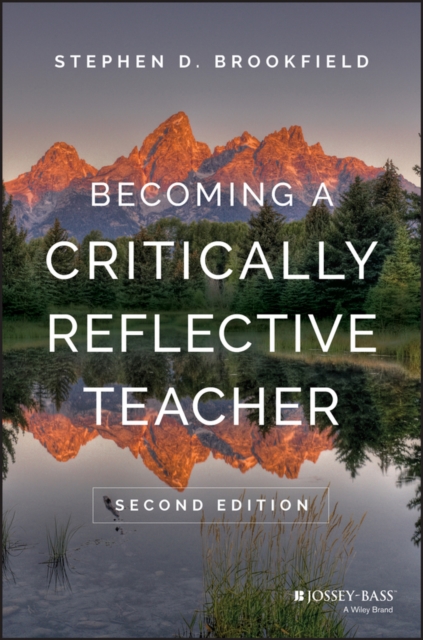
Becoming a critically reflective teacher
A practical guide to the essential practice that builds better teachers.Becoming a Critically Reflective Teacher is the landmark guide to critical reflection, providing expert insight and practical tools to facilitate a journey of constructive self-critique.
eBook

Radicalizing learning : adult education for a just world
Designed as an alternative introduction to the field, covering the traditional topics of adult learning, adult development, program planning, training, teaching, and research.
Book
The discussion book : 50 great ways to get people talking
Build teams, make better decisions, energize groups, and think out of the box Do you need a resource that you can pull out of your pocket to liven up meetings, trainings, professional development, and teaching? The fifty easily applied techniques in this timely manual spur creativity, stimulate energy, keep groups focused, and increase participation. Whether you're teaching classes, facilitating employee training, leading organizational or community meetings, furthering staff and professional development, guiding town halls, or working with congregations, The Discussion Book is your go-to guide for improving any group process. Each of the concrete techniques and exercises is clearly described with guidance on selection and implementation, as well as advice on which pitfalls to avoid. All of the techniques: * Offer new ways to engage people and energize groups * Get employees, students, colleagues, constituents, and community members to participate more fully in deliberative decision-making * Encourage creativity and openness to new perspectives * Increase collaboration and build cohesive teams * Keep groups focused on important topics and hard-to-address issues Derived from the authors' decades of experience using these exercises with schools, colleges, corporations, the military, social movements, health care organizations, prisons, unions, non-profits, and elsewhere, The Discussion Book will help you guide discussions that matter.
eBook

Engaging imagination : helping students become creative and reflective thinkers
\"How to nurture creativity in tomorrow's innovators--today's college students. When asked what they want colleges to emphasize most, employers didn't put science, computing, math, or business management first. According to AAC&U's 2013 employer survey, 95% of employers give hiring preference to college graduates with skills that will enable them to contribute to innovation in the workplace. In Engaging Imagination: Helping Students Become Creative and Reflective Thinkers, two leading educators help college instructors across disciplines engage students in nurturing creativity and innovation for success beyond the classroom. Alison James, an expert in creative arts education, and Stephen D. Brookfield, Distinguished University Professor of Education, outline how creative exploration can extend students' reflective capabilities in a purposeful way, help them understand their own potential and learning more clearly, and imbue students with the freedom to generate and explore new questions. This book: shows why building creative skills pays dividends in the classroom and in students' professional lives long after graduation; offers research-based, classroom-tested approaches to cultivating creativity and innovation in the college setting; provides practical tools for incorporating \"play\" into the college curriculum; draws on recent advances in the corporate sector where creative approaches have been adopted to reinvigorate thinking and problem-solving processes; and includes examples from a variety of disciplines and settings. Engaging Imagination is for college and university faculty who need to prepare students for the real challenges of tomorrow's workplace\"-- Provided by publisher.
Book
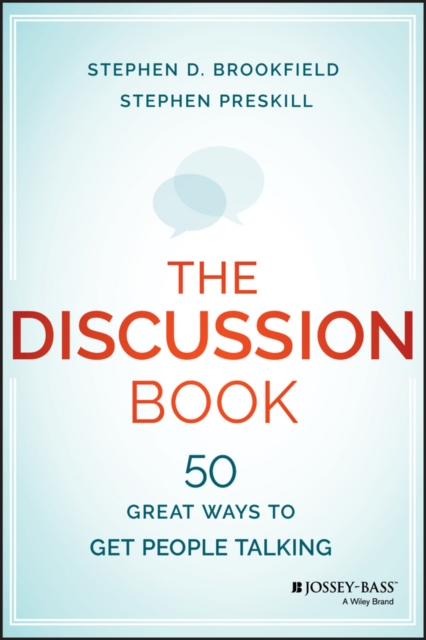
The discussion book: fifty great ways to get people talking
Build teams, make better decisions, energize groups, and think out of the box Do you need a resource that you can pull out of your pocket to liven up meetings, trainings, professional development, and teaching? The fifty easily applied techniques in this timely manual spur creativity, stimulate energy, keep groups focused, and increase participation. Whether you′re teaching classes, facilitating employee training, leading organizational or community meetings, furthering staff and professional development, guiding town halls, or working with congregations, The Discussion Book is your go-to guide for improving any group process. Each of the concrete techniques and exercises is clearly described with guidance on selection and implementation, as well as advice on which pitfalls to avoid. All of the techniques: Offer new ways to engage people and energize groups Get employees, students, colleagues, constituents, and community members to participate more fully in deliberative decision-making Encourage creativity and openness to new perspectives Increase collaboration and build cohesive teams Keep groups focused on important topics and hard-to-address issues Derived from the authors′ decades of experience using these exercises with schools, colleges, corporations, the military, social movements, health care organizations, prisons, unions, non-profits, and elsewhere, The Discussion Book will help you guide discussions that matter.
eBook