
Catalogue Search | MBRL


Are you sure you want to remove the book from the shelf?

{{itemTitle}}
38
result(s) for
"Broun, Kenneth S"
Sort by:

Saving Nelson Mandela : the Rivonia trial and the fate of South Africa
Discusses the trials of Nelson Mandela and the politics of South Africa.
BOOK
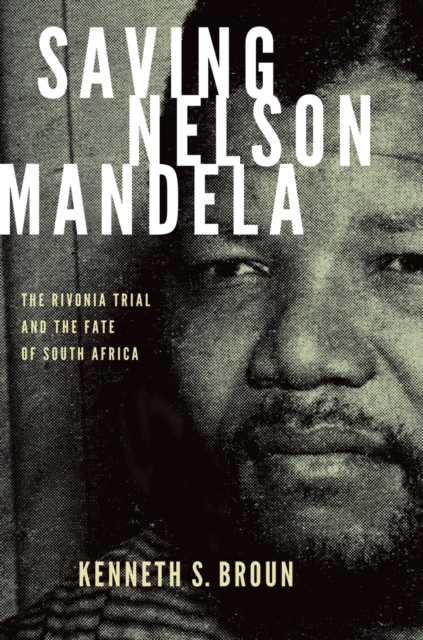
Saving Nelson Mandela : the Rivonia trial and the fate of South Africa
When South Africa's apartheid government charged Nelson Mandela with planning its overthrow in 1963, most observers feared that he would be sentenced to death. But the support he and his fellow activists in the African National Congress received during his trial not only saved his life, but also enabled him to save his country. This book recreates the trial—called the “Rivonia” Trial after the Johannesburg suburb where police seized Mandela. Based upon interviews with many of the case's primary figures and portions of the trial transcript, the book situates readers inside the courtroom at the imposing Palace of Justice in Pretoria. Here, the trial unfolds through a dramatic narrative that captures the courage of the accused and their defense team, as well as the personal prejudices that colored the entire trial. The Rivonia trial had no jury and only a superficial aura of due process, combined with heavy security that symbolized the apartheid government's system of repression. The book shows how outstanding advocacy, combined with widespread public support, in fact backfired on apartheid leaders, who sealed their own fate. Despite his twenty-seven-year incarceration, Mandela's ultimate release helped move his country from the racial tyranny of apartheid toward democracy.
eBook


Teaching Advocacy the N.I.T.A. Way
Young lawyers need opportunities to learn trial techniques
Journal Article


Thinking about the Judgment and Sentence
This chapter examines the judgment and sentence in the Rivonia Trial. Mandela and his co-accused were unlikely to have been found innocent under the Sabotage Act, but application of the harsh provisions of that law was not necessary. The defendants—with the exception of Lionel Bernstein, James Kantor, and perhaps Ahmed Kathrada—admitted that they committed the acts prohibited in the Sabotage Act.
Book Chapter
A Pyrrhic Victory
This chapter focuses on the main part of the Rivonia Trial. Mandela and his co-accused were charged under the Sabotage Act, which not only carries the maximum of death penalty but also gave procedural advantages to the state that it did not have in other criminal prosecutions. The indictment alleged that the defendants had conspired with some seventy other persons and several organizations, including the African National Congress and the Communist Party of South Africa, to commit “acts of sabotage, preparatory to and in facilitation of, armed invasion and guerilla warfare.” The accused and their counsel challenged the legal sufficiency of the charges.
Book Chapter
Mandela at the Dock
This chapter focuses on the defense team's decision to have Nelson Mandela make a statement to the court rather than testify during the Rivonia Trial. The most crucial decision the defense needed to make is whether or not to have the accused give testimony as witnesses. If the accused elect not to testify, the prosecution cannot require them to take the witness stand. Mandela, his fellow defendants, and their lawyers faced a dilemma: If they testified truthfully, most would have to admit to enough charges to ensure their conviction. But if they do not testify, they would lose the opportunity to make their case against apartheid. George Bizos of the defense team persuaded the others that most of the accused should testify. In his statement, Mandela would admit to many of the acts charged in the indictment, deny others, and make his case.
Book Chapter