
Catalogue Search | MBRL


Are you sure you want to remove the book from the shelf?

{{itemTitle}}
82
result(s) for
"Bruijn, Mirjam de"
Sort by:


Ordinary Violence and Social Change in Africa
Ordinary social violence, - recurrent mental or physical aggression occurring between closely related people - structures social relationships. This book presents anthropological case studies from different parts of Africa to show how this 'hidden' violence is essential to understand social change.
eBook


Prevalence of Schistosoma Haematobium Measured by a Mobile Health System in an Unexplored Endemic Region in the Subprefecture of Torrock, Chad
Schistosoma haematobium is a parasitic digenetic trematode responsible for schistosomiasis (also known as bilharzia). The disease is caused by penetration of the skin by the parasite, spread by intermediate host molluscs in stagnant waters, and can be treated by administration of praziquantel. Schistosomiasis is considered to be an important but neglected tropical disease.
The aim of this pilot study was to investigate the prevalence of schistosomiasis in the subprefecture of Torrock, an endemic area in Chad where no earlier investigation had been conducted and no distribution system for pharmacotherapy has ever existed.
This study examined 1875 children aged 1 to 14 years over a period of 1 year. After centrifugation, urine examination was performed by a direct microscopic investigation for eggs. The investigation was conducted with a mobile health (mHealth) approach, using short message service (SMS) for communication among parents, local health workers, a pharmacist, and a medical doctor. An initial awareness campaign requested parents to have their children examined for schistosomiasis. Urine was then collected at home by the parents following the SMS request. Urine results that proved positive were sent to a medical doctor by SMS, who in turn ordered a pharmacist by SMS to distribute praziquantel to the infected children.
Direct microscopic examination of urine found 467 positive cases (24.9% of the total sample). Of all male and female samples, 341 (34%) and 127 (14.4%) samples were positive, respectively. The infection rate was equally distributed over age groups. The newly developed mHealth system had a limited level of participation (8%) from an estimated total of 25,000 children in the target group.
The prevalence of schistosomiasis in children in the subprefecture of Torrock is moderately high. Efforts will be required to enhance the awareness of parents and to reach a larger percentage of the population. Systematic governmental measures should be put in place as soon as possible to increase awareness in the area and to diagnose and treat cases of schistosomiasis.
Journal Article


Strength beyond Structure
Drawing on a wide range of historical and anthropological case studies from various parts of Africa, this anthology provides an understanding of the importance of agency in processes of social transformation, especially in the context of crisis and structural constraint.
eBook
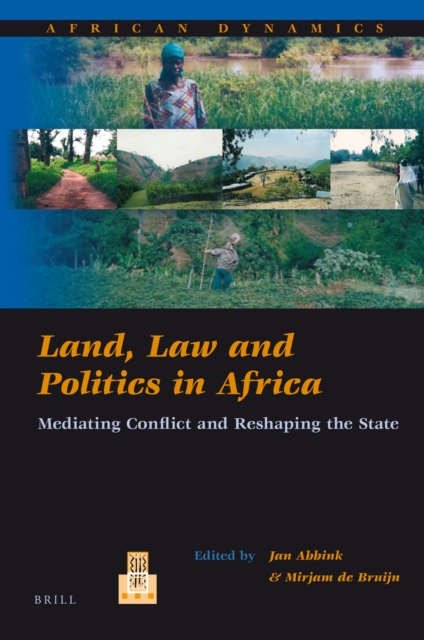
Land, Law and Politics in Africa
This book offers a series of new studies on the dynamics of political and legal culture as well as of conflict management in contemporary Africa, taking inspiration from and honoring the scholarly contributions and impact of Prof. Gerti Hesseling (1946-2009) in African Studies.
eBook

Rethinking resistance : revolt and violence in African history
Rethinking Resistance analyzes revolts from the nineteenth century and early colonial Africa, post-colonial rebellions and recent conflicts in African history by reinterpreting resistance studies in the light of current scholarly thought and linking them to new conceptual perspectives on the changing nature of violence.
eBook

“Human Telephone Lines”: Flag Post Mail Relay Runners in British Southern Cameroon (1916–1955) and the Establishment of a Modern Communications Network
The flag post mail relay runners, a communications system established in Cameroon during British colonial rule, laid the foundations for the communications structure of this colonial state. They were a remnant of a pre-colonial communications system and, with the advancement of “modern” communications structures such as roads, telephone lines, and post houses, the flag post runner gradually disappeared. This article explores the role of the runners for the colonial administration in Cameroon and is based mostly on archival research. It describes the runners’ system and how it influenced the colonial communications landscape. In addition, the questions of how these runners were involved in the colonial state and what forms of resistance emerged among runners are analysed. Finally, the article discusses the degree to which the subsequent construction of roads, telegraphic communications, and postal networks reflected the role played by mail runners in the British colonial period up to the 1950s.
Journal Article

Slam Poetry in Chad
How can we explain the increasing popularity of slam poetry among youth in societies colored by long histories of conflict and political repression? This article explores this question for the rise of slam poetry in Chad, since 2014, a conflict-ridden country with an authoritarian regime and deep poverty, characteristics of a society in duress. In Francophone Africa we can speak of a slam poetry movement, where slam as a form of expression and the organization of (inter)national festivals has become a space of belonging for young people in Africa who must cope with societies in duress. The article is the result of my long engagement with the slam scene in francophone Africa.
Journal Article