
Catalogue Search | MBRL


Are you sure you want to remove the book from the shelf?

{{itemTitle}}
182
result(s) for
"Brundage, W. Fitzhugh"
Sort by:

Civilizing torture : an American tradition
\"The pilgrims and merchants who first came to America from Europe professed an intention to create a society free of the barbarism of Old World tyranny and New World savagery. But over the centuries Americans have turned to torture during moments of crisis at home and abroad and have debated its legitimacy in defense of law and order. From the Indian wars to Civil War POW prisons and early penitentiaries, from \"the third degree\" in police stations and racial lynchings to the War on Terror, US institutions have proven to be far more amenable to torture than the nation's professed commitment to liberty would suggest. Legal and racial inequality fostered many opportunities for state agents to wield excessive power, which they justified as essential for American safety and well-being. Reconciling state violence with the aspirations of Americans for social and political justice is an enduring challenge. By tracing the historical debates about the efficacy of torture and the attempt to adapt it to democratic values, Civilizing Torture reveals the recurring struggle to decide what limits Americans are willing to impose on the power of the state. At a time of escalating rhetoric aimed at cleansing the nation of the undeserving, as well as ongoing military involvement in conflicts around the world, the debate over torture remains a critical and unresolved part of America's tradition.\"-- Provided by publisher
Book

A New History of the American South
For at least two centuries, the South's economy, politics,
religion, race relations, fiction, music, foodways and more have
figured prominently in nearly all facets of American life. In A
New History of the American South , W. Fitzhugh Brundage joins
a stellar group of accomplished historians in gracefully weaving a
new narrative of southern history from its ancient past to the
present. This groundbreaking work draws on both well-established
and new currents in scholarship, among them global and Atlantic
world history, histories of African diaspora, and environmental
history. The volume also considers the experiences of all people of
the South: Black, white, Indigenous, female, male, poor, and elite.
Together, the essays compose a seamless, cogent, and engaging work
that can be read cover to cover or sampled at leisure. Contributors
are Peter A. Coclanis, Gregory P. Downs, Laura F. Edwards, Robbie
Ethridge, Kari Frederickson, Paul Harvey, Kenneth R. Janken, Martha
S. Jones, Blair L. M. Kelley, Kate Masur, Michael A. McDonnell,
Scott Reynolds Nelson, James D. Rice, Natalie J. Ring, and Jon F.
Sensbach.
eBook


Beyond Blackface
This collection of thirteen essays, edited by historian W. Fitzhugh Brundage, brings together original work from sixteen scholars in various disciplines, ranging from theater and literature to history and music, to address the complex roles of black performers, entrepreneurs, and consumers in American mass culture during the early twentieth century.Moving beyond the familiar territory of blackface and minstrelsy, these essays present a fresh look at the history of African Americans and mass culture. With subjects ranging from representations of race in sheet music illustrations to African American interest in Haitian culture,Beyond Blackfacerecovers the history of forgotten or obscure cultural figures and shows how these historical actors played a role in the creation of American mass culture. The essays explore the predicament that blacks faced at a time when white supremacy crested and innovations in consumption, technology, and leisure made mass culture possible. Underscoring the importance and complexity of race in the emergence of mass culture,Beyond Blackfacedepicts popular culture as a crucial arena in which African Americans struggled to secure a foothold as masters of their own representation and architects of the nation's emerging consumer society.The contributors are:Davarian L. Baldwin, Trinity CollegeW. Fitzhugh Brundage, University of North Carolina at Chapel HillClare Corbould, University of SydneySusan Curtis, Purdue UniversityStephanie Dunson, Williams CollegeLewis A. Erenberg, Loyola University ChicagoStephen Garton, University of SydneyJohn M. Giggie, University of AlabamaGrace Elizabeth Hale, University of VirginiaRobert Jackson, University of TulsaDavid Krasner, Emerson CollegeThomas Riis, University of Colorado at BoulderStephen Robertson, University of SydneyJohn Stauffer, Harvard UniversityGraham White, University of SydneyShane White, University of Sydney
eBook

Reconstruction in the South
The article also argues that the conventional end date of Reconstruction obscures political, economic, and social processes that were not synchronized with presidential elections.
Journal Article
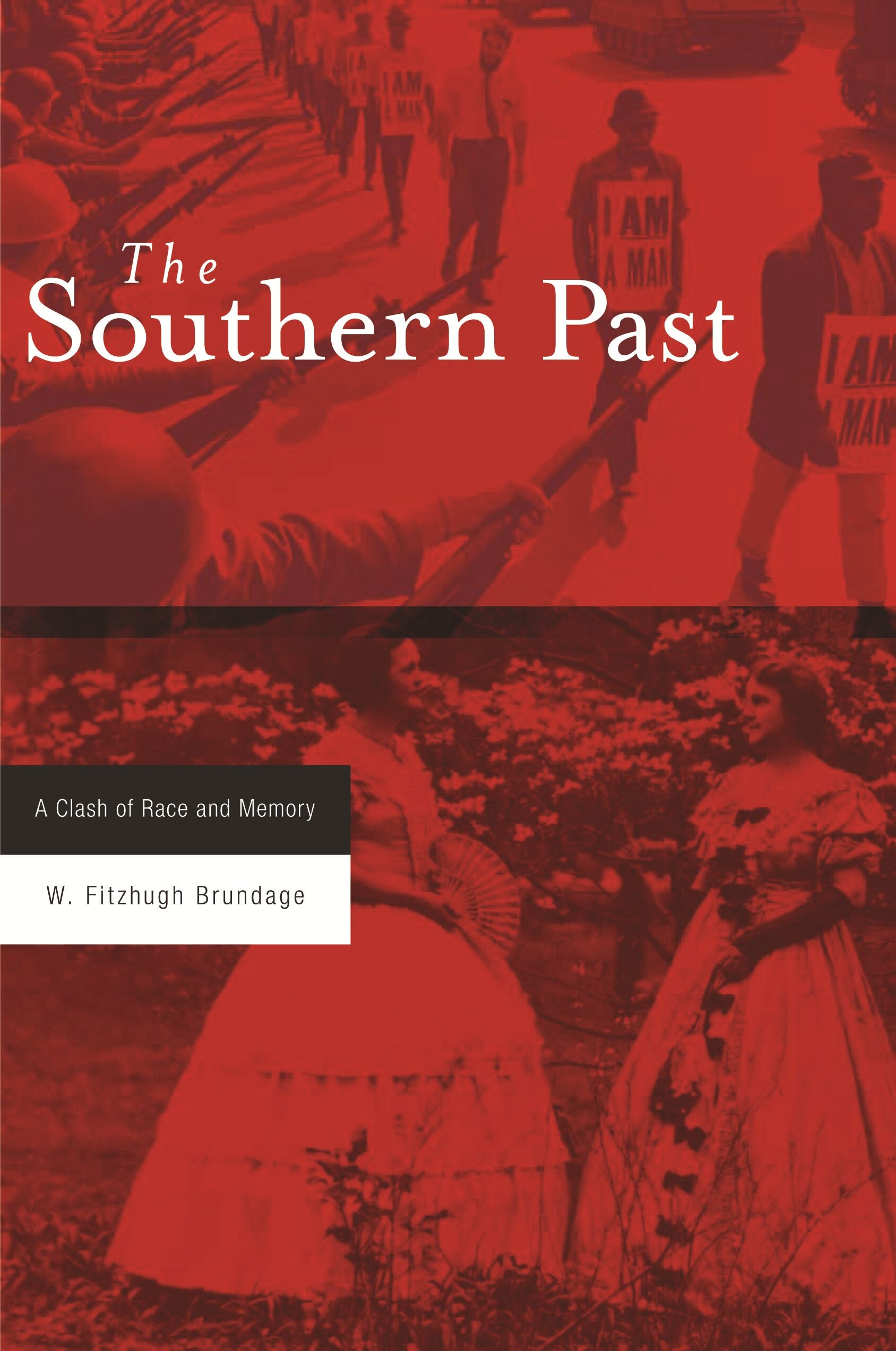
The Southern past : a clash of race and memory
Since the Civil War whites and blacks have struggled over the meanings and uses of the Southern past. The Southern Past argues that these battles are ultimately about who has the power to determine what we remember of the past, and whether that remembrance will honor all Southerners or only select groups.
eBook

The folly of Jim Crow : rethinking the segregated South
Although the origins, application, and socio-historical implications of the Jim Crow system have been studied and debated for at least the last three-quarters of a century, nuanced understanding of this complex cultural construct is still evolving, according to Stephanie Cole and Natalie J. Ring, coeditors of The Folly of Jim Crow: Rethinking the Segregated South. Indeed, they suggest, scholars may profit from a careful examination of previous assumptions and conclusions along the lines suggested by the studies in this important new collection.
Based on the March 2008 Walter Prescott Webb Memorial Lectures at the University of Texas at Arlington, this forty-third volume in the prestigious series undertakes a close review of both the history and the historiography of the Jim Crow South. The studies in this collection incorporate important perspectives that have developed during the past two decades among scholars interested in gender and politics, the culture of resistance, and the hegemonic function of ‘whiteness.’
By asking fresh questions and critically examining long-held beliefs, the new studies contained in The Folly of Jim Crow will, ironically, reinforce at least one of the key observations made in C. Vann Woodward’s landmark 1955 study: In its idiosyncratic, contradictory, and multifaceted development and application, the career of Jim Crow was, indeed, strange. Further, as these studies demonstrate—and as alluded to in the title—it is folly to attempt to locate the genesis of the South’s institutional racial segregation in any single event, era, or policy. Instead, as W. Fitzhugh Brundage notes in his introduction to the volume, formal segregation evolved through an untidy process of experimentation and adaptation.
eBook

Journalism and Jim Crow
White publishers and editors used their newspapers to build,
nurture, and protect white supremacy across the South in the
decades after the Civil War. At the same time, a vibrant Black
press fought to disrupt these efforts and force the United States
to live up to its democratic ideals. Journalism and Jim
Crow centers the press as a crucial political actor shaping
the rise of the Jim Crow South. The contributors explore the
leading role of the white press in constructing an anti-democratic
society by promoting and supporting not only lynching and convict
labor but also coordinated campaigns of violence and fraud that
disenfranchised Black voters. They also examine the Black press's
parallel fight for a multiracial democracy of equality, justice,
and opportunity for all-a losing battle with tragic consequences
for the American experiment.
Original and revelatory, Journalism and Jim Crow opens
up new ways of thinking about the complicated relationship between
journalism and power in American democracy.
Contributors: Sid Bedingfield, Bryan Bowman, W. Fitzhugh
Brundage, Kathy Roberts Forde, Robert Greene II, Kristin L.
Gustafson, D'Weston Haywood, Blair LM Kelley, and Razvan Sibii
eBook

Remembering the Revolution
In today’s United States, the legacy of the American Revolution looms large. From presidential speeches to bestselling biographies, from conservative politics to school pageants, everybody knows something about the Revolution. Yet what was a messy, protracted, divisive, and destructive war has calcified into a glorified founding moment of the American nation. Disparate events with equally diverse participants have been reduced to a few key scenes and characters, presided over by wellmeaning and wise old men. Recollections of the Revolution did not always take today’s form. In this lively collection of essays, historians and literary scholars consider how the first three generations of American citizens interpreted their nation’s origins. The volume introduces readers to a host of individuals and groups both well known and obscure, from Molly Pitcher and “forgotten father” John Dickinson to African American Baptists in Georgia and antebellum pacifists. They show how the memory of the Revolution became politicized early in the nation’s history, as different interests sought to harness its meaning for their own ends. No single faction succeeded, and at the outbreak of the Civil War the American people remained divided over how to remember the Revolution.
eBook