
Catalogue Search | MBRL


Are you sure you want to remove the book from the shelf?

{{itemTitle}}
617
result(s) for
"Brunette, Peter"
Sort by:


Michael Haneke
In this book, Peter Brunette analyzes the theatrical releases of Austrian film director Michael Haneke, including The White Ribbon, winner of the 2009 Palme d'Or at the Cannes Film Festival. Perhaps best known to U.S. audiences for Cache, The Piano Teacher, and his remake of his own disturbing Funny Games, Haneke has consistently challenged critics and film viewers to consider their own responsibility for what they watch when they seek to be \"merely\" entertained by such studio-produced Hollywood thrillers. _x000B__x000B_Brunette highlights Haneke's brilliant use of uncompromising visual and aural techniques to express complex themes. His most recent films contain what has become his hallmark: a moment of violence or shock that is not intended to be exploitative, but that nevertheless goes beyond the conventional boundaries of most art cinema. Lauded for graphically revealing the powerful influence of contemporary media on social behavior, his films offer a chilling critique of contemporary consumer society. Brunette discusses Haneke's major releases in English, French, and German, including the film that first brought him to international attention, Benny's Video. The first full-length study of Haneke's work in any language, this book also includes an interview with the director that explores his motivations and methods._x000B_
eBook
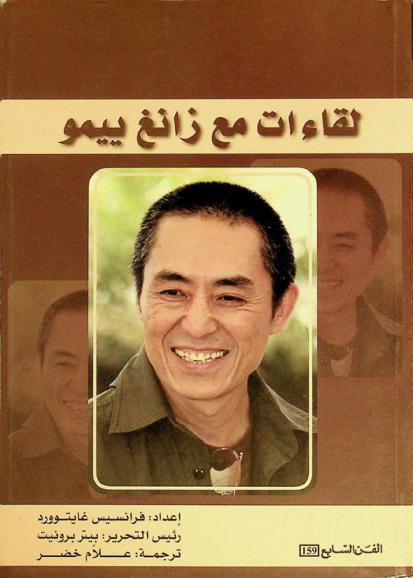
لقاءات مع زانغ ييمو
يتضمن مقابلات مع المخرج الصيني المشهور لأفلام مثل Red Sorghum (1987) Shanghai Triad (1995)، و Not One Less (1999) و Trilogy Ju Dou (1990) Raise the Red الفانوس (1992)، وقصة تشيو جو (1992). تظهر العديد من هذه المقابلات باللغة الإنجليزية لأول مرة. يأتي البعض من الدوريات الصادرة باللغة الصينية، وبعضها لم ينشر قط حتى الآن. في هذه المحادثات مع نقاد بارزين مثل ميشيل سيمنت وروبرت سكلار وتام كوك كان ، يناقش تشانغ ييمو كل أفلامه ويتحدث بصراحة عن عمله كمصور سينمائي وممثل. موضوعات معينة-الرمزية في استخدامه للألوان، واستخدام الأبطال النساء في معظم أفلامه، وعلاقات العمل مع المخرجين التايوانيين هو هسياو هسين وإدوارد يانغ-ظهرت عدة مرات في المقابلات. يظهر اهتمامات قوية في الأدب وتكييف الأفلام للنصوص. يتحدث تشانغ أيضا عن عمله مع الممثلة غونغ لي وأدوارها في ستة من أفلامه، والتي يصور معظمها دور المرأة التي تعيش في المجتمع الأبوي الإقطاعي. كان تشانغ أحد خريجي أكاديمية بكين لعام 1982-ما يسمى بالجيل الخامس من صانعي الأفلام، الذين كانوا الجيل الأول من المخرجين الصينيين الذين تم تدريبهم بعد الثورة الثقافية. يناقش تأثير الأكاديمية عليه وعلى أقرانه. غالبا ما يذكر أن العديد من زملائه الخريجين يعملون الآن في التلفزيون لأن الدولة لم تعتبر أفلامهم ناجحة. وقال لصحيفة نيويورك تايمز عام 2000 : \"إذا لم يسترد الفيلم تكاليفه في الصين، فلن تصنع فيلما آخر. ولن تصنع فيلما دون جذب المستثمرين\". يستخدم تشانغ فنه كوسيلة لاستكشاف القمع وتدميره للعلاقات الإنسانية، ويتحدث بصراحة عن آثار قوانين الرقابة في البر الرئيسي للصين على عمله. غالبا ما يتحسر على عدم وصوله إلى الأفلام ، وخاصة الأفلام الدولية خلال شبابه. بينما يناقش أسلوبه في صناعة الأفلام ويقارنها بالحالة الحالية لصناعة الأفلام الصينية، تم الكشف عنه على أنه منفتح ومتواضع، ولكنه متحمس بشدة لفنه. سيراه القراء الذين يقابلونه خلال هذه المقابلات أنه معقد وجاد ومتواضع بهدوء مثل أفلامه.
Book


Wong Kar-wai
Wong Kar-Wai traces this immensely exciting director's perennial themes of time, love, and loss, and examines the political implications of his films, especially concerning the handover of former British colony Hong Kong to the People's Republic of China. This book is the first in any language to cover all of Wong's work, from his first film, As Tears Go By, to his most recent, the still unreleased 2046. It also includes his best-known, highly honored films, Chungking Express, Happy Together, and above all, In the Mood for Love. Most importantly, Peter Brunette describes the ways in which Wong's supremely visual films attempt to create a new form of cinema by relying on stunning, suggestive visual images and audio tracks to tell their story, rather than on traditional notions of character, dialogue, and plot. The question of Wong Kar-wai's use of genre film techniques in art films is also explored in depth.
eBook
Tears, Time, and Love
In 1988, when Wong Kar-wai directed his first film,As Tears Go By, he had already been working in the Hong Kong film industry for a number of years, principally as a scriptwriter. The project was initially given to Wong as a star vehicle for Andy Lau, a popular singer at the time (Carbon 36), initiating a pattern that has continued throughout the director’s career. In an interview with the French journalPositif, whose critics were early supporters of Wong’s films, the director explained thatAs Tears Go Bywas originally intended to be the second film in a trilogy:
Book Chapter
A Talk with Benôit Jacquot
Benôit Jacquot, born in 1947, an assistant director for Marguerite Duras and others before turning filmmaker, has quietly built a body of subtle, serious feature films in France, which, added up, constitute an unarguably important career. Today’s Cahiers du Cinéma endorses Jacquot. But his films—thoughtful, talky, literary—don’t have the cachet of other current Cahiers director picks, who are more youth-oriented and with a techno-Hollywood feel. Though his first feature was made in 1975, Jacquot has only slowly been distributed around the world. With A Single Girl (1995) and Seventh Heaven (1997), he became a critics’ favorite.
Credit the
Book Chapter
Interviews with Michael Haneke
Interview by Michel Cieutat, translated from the French by Peter Brunette. (Originally appeared inPositif478 [December 2000]: 25–29.) Interview conducted at Cannes, May 20, 2000; translated from the German by Robert Gray.
Michel cieutat: [Code Unknown] is the second time, after 71Fragments of a Chronology of Chance, that you’ve opted for a story based on a structured fragmentation. You seem very interested in this narrative mode.
Michael haneke: For me, it’s not an interest but rather a necessity because the cinema of distraction [Haneke’s term for Hollywood or any non-art film] claims that we can show reality
Book Chapter
Cardiotrophin 1 stimulates beneficial myogenic and vascular remodeling of the heart
The post-natal heart adapts to stress and overload through hypertrophic growth, a process that may be pathologic or beneficial (physiologic hypertrophy). Physiologic hypertrophy improves cardiac performance in both healthy and diseased individuals, yet the mechanisms that propagate this f~vorable adaptation remain poorly defined. We identify the cytokine cardiotrophin 1 (CT1) as a factor capable of recapitulating the key features of physiologic growth of the heart including transient and reversible hypertrophy of the myocardium, and stimulation of cardiomyocyte-derived angiogenic signals leading to increased vascularity. The capacity of CT1 to induce physiologic hypertrophy originates from a CK2-mediated restraining of caspase activation, preventing the transition to unrestrained pathologic growth. Exogenous CT1 protein delivery attenuated pathology and restored contractile function in a severe model of right heart failure, suggesting a novel treatment option for this intractable cardiac disease.
Journal Article
