
Catalogue Search | MBRL


Are you sure you want to remove the book from the shelf?

{{itemTitle}}
18
result(s) for
"Bruno, Holly Elissa"
Sort by:

What you need to lead an early childhood program : emotional intelligence in practice
Early childhood directors manage through relationships. What You Need to Lead an Early Childhood Program guides a director through the steps to build respectful, dynamic, and welcoming relationships with families and staff. This important book covers all traditional early childhood administration topics, from financial management to marketing and development, while also recognizing and exploring the human side of management and the critical role of emotional intelligence in effective leadership.
Book

The Neurobiology of Emotional Intelligence: Using Our Brain to Stay Cool under Pressure
Losing self-control is costly. In the aftermath, a teacher wilts with shame or embarrassment. In truth, teachers may be unwittingly susceptible to rash behavior, not because they are inherently ill-tempered people, but because they are biologically wired to respond unthinkingly to perceived threats. Thanks to the evolving field of social neuroscience--the study of how relationships affect every cell in the body and how one's brain/nervous system affects one's relationships--teachers now know more about what causes blowups and what they can do to prevent and ease out of them. Neuroscientific terms describing the brain might seem dry and irrelevant to early childhood educators. However, staying informed about the internal processes enables teachers to make wise choices and frees them from falling into repetitive unproductive patterns.
Journal Article
The Holly Elissa Bruno, MA, JD, is an author and keynote speaker from Massachusetts, where she is an adjunct Instructor at Wheelock College. Former assistant attorney general of Maine, Holly Elissa hosts Heart to Heart Conversations on Leadership: Your Guide to Making a Difference, on BAM! Radio Network. hollyelissab@comcast.net A study guide for this article will be available in mid-January online at www.naeyc.org/yc. Holly Elissa Bruno, MA, JD, is an author and keynote speaker from Massachuset
Thanks to the evolving field of social neuroscience ? the study of how relationships affect every cell in our body and how our brain/nervous system affects our relationships ? we now know more about what causes blowups and what we can do to prevent and ease out of them. To envision how mirror neurons work, picture a glittering school of fish darting and rising as one in perfectly synchronized motion. [...] if you have felt the rippling exhilaration of a crowd at a sports event, you have experienced mirror neurons in action.
Journal Article
Gossip-free Zones: Problem Solving to Prevent Power Struggles
Gossiping staff in early childhood programs models destructive behavior and harms families' trust in the professionalism of the program. Bruno identifies some of the causes and motives for gossip and examines its occurrence in early care and education settings. She offers step-by-step strategies to help supervisors set and enact policies that create gossip-free zones; she suggests gossip-stopping lines for peers. The article includes case studies, a five-step process for staff accountability, an agreement for staff to sign, and a peer conflict-resolution process.
Journal Article
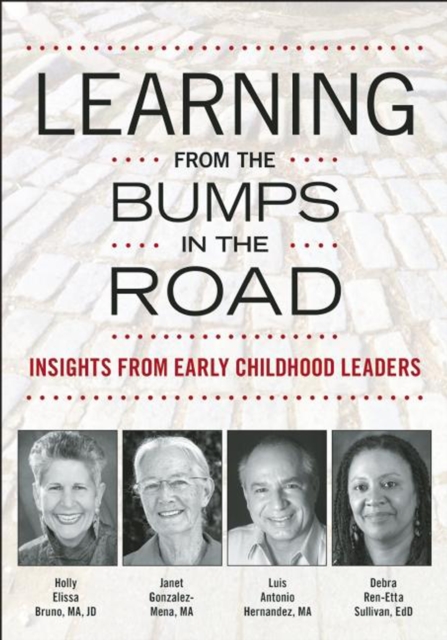
Learning from the Bumps in the Road
The journey to professional and personal growth takes time, and the road isn't always smooth, but it is a learning-filled adventure Holly Elissa Bruno, Janet Gonzalez-Mena, Luis Antonio Hernandez, and Debra Ren-Etta Sullivan are accomplished professionals and respected leaders in the early childhood field. After a decade of speaking together at national professional development conferences, they now give you twelve of their most important presentation topics as essays. Each chapter presents a dialogue among the authors about a particular topic and the lessons gleaned from facing and overcoming uncertainty and obstacles. Merging each author's distinct voice, expertise, and life experiences, this collection unveils the authors' personal and meaningful histories, insecurities, and insights. You will be encouraged and challenged to think more deeply and openly about your own practices and philosophies. You will gain a renewed sense of purpose as you help children reach their full potentials. And you will discover-as the authors did-that every bump in the road is an invitation to grow and opportunity to learn. Holly Elissa Bruno, MA, JD;Janet Gonzalez-Mena, MA;Luis Antonio Hernandez, MA; andDebra Ren-Etta Sullivan, EdD, are acclaimed keynote speakers, authors, and experts on a variety of topics in early childhood.
eBook