
Catalogue Search | MBRL


Are you sure you want to remove the book from the shelf?

{{itemTitle}}
1,759
result(s) for
"Bryan, T. Scott"
Sort by:

The explorer's guide to Death Valley National Park
\"\"Originally published in 1995, soon after Death Valley National Park became the fifty-third park in the US park system. The third edition is the only book that includes all aspects of the park. Much more than just a guidebook, it covers the park's cultural history, botany and zoology, hiking and biking opportunities\"--Provided by publisher\"-- Provided by publisher.
Book

The Geysers of Yellowstone, Fourth Edition
This revised popular field guide describes in detail each of the more than 500 geysers in Yellowstone National Park. With updated information and a new foreword by park archivist Lee Whittlesey,Geysers of Yellowstoneis both a reference work and a fine introduction to the nature of geyser activity for the newcomer to geothermal phenomena. A glossary of key terms is provided, along with a comprehensive appendix that discusses other geyser areas of the world. Detailed maps accompany each geyser basin described, and tables are provided for easy reference.
eBook
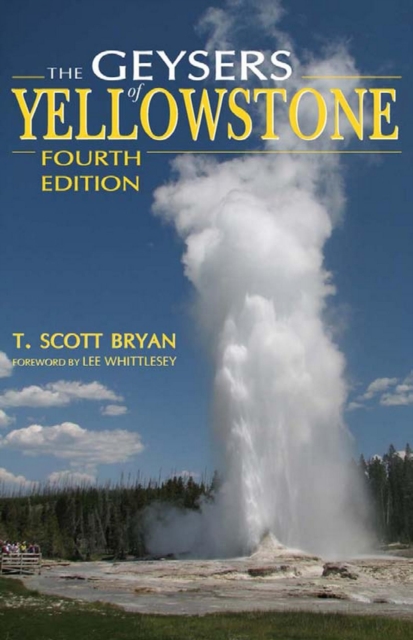
The geysers of Yellowstone
This revised popular field guide describes in detail each of the more than 500 geysers in Yellowstone National Park. With updated information and a new foreword by park archivist Lee Whittlesey, Geysers of Yellowstone is both a reference work and a fine introduction to the nature of geyser activity for the newcomer to geothermal phenomena. A glossary of key terms is provided, along with a comprehensive appendix that discusses other geyser areas of the world. Detailed maps accompany each geyser basin described, and tables are provided for easy reference.
eBook
Shoshone Geyser Basin
The Shoshone Geyser Basin (Map 11.1, Tables 11.1, 11.2, and 11.3, numbers 1 through 56) is one of the most important thermal areas in the world, even though its major portion measures only 1,600 by 800 feet. The basin contains over eighty geysers, more than any place on Earth other than the remainder of Yellowstone, the Valley of Geysers on Russia’s Kamchatka Peninsula, and El Tatio, Chile. Some of the spouting at Shoshone can be of considerable size, and one geyser—Union—is of truly major proportions. On the other hand, many of these geysers are small, infrequent performers about
Book Chapter
Other Yellowstone Geysers
Geysers have been known to occur in at least seventeen other areas of Yellowstone National Park (Map 13.1). Most of these places are relatively inaccessible, but this book would not be complete without mention of them. In each case, geysers are small in number and secondary to other types of hot springs.
Seven Mile Hole, roughly 7 miles downstream from the Lower Falls of the Yellowstone River, is the only place where the bottom of the Grand Canyon of the Yellowstone can be reached by trail. The trail follows the canyon rim from near Inspiration Point and then abruptly drops
Book Chapter
West Thumb Geyser Basin
Compared with the other areas of clear, alkaline water, geyser activity at the West Thumb Geyser Basin (Map 8.1, Table 8.1) is limited and generally weak. Only two dozen geysers have been observed within the developed part of the basin, which is properly known as the Lower Group. The geysers currently of greater importance lie to the north, near one another in the narrow tract of the Lake Shore Group between the lake and the highway. Still farther north is the Potts Hot Spring Basin, originally called the Upper Group, in which there are numerous small geysers but only infrequently
Book Chapter
Some Background on the Yellowstone Geysers
Geysers are beautiful and rare. Wherever they are found, they have attracted attention for the duration of their known history. Outside of Yellowstone some geysers have been watched for hundreds, even thousands of years. Within the Park they have been observed for far longer than recorded history. The Indians certainly saw them and wondered about them.
But justwhatthe Indians thought about the geysers is uncertain. Few tales have come down to us, and most were probably embellished by the trappers who passed them on to us. We do know that some Shoshoni Indians called the geyser basins “Water-That-Keeps-On-Coming-Out.”
Book Chapter
Gibbon Geyser Basin
The Gibbon Geyser Basin (Map 9.1 and Map 9.2, Table 9.1, numbers 1 through 22) includes all the hot spring clusters that lie around the perimeter of Gibbon Meadows, about 5 miles south of Norris Junction and south from there into Gibbon Canyon. The main highway runs across Gibbon Meadows near the middle of the Gibbon Basin. Trails proceed to some of the hot spring areas. Geysers are comparatively few and small, but they exist in seven of the eight groups of springs. The only group without geysers is the Chocolate Pots, along the river next to the road in
Book Chapter
Midway Geyser Basin
The Midway Geyser Basin (Map 5.1, Table 5.1) is a relatively small area. The hot springs are mostly confined to a narrow band of ground that parallels a 1-mile stretch of Firehole River. Additional springs extend up the Rabbit Creek drainage to the east, at the head of which are assortments of mud pots, small geysers, and one exceptionally large pool.
Topographically, the Midway Geyser Basin is part of the Lower Geyser Basin (Chapter 6), but it has always held separate status because it is separated from the Lower Basin by a forest of lodgepole pines. First known as the
Book Chapter