
Catalogue Search | MBRL


Are you sure you want to remove the book from the shelf?

{{itemTitle}}
10
result(s) for
"Bryant, Clive"
Sort by:

Romeo & Juliet : the graphic novel : original text version
Presents in graphic novel format an easy-to-follow adaptation of Shakespeare's play of the tragic consequences of a deadly feud between two rival families in Renaissance Verona.
BOOK

Consensus Paper: Cerebellum and Ageing
Given the key roles of the cerebellum in motor, cognitive, and affective operations and given the decline of brain functions with aging, cerebellar circuitry is attracting the attention of the scientific community. The cerebellum plays a key role in timing aspects of both motor and cognitive operations, including for complex tasks such as spatial navigation. Anatomically, the cerebellum is connected with the basal ganglia via disynaptic loops, and it receives inputs from nearly every region in the cerebral cortex. The current leading hypothesis is that the cerebellum builds internal models and facilitates automatic behaviors through multiple interactions with the cerebral cortex, basal ganglia and spinal cord. The cerebellum undergoes structural and functional changes with aging, being involved in mobility frailty and related cognitive impairment as observed in the physio-cognitive decline syndrome (PCDS) affecting older, functionally-preserved adults who show slowness and/or weakness. Reductions in cerebellar volume accompany aging and are at least correlated with cognitive decline. There is a strongly negative correlation between cerebellar volume and age in cross-sectional studies, often mirrored by a reduced performance in motor tasks. Still, predictive motor timing scores remain stable over various age groups despite marked cerebellar atrophy. The cerebello-frontal network could play a significant role in processing speed and impaired cerebellar function due to aging might be compensated by increasing frontal activity to optimize processing speed in the elderly. For cognitive operations, decreased functional connectivity of the default mode network (DMN) is correlated with lower performances. Neuroimaging studies highlight that the cerebellum might be involved in the cognitive decline occurring in Alzheimer’s disease (AD), independently of contributions of the cerebral cortex. Grey matter volume loss in AD is distinct from that seen in normal aging, occurring initially in cerebellar posterior lobe regions, and is associated with neuronal, synaptic and beta-amyloid neuropathology. Regarding depression, structural imaging studies have identified a relationship between depressive symptoms and cerebellar gray matter volume. In particular, major depressive disorder (MDD) and higher depressive symptom burden are associated with smaller gray matter volumes in the total cerebellum as well as the posterior cerebellum, vermis, and posterior Crus I. From the genetic/epigenetic standpoint, prominent DNA methylation changes in the cerebellum with aging are both in the form of hypo- and hyper-methylation, and the presumably increased/decreased expression of certain genes might impact on motor coordination. Training influences motor skills and lifelong practice might contribute to structural maintenance of the cerebellum in old age, reducing loss of grey matter volume and therefore contributing to the maintenance of cerebellar reserve. Non-invasive cerebellar stimulation techniques are increasingly being applied to enhance cerebellar functions related to motor, cognitive, and affective operations. They might enhance cerebellar reserve in the elderly. In conclusion, macroscopic and microscopic changes occur in the cerebellum during the lifespan, with changes in structural and functional connectivity with both the cerebral cortex and basal ganglia. With the aging of the population and the impact of aging on quality of life, the panel of experts considers that there is a huge need to clarify how the effects of aging on the cerebellar circuitry modify specific motor, cognitive, and affective operations both in normal subjects and in brain disorders such as AD or MDD, with the goal of preventing symptoms or improving the motor, cognitive, and affective symptoms.
Journal Article

A midsummer night's dream : the graphic novel : original text version
The entire Shakespeare play as a graphic novel.
BOOK

The genome of woodland strawberry (Fragaria vesca)
The International Strawberry Sequencing Consortium reports the draft genome of the woodland strawberry (
Fragaria vesca
). The genome of this diploid species should serve as a reference genome for the
Fragaria
genus, as the cultivated strawberry (
Fragaria
×
ananassa
) is an octoploid where
F. vesca
is predicted to be a subgenome donor.
The woodland strawberry,
Fragaria vesca
(2
n
= 2
x
= 14), is a versatile experimental plant system. This diminutive herbaceous perennial has a small genome (240 Mb), is amenable to genetic transformation and shares substantial sequence identity with the cultivated strawberry (
Fragaria
×
ananassa
) and other economically important rosaceous plants. Here we report the draft
F. vesca
genome, which was sequenced to ×39 coverage using second-generation technology, assembled
de novo
and then anchored to the genetic linkage map into seven pseudochromosomes. This diploid strawberry sequence lacks the large genome duplications seen in other rosids. Gene prediction modeling identified 34,809 genes, with most being supported by transcriptome mapping. Genes critical to valuable horticultural traits including flavor, nutritional value and flowering time were identified. Macrosyntenic relationships between
Fragaria
and
Prunus
predict a hypothetical ancestral Rosaceae genome that had nine chromosomes. New phylogenetic analysis of 154 protein-coding genes suggests that assignment of
Populus
to Malvidae, rather than Fabidae, is warranted.
Journal Article
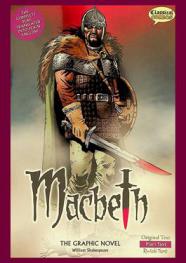
Macbeth : the graphic novel : plain text version
In graphic novel format, presents an adaptation of Shakespeare's classic tale about a man who kills his king after hearing the prophesies of three witches.
BOOK

Rabble Rousers
The decade following the 1954 Brown v. Board of Education decision saw white southerners mobilize in massive resistance to racial integration. Most segregationists conceded that ultimately they could only postpone the demise of Jim Crow. Some militant whites, however, believed it possible to win the civil rights struggle. Histories of the black freedom struggle, when they mention these racist zealots at all, confine them to the margin of the story. These extremist whites are caricatured as ineffectual members of the lunatic fringe. Civil rights activists, however, saw them for what they really were: calculating, dangerous opponents prepared to use terrorism in their stand against reform. To dismiss white militants is to underestimate the challenge they posed to the movement and, in turn, the magnitude of civil rights activists' accomplishments. The extremists helped turn massive resistance into a powerful political phenomenon. While white southern elites struggled to mobilize mass opposition to racial reform, the militants led entire communities in revolt. Rabble Rousers turns traditional top-down models of massive resistance on their head by telling the story of five far-right activists-Bryant Bowles, John Kasper, Rear Admiral John Crommelin, Major General Edwin Walker, and J. B. Stoner-who led grassroots rebellions. It casts new light on such contentious issues as the role of white churches in defending segregation, the influence of anti-Semitism in southern racial politics, and the divisive impact of class on white unity. The flame of the far right burned brilliantly but briefly. In the final analysis, violent extremism weakened the cause of white southerners. Tactical and ideological tensions among massive resisters, as well as the strength and unity of civil rights activists, accelerated the destruction of Jim Crow.
eBook

Cholesterol depletion does not alter the capacitance or Ca handling of the surface or t‐tubule membranes in mouse ventricular myocytes
Cholesterol is a key component of the cell plasma membrane. It has been suggested that the t‐tubule membrane of cardiac ventricular myocytes is enriched in cholesterol and that this plays a role in determining t‐tubule structure and function. We have used methyl‐β‐cyclodextrin (MβCD) to deplete cholesterol in intact and detubulated mouse ventricular myocytes to investigate the contribution of cholesterol to t‐tubule structure, membrane capacitance, and the distribution of Ca flux pathways. Depletion of membrane cholesterol was confirmed using filipin; however, di‐8‐ANEPPS staining showed no differences in t‐tubule structure following MβCD treatment. MβCD treatment had no significant effect on the capacitance:volume relationship of intact myocytes or on the decrease in capacitance:volume caused by detubulation. Similarly, Ca influx and efflux were not altered by MβCD treatment and were reduced by a similar amount following detubulation in untreated and MβCD‐treated cells. These data show that cholesterol depletion has similar effects on the surface and t‐tubule membranes and suggest that cholesterol plays no acute role in determining t‐tubule structure and function. We show that cholesterol depletion using MβCD has no effect on t‐tubule structure or function and does not alter surface or t‐tubular membrane capacitance. These data suggest that the functional differences observed between the surface and t‐tubular membranes are not due to differences in cholesterol content.
Journal Article

Rabies in a Dog Imported from Egypt — Connecticut, 2017
In 2007, the United States successfully eliminated canine rabies virus variant. Globally, however, dogs remain the principal source of human rabies infections. Since 2007, three cases of canine rabies virus variant were reported in dogs imported into the United States, one each from India (2007), Iraq (2008), and Egypt (2015) (1-3). On December 20, 2017, a dog imported into the United States from Egypt was identified with rabies, representing the second case from Egypt in 3 years. An Egyptian-based animal rescue organization delivered four dogs from Cairo, Egypt, to a flight parent (a person solicited through social media, often not affiliated with the rescue organization, and usually compensated with an airline ticket), who transported the dogs to the United States. The flight parent arrived at John F. Kennedy International Airport (JFK) in New York City and, via transporters (persons who shuttle dogs from one state to another), transferred the dogs to foster families; the dogs ultimately were adopted in three states. The Connecticut Department of Public Health Laboratory (CDPHL) confirmed the presence of a canine rabies virus variant in one of the dogs, a male aged 6 months that was adopted by a Connecticut family. An investigation revealed the possibility of falsified rabies vaccination documentation presented on entry at JFK, allowing the unvaccinated dog entry to the United States. This report highlights the continuing risk posed by the importation of dogs inadequately vaccinated against rabies from high-risk countries and the difficulties in verifying any imported dog's health status and rabies vaccination history.
Journal Article

