
Catalogue Search | MBRL


Are you sure you want to remove the book from the shelf?

{{itemTitle}}
29
result(s) for
"Buckley, Eleanor"
Sort by:

Higher levels of autistic traits associated with lower levels of self-efficacy and wellbeing for performing arts professionals
This study sought for the first time to identify the extent to which autistic people are pursuing careers in the performing arts, and to determine the nature of the relationship between individuals’ autistic traits and their reported wellbeing. To address these aims, we recruited a self-selecting, community-based sample of individuals working in the performing arts and invited them to complete an online survey. A total of 1,427 respondents took part. We collected responses on participants’ backgrounds, including diagnostic history as well as measures assessing their level of autistic traits, perceived occupational self-efficacy, quality of life, and mental health. They were also asked open-ended questions about support needed, received, or desired in their workplace. Eleven of the 1,427 professionals (1%) reported a clinical diagnosis of autism. Correlational analyses demonstrated that higher levels of autistic traits were significantly associated with lower levels of quality of life, lower levels of occupational self-efficacy and greater severity of mental health conditions. Almost half the sample of professionals (N = 621; 44%) reported a desire for more employment-based support, and autistic traits were significantly higher in those participants who wanted greater support. Within the community of those working in the performing arts, there are a minority of individuals who are autistic or who have high levels of autistic traits. We have demonstrated for the first time that these individuals may be especially vulnerable to lower wellbeing.
Journal Article

Novel Procedures for Evaluating Autism Online in a Culturally Diverse Population of Children: Protocol for a Mixed Methods Pathway Development Study
Current autism assessment procedures are costly and resource-intensive. The COVID-19 pandemic accelerated the adoption of telemedicine, highlighting the benefits of innovative diagnostic tools. Telemedicine-based pathways could enhance accessibility and equity in autism diagnostics.
The Children with Autism Technology Enabled Assessment (CHATA) project aims to develop and pilot an open-source autism diagnostic pathway for children up to 5 years old, delivered through telemedicine. The pathway is designed to be culturally and linguistically adaptable, increasing its applicability to diverse populations and integrating with existing National Health Service digital systems.
Initial pathway development was informed by systematic evidence reviews, coproduction, and mixed methods usability. CHATA comprises 2 key elements: online self-completed standardized autism questionnaires and a structured online interview and observation by a trained clinician. Out of 60 families near the top of the local waiting list will be invited to participate in the pilot evaluation, assessed using both the CHATA and usual assessment pathways. Sensitivity and specificity will be calculated by comparing the diagnosis of autism through CHATA with usual care. Quantitative usability assessment will be gathered from all families using the System Usability Scale (where a mean above 68 indicates above-average usability). A subset of CHATA assessments will be reviewed for interrater reliability (measured by the Cohen κ for categorical data [diagnosis present or absent], with values indicating the level of agreement; eg, <0 indicating no agreement, 0.61-0.80 indicating substantial agreement). Qualitative data on acceptability, feasibility, and usability will be gathered from semistructured interviews with a subset of families and health care providers. We will recruit 60 families for the main pilot study (including the usability testing) and 10-15 participants for the qualitative substudy. Data will estimate CHATA's diagnostic accuracy, validity, reliability, usability, and acceptability. Patient and public involvement will be integral throughout. The study will take place in a socio-economically deprived, ethnically diverse inner-London Borough within a community-based child health National health service responsible for the Autism assessment of children and young people up to the age of 13 years.
Ethics approval was received in June 2023 (Research Ethics Committee reference 22/LO/0751; IRAS project ID 320499). Data collection commenced in April 2023 and completed in October 2024. Project end date is March 2025. As of November 2024, we had enrolled 57 participants to the pilot study and 12 to the qualitative substudy.
The CHATA project aims to establish a novel, culturally sensitive, equitable, and accurate online autism assessment pathway. By addressing geographical and linguistic barriers, this pathway seeks to reduce service costs, shorten waiting times, and promote equity in autism diagnosis. The procedures developed are expected to be generalized to other populations nationwide.
DERR1-10.2196/55741.
Journal Article

“The Real Thing I Struggle with is Other People’s Perceptions”: The Experiences of Autistic Performing Arts Professionals and Attitudes of Performing Arts Employers in the UK
This research examined in-depth the employment experiences of autistic performing arts professionals and the attitudes and adjustments of performing arts employers. We interviewed 18 autistic performing arts professionals and 19 performing arts employers. Autistic performing arts professionals described facing challenges in the workplace. Some autistic professionals had access to support, but the majority felt that there was not enough available and highlighted many ways in which they could be better supported. Performing arts employers varied in their experiences of working with autistic people, many had limited knowledge about autism-specific support or relied on other professionals to provide it. These findings shed light on current unmet support needs of autistic performing arts professionals, and provide key recommendations for research and practice.
Journal Article
“Knowing That I’m Not Necessarily Alone in My Struggles”: UK Autistic Performing Arts Professionals’ Experiences of a Mentoring Programme
This research examined whether professional mentoring could have a positive effect on the occupational self-efficacy of autistic performing arts professionals. We compared the outcomes of one group who received mentoring to a waitlist control group. 26 participants took part in this study: 15 autistic mentees and 11 mentors, three of whom were also autistic. The mentoring programme was well received and felt to be beneficial by the participating mentees and mentors, particularly regarding gains in mentees’ occupational self-efficacy. Professional mentoring also addressed several work-oriented challenges identified by autistic performing arts professionals such as feelings of isolation in the industry and need for consultation and advice on both a professional level, and for mentees with autistic mentors, also a neurodivergent one.
Journal Article
Autism and the Performing Arts : Celebrating Creativity and Improving Outcomes
This research sought for the first time to identify the extent to which autistic people, and those with high levels of autistic traits, are pursuing careers in the performing arts, and to examine the experiences and support needs of this population. In Chapter 2, I determined that there are significant relationships between autistic traits, occupational self-efficacy, quality of life, mental health, and need for support in performing arts professionals, as well as qualitatively analysed professionals' experiences of accessing support in the industry. I showed that there a significant minority of autistic professionals in the performing arts who may have unmet support needs. In Chapter 3, I found similar significant relationships between autistic traits, educational self-efficacy, quality of life, mental health, and need for support in the performing arts student population. Additionally, I compared their experiences to students studying other subjects and found very few differences, suggesting that performing arts education is not a uniquely challenging environment compared to other higher education courses. In Chapter 4, I analysed, in-depth, the support needs and views of autistic performing arts professionals on working in the industry, and the attitudes and levels of autism knowledge of performing arts employers. Some autistic professionals had access to support, but the majority felt that there was not enough available and highlighted many ways in which they could be better supported. Performing arts employers varied in their experiences of working with autistic people, many had limited knowledge about autism-specific support or relied on other professionals to provide it. In Chapter 5, I tested the feasibility and acceptability of professional mentoring as a form of employment-based support for autistic performing arts professionals. I found it to be an acceptable and workable method of support, with many participants reporting increased occupational self-confidence. Finally, in Chapter 6, I summarise the main findings from the empirical studies presented in this thesis. I discuss the contributions the studies have made towards our understanding of the experiences and support needs of autistic performing arts professionals. I describe the limitations of my research, and I outline the implications and possible future directions for this research.
Dissertation
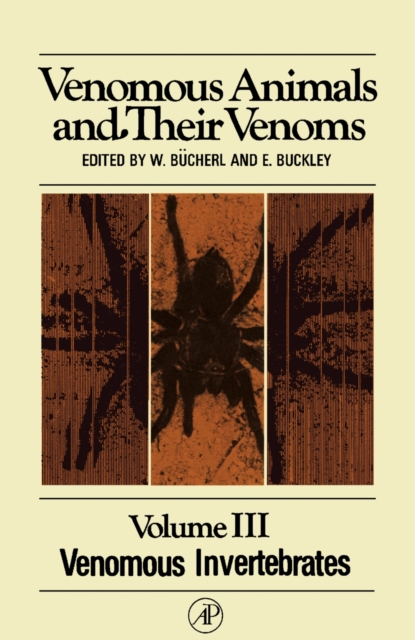
Venomous Animals and Their Venoms: Venomous Invertebrates
Venomous Animals and their Venoms, Volume III: Venomous Invertebrates provides a comprehensive presentation of the entire field of the venomous members of the animal kingdom and chemistry and biochemistry of their venoms, including their pharmacological actions and antigenic properties. This volume focuses on venomous invertebrates, such as insects, centipedes, spiders, scorpions, venomous mollusks, and marine animals. Animals that possess at least one or more venom glands and mechanisms for excretion or extrusion of the venom, as well as apparatus with which to inflict wounds or inject the venomous substances are characterized in this book as \"actively venomous\", while creatures that have venom glands and venom-excreting ducts, but lack adequate apparatus for inflicting wounds or injecting venom, such as toads, frogs, and salamanders are identified as \"passively venomous.\" This publication is a valuable reference for physicians and veterinarians seeking information on the injuries caused by venomous animals.
eBook

Venomous Animals and Their Venoms
Venomous Animals and their Venoms, Volume III: Venomous Invertebrates provides a comprehensive presentation of the entire field of the venomous members of the animal kingdom and chemistry and biochemistry of their venoms, including their pharmacological actions and antigenic properties.
eBook
