
Catalogue Search | MBRL


Are you sure you want to remove the book from the shelf?

{{itemTitle}}
93
result(s) for
"Buffetaut, Eric"
Sort by:
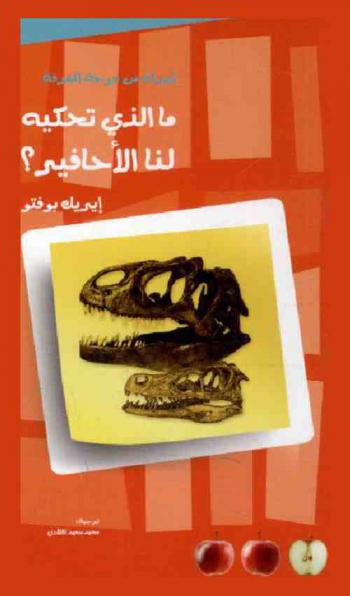
ما الذي تحكيه لنا الأحافير ؟
يتناول كتاب (ما الذي تحكيه لنا الأحافير ؟) والذي قام بتأليفه (إيريك بوفتو) في حوالي (82) صفحة من القطع المتوسط موضوع (علم الحفريات) مستعرضا المحتويات التالية : الأحافير تحكي لنا قصة الطوفان حسب الكتاب المقدس-الأحافير تحكي قصة الكائنات الحية-الأحافير تحكي قصة تطور الأنواع-ما الذي تقوله لنا الأحافير اليوم ؟-أين التطور من كل هذا ؟-كيف نقرأ قصة الأحافير ؟
Book

The First-Named Fossil Ostrich: A Revision of Struthio asiaticus, from the Siwaliks of India
The first fossil ostrich to have been named, by Milne-Edwards in 1869–1871, was Struthio asiaticus, a taxon based on a specimen collected by Colonel Colvin in the Siwaliks of India, consisting of associated postcranial elements (vertebrae, forelimb elements, a fragmentary tarsometatarsus and first phalanx of the third toe). Although it was described as least twice in some detail in the 19th century, the specimen has since then been interpreted in conflicting ways. A revision of the type material and its history shows that it came in all likelihood from the Siwaliks of present-day India, not Pakistan. The exact locality is unknown and the stratigraphic position of the specimen is uncertain (the frequent attribution to the Dhok Pathan Formation is not based on solid evidence). Contrary to what has sometimes been claimed, Struthio asiaticus was neither a small nor an especially large ostrich. It was apparently comparable in size with the modern S. camelus, but had slightly more robust cervical vertebrae and carpal bones. It seems to have been relatively short-toed. Because of the incompleteness of the material and uncertainties about its geological age, it is difficult to assess the place of Struthio asiaticus in the evolutionary history of the ostriches. Reports of Struthio asiaticus from Africa and north-eastern Asia are based on misinterpretations and should be discarded.
Journal Article
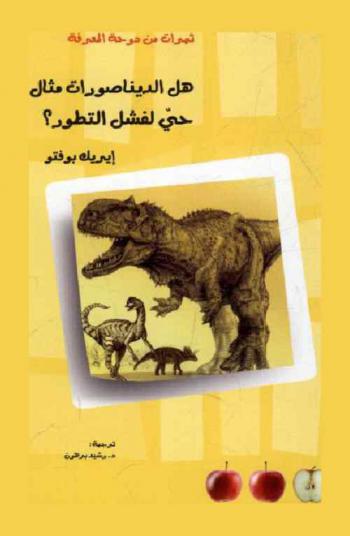
هل الديناصورات مثال حي لفشل التطور ؟
غالبا ما ترتبط الديناصورات في الذهن بصورة الفشل والإخفاق، ليس فقط لأنها انقرضت، بل لأن الذهن يتجه أول ما يتجه عند الحديث عنها إلى فصيلة من الكائنات «العاجزة» عن مجاراة التطور. وغالبا ما نصف الديناصورات بضخامة الجثة والغباء إلى حد لا يطاق، وبامتلاك احتياجات مغرقة في خصوصيتها، وبغرابة لا توصف، مما عرضها للانقراض، لكن أين الحقيقة في كل ذلك ؟ كيف ينظر علماء المستحثات إلى الديناصورات ومكانتها داخل العالم الحي ؟ أما زال بإمكاننا أن نعدها مظهرا من مظاهر «فشل» تطور الكائنات الحية ؟
Book
The Missing Late Pleistocene Ostrich Femur from Zhoukoudian (China): New Information Provided by a Rediscovered Old Cast
A complete ostrich femur from the Late Pleistocene deposits of the Upper Cave at Zhoukoudian (China) was referred by Shaw to Struthio anderssoni in the 1930s, but its present whereabouts are unknown. A good quality plaster cast of the missing specimen has been found in the collections of the Natural History Museum (London). This cast provides interesting information about the morphology of this large ostrich femur, which had previously been only summarily described and not illustrated. Although smaller than the femora of the Early Pleistocene giant ostrich Pachystruthio, the robust femur from Zhoukoudian shows morphological similarities with them, and it is suggested that ‘Struthio’ anderssoni should be placed in the genus Pachystruthio. The importance of old palaeontological casts is emphasized, as well as the need to preserve and curate them properly.
Journal Article
The Enigmatic Avian Oogenus Psammornis: A Review of Stratigraphic Evidence
Psammornis rothschildi is an avian taxon established by Andrews in 1911 on the basis of eggshell fragments surface-collected near the city of Touggourt, in the north-eastern part of the Algerian Sahara. Since the initial discovery, a number of Psammornis specimens have been reported from various localities in North Africa (Algeria, Tunisia, Libya, Mauritania) and the Middle East (Saudi Arabia, Iran). Most of the finds lack a stratigraphic context, which has resulted in considerable confusion about the geological age of Psammornis, with attributions ranging from the Eocene to the Holocene. A review of the available evidence shows that only two groups of localities provide reasonably reliable stratigraphic evidence: the Segui Formation of SW Tunisia, apparently of latest Miocene age, and the Aguerguerian (Middle Pleistocene) of NW Mauritania. This suggests a fairly long time range for Psammornis. Psammornis eggs are, in all likelihood, those of giant ostriches, although the lack of associated skeletal material makes it difficult to interpret the eggshell fragments in evolutionary terms. However, the oological record suggests that giant ostriches have been present in Africa since the late Miocene, which leads to the reconsideration of some hypotheses about the palaeobiogeographical history of the Struthionidae. The lack of Psammornis eggs transformed by humans suggests that this giant ostrich did not survive until Epipalaeolthic or Neolithic times.
Journal Article
A Giant Ostrich from the Lower Pleistocene Nihewan Formation of North China, with a Review of the Fossil Ostriches of China
A large incomplete ostrich femur from the Lower Pleistocene of North China, kept at the Muséum National d’Histoire Naturelle (Paris), is described. It was found by Father Emile Licent in 1925 in the Nihewan Formation (dated at about 1.8 Ma) of Hebei Province. On the basis of the minimum circumference of the shaft, a mass of 300 kg, twice that of a modern ostrich, was obtained. The bone is remarkably robust, more so than the femur of the more recent, Late Pleistocene, Struthio anderssoni from China, and resembles in that regard Pachystruthio Kretzoi, 1954, a genus known from the Lower Pleistocene of Hungary, Georgia and the Crimea, to which the Nihewan specimen is referred, as Pachystruthio indet. This find testifies to the wide geographical distribution of very massive ostriches in the Early Pleistocene of Eurasia. The giant ostrich from Nihewan was contemporaneous with the early hominins who inhabited that region in the Early Pleistocene.
Journal Article

Island life in the Cretaceous - faunal composition, biogeography, evolution, and extinction of land-living vertebrates on the Late Cretaceous European archipelago
The Late Cretaceous was a time of tremendous global change, as the final stages of the Age of Dinosaurs were shaped by climate and sea level fluctuations and witness to marked paleogeographic and faunal changes, before the end-Cretaceous bolide impact. The terrestrial fossil record of Late Cretaceous Europe is becoming increasingly better understood, based largely on intensive fieldwork over the past two decades, promising new insights into latest Cretaceous faunal evolution. We review the terrestrial Late Cretaceous record from Europe and discuss its importance for understanding the paleogeography, ecology, evolution, and extinction of land-dwelling vertebrates. We review the major Late Cretaceous faunas from Austria, Hungary, France, Spain, Portugal, and Romania, as well as more fragmentary records from elsewhere in Europe. We discuss the paleogeographic background and history of assembly of these faunas, and argue that they are comprised of an endemic 'core' supplemented with various immigration waves. These faunas lived on an island archipelago, and we describe how this insular setting led to ecological peculiarities such as low diversity, a preponderance of primitive taxa, and marked changes in morphology (particularly body size dwarfing). We conclude by discussing the importance of the European record in understanding the end-Cretaceous extinction and show that there is no clear evidence that dinosaurs or other groups were undergoing long-term declines in Europe prior to the bolide impact.
Journal Article

Morphofunctional Analysis of the Quadrate of Spinosauridae (Dinosauria: Theropoda) and the Presence of Spinosaurus and a Second Spinosaurine Taxon in the Cenomanian of North Africa
Six quadrate bones, of which two almost certainly come from the Kem Kem beds (Cenomanian, Upper Cretaceous) of south-eastern Morocco, are determined to be from juvenile and adult individuals of Spinosaurinae based on phylogenetic, geometric morphometric, and phylogenetic morphometric analyses. Their morphology indicates two morphotypes evidencing the presence of two spinosaurine taxa ascribed to Spinosaurus aegyptiacus and? Sigilmassasaurus brevicollis in the Cenomanian of North Africa, casting doubt on the accuracy of some recent skeletal reconstructions which may be based on elements from several distinct species. Morphofunctional analysis of the mandibular articulation of the quadrate has shown that the jaw mechanics was peculiar in Spinosauridae. In mature spinosaurids, the posterior parts of the two mandibular rami displaced laterally when the jaw was depressed due to a lateromedially oriented intercondylar sulcus of the quadrate. Such lateral movement of the mandibular ramus was possible due to a movable mandibular symphysis in spinosaurids, allowing the pharynx to be widened. Similar jaw mechanics also occur in some pterosaurs and living pelecanids which are both adapted to capture and swallow large prey items. Spinosauridae, which were engaged, at least partially, in a piscivorous lifestyle, were able to consume large fish and may have occasionally fed on other prey such as pterosaurs and juvenile dinosaurs.
Journal Article

Oxygen isotopes of East Asian dinosaurs reveal exceptionally cold Early Cretaceous climates
Early Cretaceous vertebrate assemblages from East Asia and particularly the Jehol Biota of northeastern China flourished during a period of highly debated climatic history. While the unique characters of these continental faunas have been the subject of various speculations about their biogeographic history, little attention has been paid to their possible climatic causes. Here we address this question using the oxygen isotope composition of apatite phosphate (δFormula ) from various reptile remains recovered from China, Thailand, and Japan. δFormula values indicate that cold terrestrial climates prevailed at least in this part of Asia during the Barremian--early Albian interval. Estimated mean air temperatures of about 10 ± 4 °C at midlatitudes (
Journal Article
An Introduction to Evolution and Palaeobiology of Flightless Birds
Although flight is often considered as one of the most salient characteristics of birds, in the course of their evolution various avian lineages have lost the ability to fly [...]
Journal Article