
Catalogue Search | MBRL


Are you sure you want to remove the book from the shelf?

{{itemTitle}}
118
result(s) for
"Burack-Weiss, Ann"
Sort by:

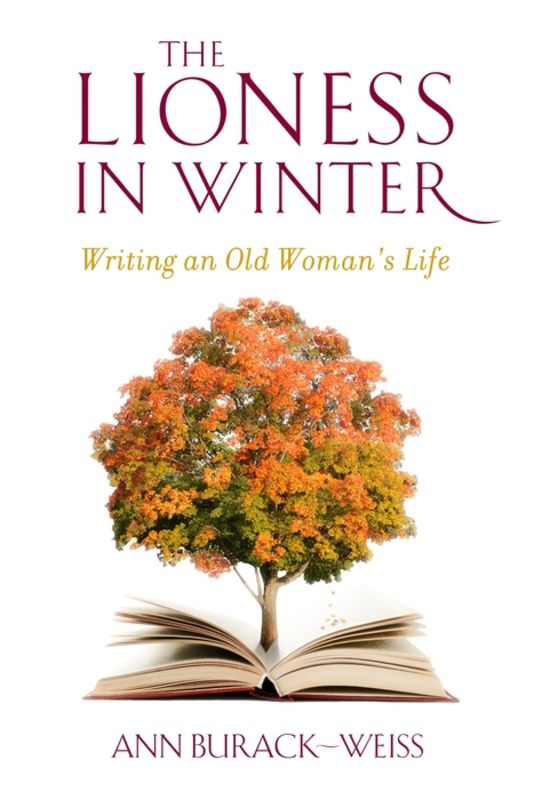
The lioness in winter
When she started working with the aged more than forty years ago, Ann Burack-Weiss began storing the knowledge and skills she thought would help when she got old herself. It was not until she hit her mid-seventies that she realized she had packed sneakers to climb Mount Everest, not anticipating the crevices and chasms that constitute the rocky terrain of old age. The professional gerontological and social work literature offered little help, so she turned to the late-life works of beloved women authors who had bravely climbed the mountain and sent back news from the summit. Maya Angelou, Colette, Simone de Beauvoir, Joan Didion, Marguerite Duras, M. F. K. Fisher, Doris Lessing, Mary Oliver, Adrienne Rich, May Sarton, and Florida Scott-Maxwell were among the many guides she turned to for inspiration.
InThe Lioness in Winter, Burack-Weiss blends an analysis of key writings from these and other famed women authors with her own wisdom to create an essential companion for older women and those who care for them. She fearlessly examines issues such as living with loss, finding comfort and joy in unexpected places, and facing disability and death. This book is filled with powerful passages from women who turned their experiences of aging into art, and Burack-Weiss ties their words to her own struggles and epiphanies, framing their collective observations with key insights from social work practice.
eBook

Gerontological Social Work Supervision
This unique book clearly depicts a need for supervision in gerontological social work settings and provides a framework for approaching supervision. Grounded in two distinct bodies of literature, social work supervision and gerontological social work, this important book thoroughly examines present gerontological practice and principles and focuses on the stages and styles of helping, and teaching case workers to improve agency efficiency.
Gerontological Social Work Supervision assumes some gerontological knowledge and experience with aging on the part of the supervisor, yet provides an abundance of informative and practical methods to aid agency success rates with their clients. The authors discuss the supervisory position as a positive asset in all aspects of case work and management. Throughout the chapters, the value of a supervisor is compounded, whether the supervisor is helping a worker in seeing a broader scope of the field of social work with the elderly, providing guidance through gray areas of ethics, or teaching practice skills for work with individuals, groups, or families, the need for an involved and prepared case worker supervisor becomes increasingly clear through the theories and scenarios presented. Extensive examples and helpful considerations make this an invaluable book for agency supervisors and workers. An entire chapter is devoted to providing supervision in the educational arena, promoting a greater awareness of gerontological social work in students preparing for the field. The appendices are packed with lists of additional works on supervision in social work, bibliographies of selected readings in case management, entitlement, long term care, and family caregiving.
eBook
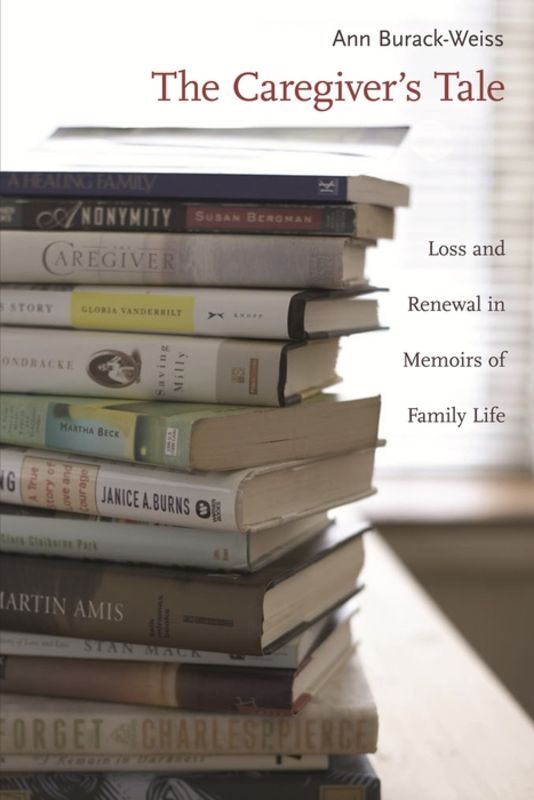
The Caregiver's Tale
Ann Burack-Weiss explores a rich variety of published memoirs by authors who cared for ill or disabled family members. Contrary to the common belief that caregiving is nothing more than a stressful situation to be endured, memoirs describe a life transforming experience-self-discovery, a reordering of one's priorities, and a changed view of the world. The Caregiver's Tale offers insight and comfort to individuals caring for a loved one and is a valuable resource for all health care professionals. Identifying common themes, Burack-Weiss describes how the illness career and social meaning of cancer, dementia, HIV/AIDS, mental illness, and chemical dependence affect the caregiving experience. She applies the same method to an examination of family roles: parents caring for ailing children, couples and siblings caring for one another, and adult children caring for aging parents.
eBook
HOW WE ARE WITH EACH OTHER
Every gardener knows that not all perennials live up to their names—returning in their season in the same spot with the same radiance. Some are here one year, gone the next. Others lose their vigor before dying out completely. Still others crop up in new spots with a changed hue.
When I think of the people in my life today, I picture just such a garden—a few stalwarts still in bloom, standing out amid the decaying remains of their bedfellows, surrounded by the preternatural brightness of new growth. Rich’s metaphors of “grit” and “root-tangle” evoke the complexity and
Book Chapter

WHAT SHE THINKS ABOUT SOMETIMES, SOME DAYS, ABOUT SOME THINGS
Why would Marguerite Duras introduce a book of her transcribed conversations with Jerome Beaujoir with a disingenuous disclaimer? She surely knew that her thoughts—however casually presented—were being recorded and would eventually be published. Far from a “way to pass the time,” the effort was a way of satisfying a waiting public’s wish to know what the best-selling author ofThe LoverandHiroshima, Mon Amourhas to say. And how well she says it! Duras identifies an issue that must be considered in any discussion of life writing: the multiplicity of its forms and their effect on the
Book Chapter
CONCLUSION
The front cover of Reynolds’s book features a teacher standing in front of a huge blackboard on which large cursive writing is barely visible. She is holding a long pole with a pointed tip which, we can assume, will not be used to poke recalcitrant students but to call attention to this word or that. Her hairdo and dress, as those of the women who face her, mark them of a different time. The text, first published in 1942, was based on Reynolds’s work during the Great Depression.
Over seventy years have passed, along with thousands of books on social
Book Chapter
I HAD LOOKED AT MYSELF IN THE FULL-LENGTH MIRROR
For a long time I had a nude self-portrait of the painter Alice Neel above my desk. When I lifted my eyes from the computer, it was the first thing I saw. She is old, seated in an elegant striped chair. And dignified, from the neck up. White hair in a neat bun, rosy complexion, sharp blue eyes behind hornrimmed glasses. Below the neck, it’s a different story. A humped back, flattened breasts that don’t quite reach the navel, a sagging belly, feet awkwardly splayed. Neel holds a rag in her left hand. Grasped in her right hand, in a
Book Chapter
INTRODUCTION
“Frail” and “elderly”—with their connotations of disability, decline, and universality—are not favored in the gerontological lexicon of today. Younger colleagues prefer “older adult.” I revel in referring to myself as an “old lady.” Yet I and my coauthor—both in our forties—reflected the words and thoughts of 1983. To our credit, the rest of the book did not continue the pontificating tone of its opening. There were even some thoughts I would repeat today, if not in such stilted form. Still we could not have known the lived experience until we lived it.
How I loved Angela
Book Chapter