
Catalogue Search | MBRL


Are you sure you want to remove the book from the shelf?

{{itemTitle}}
4
result(s) for
"Burchell, Graham, translator"
Sort by:


The punitive society : lectures at the Collège de France, 1972-1973
These thirteen lectures on the 'punitive society,' delivered at the Collège de France in the first three months of 1973, examine the way in which the relations between justice and truth that govern modern penal law were forged, and question what links them to the emergence of a new punitive regime that still dominates contemporary society.
eBook

The government of self and others
An exciting and highly original examination of the practices of truth-telling and speaking out freely (parresia) in ancient Greek tragedy and philosophy. Foucault discusses the difficult and changing practices of truth-telling in ancient democracies and tyrannies.
Book
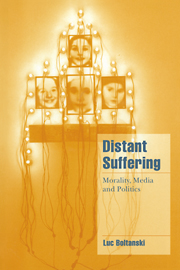
Distant Suffering
Distant Suffering, first published in 1999, examines the moral and political implications for a spectator of the distant suffering of others as presented through the media. What are the morally acceptable responses to the sight of suffering on television, for example, when the viewer cannot act directly to affect the circumstances in which the suffering takes place? Luc Boltanski argues that spectators can actively involve themselves and others by speaking about what they have seen and how they were affected by it. Developing ideas in Adam Smith's moral theory, he examines three rhetorical 'topics' available for the expression of the spectator's response to suffering: the topics of denunciation and of sentiment and the aesthetic topic. The book concludes with a discussion of a 'crisis of pity' in relation to modern forms of humanitarianism. A possible way out of this crisis is suggested which involves an emphasis and focus on present suffering.
eBook