Catalogue Search | MBRL


Are you sure you want to remove the book from the shelf?

{{itemTitle}}
11
result(s) for
"Burke, Edmund, 1940-"
Sort by:


The ethnographic state
Alone among Muslim countries, Morocco is known for its own national form of Islam, \"Moroccan Islam.\" However, this pathbreaking study reveals that Moroccan Islam was actually invented in the early twentieth century by French ethnographers and colonial officers who were influenced by British colonial practices in India. Between 1900 and 1920, these researchers compiled a social inventory of Morocco that in turn led to the emergence of a new object of study, Moroccan Islam, and a new field, Moroccan studies. In the process, they resurrected the monarchy and reinvented Morocco as a modern polity. This is an important contribution for scholars and readers interested in questions of orientalism and empire, colonialism and modernity, and the invention of traditions.
eBook


environment and world history
Since around 1500 C.E., humans have shaped the global environment in ways that were previously unimaginable. Bringing together leading environmental historians and world historians, this book offers an overview of global environmental history throughout this remarkable 500-year period. In eleven essays, the contributors examine the connections between environmental change and other major topics of early modern and modern world history: population growth, commercialization, imperialism, industrialization, the fossil fuel revolution, and more. Rather than attributing environmental change largely to European science, technology, and capitalism, the essays illuminate a series of culturally distinctive, yet often parallel developments arising in many parts of the world, leading to intensified exploitation of land and water. The wide range of regional studies-including some in Russia, China, the Middle East, India, Southeast Asia, Latin America, Southern Africa, and Western Europe-together with the book's broader thematic essays makesThe Environment and World Historyideal for courses that seek to incorporate the environment and environmental change more fully into a truly integrative understanding of world history. CONTRIBUTORS: Michael Adas, William Beinart, Edmund Burke III, Mark Cioc, Kenneth Pomeranz, Mahesh Rangarajan, John F. Richards, Lise Sedrez, Douglas R. Weiner
eBook


Environmental Imaginaries of the Middle East and North Africa
The landscapes of the Middle East have captured our imaginations throughout history. Images of endless golden dunes, camel caravans, isolated desert oases, and rivers lined with palm trees have often framed written and visual representations of the region. Embedded in these portrayals is the common belief that the environment, in most places, has been deforested and desertified by centuries of misuse. It is precisely such orientalist environmental imaginaries, increasingly undermined by contemporary ecological data, that the eleven authors in this volume question. This is the first volume to critically examine culturally constructed views of the environmental history of the Middle East and suggest that they have often benefitted elites at the expense of the ecologies and the peoples of the region. The contributors expose many of the questionable policies and practices born of these environmental imaginaries and related histories that have been utilized in the region since the colonial period. They further reveal how power, in the form of development programs, notions of nationalism, and hydrological maps, for instance, relates to environmental knowledge production. Contributors: Samer Alatout, Edmund Burke III, Shaul Cohen, Diana K. Davis, Jennifer L. Derr, Leila M. Harris, Alan Mikhail, Timothy Mitchell, Priya Satia, Jeannie Sowers, and George R. Trumbull IV
eBook


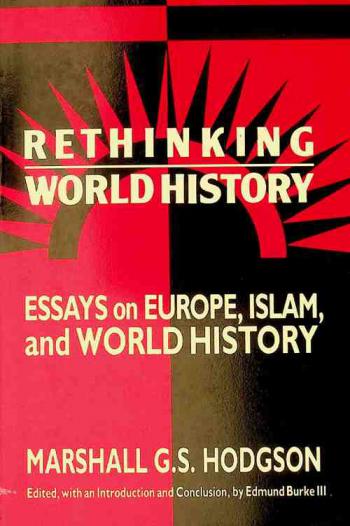
The environment and world history / edited by Edmund Burke III and Kenneth Pomeranz
In 11 essays, the contributors examine the connections between environmental change and other major topics of early modern world history: population growth, commercialization, imperialism, industrialization, the fossil fuel revolution, and more.
Book Chapter
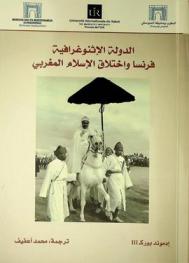
الدولة الإثنوغرافية : فرنسا واختلاق الإسلام المغربي
يدرس هذا الكتاب الهيمنة الإثنوغرافية والسياسية الفرنسية عبر عدسات ثنائية البؤرة. وبفعله ذاك يسعى إلى توضيح الفهم السيئ المظاهر من تاريخ المغرب منذ مطلع الحكم الفرنسي الذي يظل سائدا حتى يومنا هذا، ومنه يروم طرح أسئلة حول التاريخ والنظرية. وأخيرا يثير هذا الكتاب الانتباه إلى الخطاب حول الإسلام المغربي واستمرارية النظام الملكي في المغرب. إذ يؤكد كتاب الدولة الإثنوغرافية على أهمية السياقات التاريخية الدولية والمالية والسياسية التي حصلت فيها التطورات المحورية التي ساهمت في تشكيل البحث الفرنسي في المغرب، فهو يركز أساسا على الفترة الممتدة من 1900 إلى 1914، أي الفترة التي جمع فيها الأرشيف المغربي الكولونيالي. وتمهيدا لذلك يبدأ بدراسة التاريخ البعيد للإثنوغرافيا الفرنسية في بلاد الإسلام، خاصة في الجزائر المستعمرة. وإضافة إلى ذلك يتناول الفترة التالية على 1914، أي عهد ليوطي الذي وضع فيه القالب الذي سيصاغ فيه الحقل الأكاديمي الجديد المعني بالدراسات المغربية.
Book