
Catalogue Search | MBRL


Are you sure you want to remove the book from the shelf?

{{itemTitle}}
12
result(s) for
"Burke, Peter, 1937-"
Sort by:


Early Modern Cultures of Translation
\"Would there have been a Renaissance without translation?\" Karen Newman and Jane Tylus ask in their Introduction to this wide-ranging group of essays on the uses of translation in an era formative for the modern age. The early modern period saw cross-cultural translation on a massive scale. Humanists negotiated status by means of their literary skills as translators of culturally prestigious Greek and Latin texts, as teachers of those same languages, and as purveyors of the new technologies for the dissemination of writing. Indeed, with the emergence of new vernaculars and new literatures came a sense of the necessary interactions of languages in a moment that can truly be defined as \"after Babel.\"
As they take their starting point from a wide range of primary sources-the poems of Louise Labé, the first Catalan dictionary, early printed versions of the Ptolemy world map, the King James Bible, and Roger Williams'sKey to the Language of America-the contributors to this volume provide a sense of the political, religious, and cultural stakes for translators, their patrons, and their readers. They also vividly show how the very instabilities engendered by unprecedented linguistic and technological change resulted in a far more capacious understanding of translation than what we have today.
A genuinely interdisciplinary volume,Early Modern Cultures of Translationlooks both east and west while at the same time telling a story that continues to the present about the slow, uncertain rise of English as a major European and, eventually, world language.
Contributors:Gordon Braden, Peter Burke, Anne Coldiron, Line Cottegnies, Margaret Ferguson, Edith Grossman, Ann Rosalind Jones, Lázló Kontler, Jacques Lezra, Carla Nappi, Karen Newman, Katharina N. Piechocki, Sarah Rivett, Naomi Tadmor, Jane Tylus
eBook

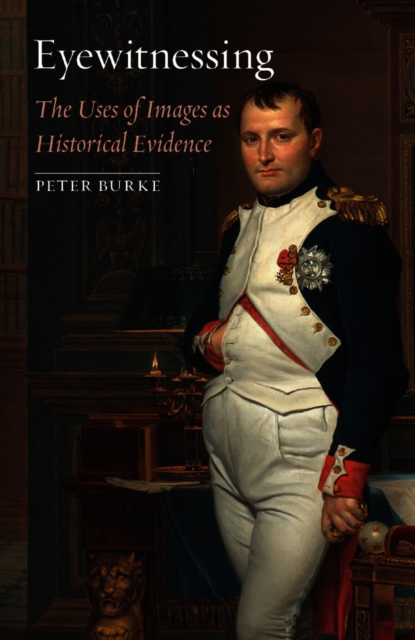
Eyewitnessing
Eyewitnessing evaluates the place of images among other kinds of historical evidence. By reviewing the many varieties of images by region, period and medium, and looking at the pragmatic uses of images (e.g. the Bayeux Tapestry, an engraving of a printing press, a reconstruction of a building), Peter Burke sheds light on our assumption that these practical uses are 'reflections' of specific historical meanings and influences. He also shows how this assumption can be problematic. Traditional art historians have depended on two types of analysis when dealing with visual imagery: iconography and iconology. Burke describes and evaluates these approaches, concluding that they are insufficient. Focusing instead on the medium as message and on the social contexts and uses of images, he discusses both religious images and political ones, also looking at images in advertising and as commodities. Ultimately, Burke's purpose is to show how iconographic and post-iconographic methods – psychoanalysis, semiotics, viewer response, deconstruction – are both useful and problematic to contemporary historians.
eBook
علم الاجتماع والتاريخ
تظهر أهمية هذا الكتاب في أنه يعد مسح شامل يميز بين التاريخ وعلم الاجتماع ونقاط الالتقاء والتشابه بينهما كما أنه يسلط الضوء على المناهج البحثية والنماذج العلمية التي يستعملها كل من هذين العلمين مع تقصيل للحراك الاجتماعي والتغيير الاجتماعي ونشوء البيروقراطية كما أنه يناقش العقلية والإيديولوجيات كما يعطي نماذج وصور للنغيير الاجتماعي.
Book
Towards a social history of early modern dutch
A renowned scholar approaches the history of the Dutch language between 1500 and 1800 from a socio-cultural historian's perspective. He investigates the changing relationship between the vernacular and Latin; the incorporation (or invasion) of new words from other languages; and the movements towards standardization and purification, discussing these trends from a comparative, pan-European point of view.
eBook



From antiquity to ethnography : Keith Thomas, Brian Harrison and Peter Burke
'From Antiquity to Ethnography' is the first time a collection of these interviews is being published as a book. They have been conducted by one of England's leading social anthropologists and historians, Professor Alan Macfarlane. Filmed over a period of several years, the three conversations in this volume are part of the series 'Creative Lives and Works.' These transcriptions form a part a larger set of interviews that cut across various disciplines, from the social sciences and the sciences to the performing and visual arts. The current volume is on three of Britain's foremost social and cultural historians. The study of historical traditions, social mores and practices come alive in these conversations. We also learn about the painstaking nature of notetaking which the subject demands.
BOOK