
Catalogue Search | MBRL


Are you sure you want to remove the book from the shelf?

{{itemTitle}}
5
result(s) for
"Burt, John A., editor"
Sort by:


Thresholds of Western Culture
Thresholds of Western Culture explores identity, postcoloniality and transnationalism–three closely related issues which redefine contemporary cultural identity. The book opens with an analysis of subjectivity and the cultural meltdown that accompanied fascism in the West. The situation in Africa is then explored which, while recalling modernity’s dark side, highlights the intricacy of postcolonial identity. Post-Soviet Eastern Europe presents a separate case of neglected postcoloniality which emphasizes how ethnocentrism and cultural tensions have exposed the fragility of transnationalism. The book concludes with an examination of East Asia, a region which offers transnational options potentially much more fruitful than Balkanization.
eBook
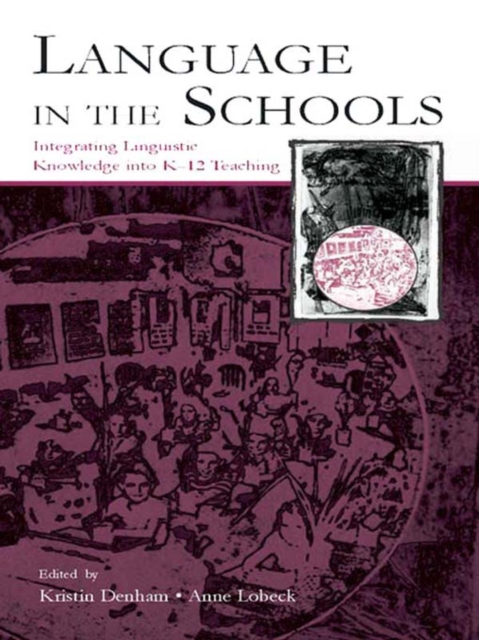
Language in the schools
Language in the Schools: Integrating Linguistic Knowledge Into K-12 Teaching addresses two important questions:*What aspects of linguistic knowledge are most useful for teachers to know?*What kinds of activities and projects are most effective in introducing those aspects of linguistic knowledge to K-12 students?The volume focuses on how basic linguistic knowledge can inform teachers' approaches to language issues in the multicultural, linguistically diverse classroom. The text also includes examples of practical applications of language awareness to pedagogy, assessment, and curriculum construction, which support the current goals of language arts, bilingual, and ESL education.Language in the Schools: Integrating Linguistic Knowledge Into K-12 Teaching contributes to the resources on linguistics and education by taking prospective teachers beyond basic linguistics to ways in which linguistics can productively inform their teaching and raise their students' awareness of language. It is intended as a text for students in teacher education programs who have a basic knowledge of linguistics.
eBook

The memory process : neuroscientific and humanistic perspectives
The convergence of neuroscience, philosophy, art, music, and literature offers valuable new insights into the study of memory.
eBook

The Columbia Companion to the Twentieth-Century American Short Story
Esteemed critic Blanche Gelfant's brilliant companion gathers together lucid essays on major writers and themes by some of the best literary critics in the United States. Part 1 is comprised of articles on stories that share a particular theme, such as “Working Class Stories” or “Gay and Lesbian Stories.” The heart of the book, however, lies in Part 2, which contains more than one hundred pieces on individual writers and their work, including Fitzgerald, Hemingway, Richard Ford, Raymond Carver, Eudora Welty, Andre Debus, Zora Neal Hurston, Anne Beattie, Bharati Mukherjee, J. D. Salinger, and Jamaica Kincaid, as well as engaging pieces on the promising new writers to come on the scene.
eBook