
Catalogue Search | MBRL


Are you sure you want to remove the book from the shelf?

{{itemTitle}}
105
result(s) for
"Buskirk, Steven W."
Sort by:

Diet, Morphology, and Interspecific Killing in Carnivora
Interspecific killing is a key determinant of the abundances and distributions of carnivores, their prey, and nonprey community members. Similarity of body size has been proposed to lead competitors to seek similar prey, which increases the likelihood of interference encounters, including lethal ones. We explored the influence of body size, diet, predatory habits, and taxonomic relatedness on interspecific killing. The frequency of attacks depends on differences in body size: at small and large differences, attacks are less likely to occur; at intermediate differences, killing interactions are frequent and related to diet overlap. Further, the importance of interspecific killing as a mortality factor in the victim population increases with an increase in body size differences between killers and victims. Carnivores highly adapted to kill vertebrate prey are more prone to killing interactions, usually with animals of similar predatory habits. Family‐level taxonomy influences killing interactions; carnivores tend to interact more with species in the same family than with species in different families. We conclude that although resource exploitation (diet), predatory habits, and taxonomy are influential in predisposing carnivores to attack each other, relative body size of the participants is overwhelmingly important. We discuss the implications of interspecific killing for body size and the dynamics of geographic ranges.
Journal Article
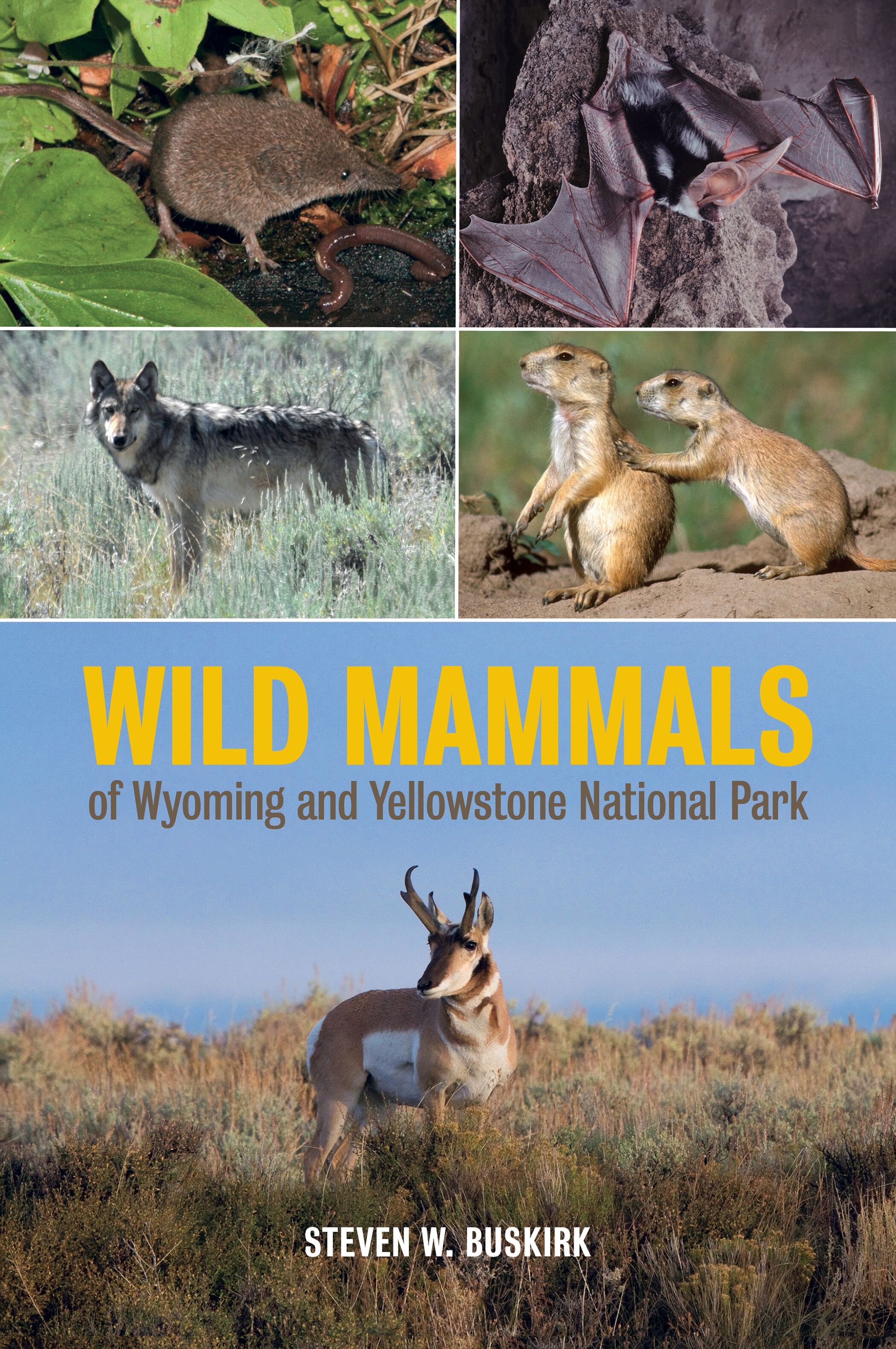
Wild mammals of Wyoming and Yellowstone National Park
Wild Mammals of Wyoming and Yellowstone National Park provides the scholar, conservationist, and interested lay reader with information on the state's 117 wild mammalian species from grizzly bears to pygmy shrews. It describes the history of mammalogy in Wyoming, the zoogeography of Wyoming mammals, and the prehistoric mammals of Wyoming. It also characterizes the habitats of Wyoming mammals and addresses the conservation and management of mammals in the region. Expanding beyond the traditional field guide, Steven W. Buskirk emphasizes taxonomic classification, geographic range, and conservation status for mammalian species. Introductory sections are provided for each order and family, and individual species accounts organize a wealth of data ranging from habitat associations to field measurements in an easy-to-use format. Featuring color species photos, continental and state-scale distribution maps, and a comprehensive bibliography with nearly 1,000 references, Wild Mammals of Wyoming and Yellowstone National Park is an indispensable resource for wildlife and conservation biologists and mammalogists working in this region.
eBook

Information theory and hypothesis testing: a call for pluralism
1. A major paradigm shift is occurring in the approach of ecologists to statistical analysis. The use of the traditional approach of null-hypothesis testing has been questioned and an alternative, model selection by information-theoretic methods, has been strongly promoted and is now widely used. For certain types of analysis, information-theoretic approaches offer powerful and compelling advantages over null-hypothesis testing. 2. The benefits of information-theoretic methods are often framed as criticisms of null-hypothesis testing. We argue that many of these criticisms are neither irremediable nor always fair. Many are criticisms of the paradigm's application, rather than of its formulation. Information-theoretic methods are equally vulnerable to many such misuses. Care must be taken in the use of either approach but users of null-hypothesis tests, in particular, must greatly improve standards of reporting and interpretation. 3. Recent critiques have suggested that the distinction between experimental and observational studies defines the limits of the utility of null-hypothesis testing (with the paradigm being applicable to the former but not the latter). However, we believe that there are many situations in which observational data are collected that lend themselves to analysis under the null-hypothesis testing paradigm. We suggest that the applicability of the two analytical paradigms is more accurately defined by studies that assess univariate causality (when null-hypothesis testing is adequate) and those that assess multivariate patterns of causality (when information-theoretic methods are more suitable). 4. Synthesis and applications. Many ecologists are confused about the circumstances under which different inferential paradigms might apply. We address some of the major criticisms of the null-hypothesis testing paradigm, assess those criticisms in relation to the information-theoretic paradigm, propose methods for improving the use of null-hypothesis testing, and discuss situations in which the use of null-hypothesis testing would be appropriate. We urge instructors and practitioners of statistical methods to heighten awareness of the limitations of null-hypothesis testing and to use information-theoretic methods whenever prior evidence suggests that multiple research hypotheses are plausible. We contend, however, that by marginalizing the use of null-hypothesis testing, ecologists risk rejecting a powerful, informative and well-established analytical tool.
Journal Article

Linking predation risk, ungulate antipredator responses, and patterns of vegetation in the high Andes
Whether large carnivores indirectly influence vegetation via prey behavior remains controversial because available evidence is largely correlational, and recent field experiments have found weak associations between risk experienced by prey and vegetative responses to herbivory. We combined observational data and a field experiment to test whether an ambush predator—the puma (Puma concolor)—affected the antipredator behavior of its primary ungulate prey—the vicuña (Vicugna vicugna)—which in turn had cascading effects on vegetation. We predicted that strong protective effects of pumas on vegetation would be most apparent in habitats where cover and terrain (i.e., physical complexity) facilitated the ambushing strategy of pumas. In 3 different habitats, we evaluated the relationships among predation risk, vicuña behavior, and—by deploying vicuña exclosures—vegetation structure and productivity. We also examined habitat-specific rates of vegetative regrowth. Risky habitats presented high physical complexity, a disproportionately large number of vicuñas killed by pumas, and high relative abundance of pumas. In these habitats, vicuñas displayed strong antipredator behaviors and exclosures did not affect vegetation, suggesting that pumas indirectly protected plants. Conversely, a safe habitat presented low structural complexity, a disproportionately low number of vicuñas killed by pumas, and low relative abundance of pumas. Here, vicuñas relaxed antipredator behaviors and exclosures had strong effects on vegetation. In 1 habitat deemed as risky, however, cascading effects were offset likely because water and nutrients were readily available to plants and regrowth was rapid. Our results show that large ambush carnivores can positively affect vegetation via nonconsumptive effects on their prey, and that these effects are habitat mediated. However, primary productivity modulated the strength of such effects, with high primary productivity dampening the observed cascading effects.
Si los grandes carnívoros terrestres afectan indirectamente la vegetación vía cambios en el comportamiento de sus presas es controversial porque la evidencia existente es largamente correlacional, y experimentos de campo recientes encontraron una débil asociación entre el riesgo de depredación y las respuestas de la vegetación a la presión de pastoreo. En este trabajo evaluamos si un depredador de emboscada—el puma (Puma concolor)—afecta las respuestas antidepredador de su presa principal—la vicuña (Vicugna vicugna)—con efectos de cascada sobre la vegetación (i.e., graminoides). Predijimos que el efecto protectivo de los pumas sobre la vegetación sería más evidente en hábitats donde la cobertura y el terreno (i.e., complejidad estructural) facilitan la estrategia de emboscada del puma. En tres hábitats diferentes, evaluamos las relaciones entre el riesgo de depredación, el comportamiento de las vicuñas y—mediante la utilización de clausuras—la estructura y productividad de la vegetación. También examinamos tasas de rebrote en cada hábitat. Los hábitats riesgosos presentaron gran complejidad estructural, un número desproporcionadamente alto de vicuñas depredadas por pumas, y una alta abundancia relativa de pumas. En estos hábitats, las vicuñas mostraron fuertes comportamientos antidepredador y las clausuras afectaron levemente la vegetación, sugiriendo que los pumas indirectamente protegen las plantas. Contrariamente, el hábitat definido como seguro presentó poca complejidad estructural, un número desproporcionadamente bajo de vicuñas depredadas por pumas, y una baja abundancia relativa de pumas. Aquí, las vicuñas relajaron sus comportamientos antidepredador y las clausuras tuvieron un fuerte efecto sobre la vegetación. Sin embargo, en un hábitat definido como riesgoso los efectos de cascada fueron neutralizados, probablemente porque el agua y los nutrientes estaban disponibles para las plantas permitiendo un rápido rebrote. Nuestros resultados muestran que los grandes carnívoros pueden beneficiar a los productores primarios vía cambios en el comportamiento de sus presas, y que estos efectos están mediados por el tipo de hábitat. No obstante, la productividad primaria modula la intensidad de estos efectos, con altos niveles de productividad primaria amortiguando los efectos de cascada iniciados por el depredador tope.
Journal Article

Ecological Consequences of Mountain Pine Beetle Outbreaks for Wildlife in Western North American Forests
Mountain pine beetle (Dendroctonus ponderosae) (MPB) outbreaks are increasingly prevalent in western North America, causing considerable ecological change in pine (Pinus spp.) forests with important implications for wildlife. We reviewed studies examining wildlife responses to MPB outbreaks and postoutbreak salvage logging to inform forest management and guide future research. Our review included 16 studies describing MPB outbreak relationships with 89 bird species and 6 studies describing relationships with 11 mammalian species, but no studies of reptiles or amphibians. We included studies that compared wildlife response metrics temporally (before versus after the outbreak) and spatially (across sites that varied in severity of outbreak) in relation to beetle outbreaks. Outbreaks ranged in size from 20,600 to ≥107 ha and studies occurred 1–30 years after the peak MPB outbreak, but most studies were conducted over the short-term (i.e., ≤6 years after the peak of MPB-induced tree mortality). Birds were the only taxa studied frequently; however, high variability existed among those studies to allow many inferences, although some patterns were evident. Avian studies concluded that cavity-nesting species responded more favorably to beetle-killed forests than species with open-cup nests, and species nesting in the shrub layer favored outbreak forests compared with ground and open-cup canopy nesters that generally showed mixed relationships. Bark-drilling species as a group clearly demonstrated a positive short-term association with MPB epidemics compared with that of other foraging assemblages. Cavity-nesting birds that do not consume bark beetles (i.e., secondary cavity-nesting species and nonbark-drilling woodpeckers) also exhibited some positive responses to MPB outbreaks, although not as pronounced or consistent as those of bark-drilling woodpeckers. Mammalian responses to MPB outbreaks were mixed. Studies consistently reported negative effects of MPB outbreaks on red squirrels (Tamiasciurus hudsonicus). However, there is evidence that red squirrels can persist after an outbreak under some conditions, e.g., when nonhost tree species are present. For small mammal species associated with forest understories, responses may be most pronounced during the postepidemic period (>6 years after the peak of beetle-induced tree mortality) when snags fall to produce coarse woody debris. Postoutbreak salvage logging studies (n = 6) reported results that lacked consensus. Postoutbreak salvage logging may have an impact on fewer wildlife species than postfire salvage logging, probably because only host-specific tree species are removed after beetle outbreaks.
Journal Article

Meta-analyses of habitat selection by fishers at resting sites in the pacific coastal region
The fisher (Pekania pennanti) is a species of conservation concern throughout the Pacific coastal region in North America. A number of radiotelemetry studies of habitat selection by fishers at resting sites have been conducted in this region, but the applicability of observed patterns beyond the boundaries of each study area is unknown. Broadly applicable information on habitat selection by fishers in this region would be useful for conservation planning and for informing forest management decisions in areas where intensive field studies have not been conducted. To provide such information, we conducted formal meta-analyses of habitat selection by fishers at resting sites in 8 study areas located from central British Columbia to the southern Sierra Nevada in California, including all areas that currently contain established fisher populations. Each study included in the meta-analyses measured environmental attributes at sites used by fishers for resting (i.e., the immediate vicinity of resting structures; typically ≤ 0.5 ha) and at random or systematically located sites representing resource availability in each study area. We selected 9 environmental attributes that we expected to be associated with fisher resting sites: slope, heat load index, percent cover of vegetation ≥ 2 m above the ground, volume of moderately decayed logs ≥ 26 cm in mean diameter, basal area of live conifers 51-100 cm in diameter at breast height (dbh), basal area of live hardwoods 51-100 cm in dbh, basal area of moderately decayed snags 51-100 cm in dbh, mean dbh of live conifers ≥ 10 cm in dbh, and mean dbh of live hardwoods > 10 cm in dbh. Despite substantial variation in environmental conditions among study locations, our analyses revealed statistically significant summary effect sizes for each of the 9 environmental attributes we analyzed. Fishers selected sites for resting that had steeper slopes, cooler microclimates, denser overhead cover, a greater volume of logs, and a greater prevalence of large trees and snags than were generally available. Thus, in areas within the Pacific coastal region where fishers have not been studied and data on selection of resting sites are lacking, our findings provide empirical support for management or conservation actions for fishers that promote the retention or development of these environmental attributes.
Journal Article
Juvenile and adult mortality patterns in a vicuña (Vicugna vicugna) population
Neotropical ungulates are poorly understood with regard to age-specific mortality and how it relates to different mortality causes. During January 2008–April 2011, we investigated mortality patterns of calf (<1 year old) and adult vicuñas (Vicugna vicugna) in west-central Argentina. Specifically, we analyzed whether birth mass, birth date, and sex of radiomarked vicuña calves affected 1st-year survival; quantified cause of death for marked calves and unmarked adults; and explored how primary productivity and quality of forage and diet related to body condition of adult vicuña carcasses. Birth mass was a strong predictor of 1st-year survival: a 1-kg (∼18%) increase in birth mass resulted in a 54% decline in the risk of death. Further, low survival rate in 1 calendar year was associated with low mean birth mass during that year, but not with population density and forage quality in the previous year. Puma (Puma concolor) predation accounted for ≥49% (n = 93) and 91% (n = 89) of the mortality in calves and adults, respectively. Body condition of adult vicuñas killed by pumas varied seasonally and correlated with seasonal changes in primary productivity and forage and diet quality. Our results highlighted the importance of puma predation and low birth mass as proximate causes of vicuña mortality. How environmental factors (e.g., early summer precipitation) influence forage and ultimately mortality has yet to be determined. En ungulados Neotropicales, la relación entre la mortalidad especifica por edades y sus causas ha sido poco estudiada. Entre enero de 2008–abril 2011, investigamos los patrones de mortalidad de crías (<1 año de edad) y adultos de vicuñas (Vicugna vicugna) en el Parque Nacional San Guillermo, ubicado en los Andes centrales de Argentina. En este trabajo analizamos la relación entre el peso al nacer, la fecha de nacimiento y el sexo de las crías con la probabilidad de supervivencia durante el primer año de vida; cuantificamos las causas de muerte en crías y adultos; y exploramos la relación entre la productividad primaria, calidad del forraje y calidad de la dieta y el estado nutricional de las carcasas de vicuñas adultas. El peso al nacer fue un buen indicador de la supervivencia durante el primer año de vida: un incremento de 1-kg (∼18%) en el peso al nacer resultó en una declinación del 54% en el riesgo de muerte. Adicionalmente, un bajo promedio del peso al nacer en un año estuvo asociado con una baja tasa de supervivencia durante ese año, pero no con la densidad poblacional ni calidad del forraje en el año previo. La depredación por puma (Puma concolor) explicó ≥49% (n = 93) y 91% (n = 89) de la mortalidad en crías y adultos, respectivamente. La condición corporal de las vicuñas adultas cazadas por pumas varió estacionalmente. Este patrón estuvo asociado con cambios estacionales en la productividad primaria, la calidad del forraje y la calidad de la dieta en vicuñas. La influencia de factores ambientales (e.g., precipitación al inicio del verano) sobre el forraje y, en ultima instancia, la mortalidad todavía debe ser determinada.
Journal Article
Risk-disturbance overrides density dependence in a hunted colonial rodent, the black-tailed prairie dog Cynomys ludovicianus
1. Traditional understanding of how hunting affects vertebrate populations emphasizes competitive release and density dependence of vital rates, but more recent thinking has proposed complex non-lethal responses to hunting disturbance and predation risk. Colonial species have been proposed to be more vulnerable than dispersed, solitary species to disturbance and perceived risk from hunting. However, empirical comparisons of density dependence vs. risk disturbance in hunted species are few. 2. To compare density dependence with risk-disturbance effects of hunting on individuals and populations of a colonial species, we tested the response of black-tailed prairie dogs Cynomys ludovicianus to shooting in a before-after, treatment-control experiment. We subjected five colonies to a pulse of shooting, and compared individual and colony attributes to those of five control colonies, protected from shooting. 3. Surviving prairie dogs increased alert behaviours eightfold and reduced both above-ground activity and time spent foraging by 66%. Changes in behaviour lowered the body condition of surviving adults by 35%. Survivors of shooting, especially juveniles, exhibited elevated stress levels; faecal corticosterone concentrations increased by 80% among juveniles. Unexpectedly, overwinter survival rates did not increase in response to reduced prairie dog density. Colonies subjected to shooting experienced reproductive near-collapse the summer after shooting; pregnancy rates declined by 50% and reproductive output fell by 82%. 4. Risk-disturbance overwhelmed any possible density-dependent effects of shooting in prairie dogs, which exhibited additive mortality in response to hunting, and reproductive failure 1 year after shooting. Risk-disturbance was the predominant mechanism whereby individuals and colonies were affected by hunting. 5. Synthesis and applications. Because of their coloniality, prairie dogs possess certain life-history traits that predisposed them to be particularly susceptible to hunting-associated disturbances, which had cascading effects on population-level processes. Our findings contradict the general belief that small-bodied mammals quickly rebound from hunting exploitation via compensatory mortality and reproduction. Managers should consider measures to reduce recreational shooting intensity and duration in regions where black-tailed prairie dog colony growth and persistence is desired, yet allow shooting in areas where colonies conflict with landowner interests.
Journal Article
Metrics for Studies of Resource Selection
Resource availability and resource use are 2 key concepts in studies of resource selection. Although equal accessibility to resources is one component defining resource availability, we rarely know what restricts access to resources. Consequently for spatially distributed resources, the animal's use of space in association with the occurrence of resources is a frequent basis for inferring resource use and testing for resource selection. For many resources, occurrence can be defined for the population or the individual animal and requires that researchers specify the spatial extent of resources an animal might use during the time interval of study (e.g., the “choice set”). Often the occurrence of resources is defined at multiple scales, which facilitates understanding hierarchical selection patterns. We discuss numerous factors and criteria that should be considered when delineating the area an animal might use during a period of interest. New analytical approaches to resource selection, including resource utilization functions (RUF) and discrete choice modeling, help address some of the issues of defining availability and dealing with the behaviors associated with resource use. A currency of use is a measure of the investment made by an animal in securing resources, avoiding loss of resources, or otherwise optimizing fitness. Common currencies used by researchers include time spent or distance traveled in a cover type, use of event sites (e.g., nest sites, roosting sites, den sites), or amounts of different kinds of foods consumed. Less common, but potentially highly informative, are such currencies as energy expended or predation risk or other risk incurred. Simulation of animal movements interspersed with diel resting periods, through habitat types with activity-dependent energy expenditure and habitat-specific predation risk showed that choice of a currency of use strongly influences inferences about habitat selection. We argue that perhaps the most informative currency of use would be increased risk to fitness accepted by an animal. Although fairly simple conceptually, such application of risk assessment faces formidable empirical challenges and is a worthy goal for the next generation of researchers of animal resource selection.
Journal Article

Footload influences wildlife use of compacted trails in the snow
Animals moving across snow surfaces sink to varying depths, increasing the energetic cost of travel. For ease of movement, animals may follow compacted trails created by sports such as snowmobiling and snowshoeing. We tested the assumption that animals less-adapted to snow travel (i.e. animals with a high footload (body mass/foot surface area)) are more likely to use compacted trails and follow them for greater distances than animals well-adapted to moving on snow. We sampled animal movements on compacted and non-compacted transects in northwestern Wyoming and southeastern Idaho, USA, during two winters. Consistent with our prediction, footload positively influenced the probability of animals following compacted transects, and positively influenced their following distance, although the latter relationship was weaker. Additionally, we found that different snow sports cause similar increases in snow density. We suggest that future researchers experimentally test whether the use of compacted trails by animals with high footloads alters their habitat selection and dispersal, and whether it affects their competitive and predatory success.
Journal Article