
Catalogue Search | MBRL


Are you sure you want to remove the book from the shelf?

{{itemTitle}}
581
result(s) for
"Butler, Judith"
Sort by:


Undoing Gender
Undoing Gender constitutes Judith Butler's recent reflections on gender and sexuality, focusing on new kinship, psychoanalysis and the incest taboo, transgender, intersex, diagnostic categories, social violence, and the tasks of social transformation. In terms that draw from feminist and queer theory, Butler considers the norms that govern--and fail to govern--gender and sexuality as they relate to the constraints on recognizable personhood. The book constitutes a reconsideration of her earlier view on gender performativity from Gender Trouble . In this work, the critique of gender norms is clearly situated within the framework of human persistence and survival. And to \"do\" one's gender in certain ways sometimes implies \"undoing\" dominant notions of personhood. She writes about the \"New Gender Politics\" that has emerged in recent years, a combination of movements concerned with transgender, transsexuality, intersex, and their complex relations to feminist and queer theory.
Judith Butler is Maxine Elliot Professor in the Departments of Rhetoric and Comparative Literature at the University of California, Berkeley. Among her books are Gender Trouble , Bodies That Matter , and Excitable Speech , all published by Routledge.
eBook
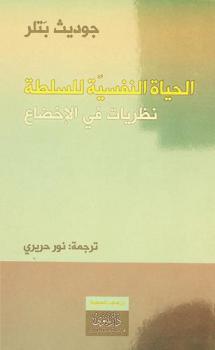
الحياة النفسية للسلطة : نظريات في الإخضاع
من مسألة السلطة يبدأ هذا الكتاب، ثم ينتقل إلى مسألة الذات الخاضعة لسلطة معينة، فيحاول كشف التناقض الكامن في الذات التي تكون خاضعة لهذه السلطة من جهة، ومتورطة في عملية إخضاعها من جهة أخرى. تتصدى جوديث بتلر للفهم الحديث للسلطة الذي يبطل الذاتية وتأثيراتها النفسية، ويتعامل مع السلطة بوصفها ثابتة، وخارجية على، ومنفصلة عن، الذات. تربط بتلرالذات إلى السلطة من جديد، وتشرح تشكل الذات من خلال عملية الإخضاع المتناقضة التي لا تستطيع الذات الإفلات منها فتبقى ممزقة بين طرفيها، والتي تبقى الشرط الأساس لتشكل الذات ووجودها. بالاستناد إلى أعمال هيغل ونيتشه، تشرح بتلر كيفية تشكل الأخلاق والوعي الذاتي، وعلاقة هذا التشكل بالذنب، ومن خلال الرجوع إلى أعمال فوكو وألتوسير، تستكشف العلاقة الملتبسة بين السلطة وإدراك الهوية، وارتباط الحيز النفسي الجواني بالحيز البراني ، حيث تزول الحدود بينهما، ويتفاعل صوت السلطة الخارجي مع صوت الذات الداخلي. ثم تتوسع بتلر في الأبعاد النفسية للسلطة، ومن خلال التعليق على نصوص فرويد، تبين دور الفقد والميلانخوليا في تأسيس الذوات.
BOOK

Reification
In the early 20th century, Marxist theory was enriched and rejuvenated by adopting the concept of reification, introduced by the Hungarian theorist Georg Lukács to identify and denounce the transformation of historical processes into ahistorical entities, human actions into things that seemed part of an immutable “second nature.” For a variety of reasons, both theoretical and practical, the hopes placed in de-reification as a tool of revolutionary emancipation proved vain. This book attempts to rescue the concept of reification by recasting it in terms of the philosophy of recognition that has been developed over the past two decades. Three political and social theorists: Judith Butler, Raymond Geuss, and Jonathan Lear, respond with hard questions about the central anthropological premise of the book's main argument, the assumption that prior to cognition there is a fundamental experience of intersubjective recognition that can provide a normative standard by which current social relations can be judged wanting.
eBook


What We Don’t Know Really Will Hurt Us: Examining Trauma Awareness Knowledge, Strategies, and Training in Ireland’s Early Childhood Education and Care Profession
Childhood trauma can exert a negative influence in the lives of young children. Yet, while Early Childhood Education and Care (ECEC) professionals are perfectly positioned to support children exposed to such trauma, extant research reports a scarcity of bespoke trauma awareness training for the ECEC profession. The aim of the current study served to explore the trauma awareness knowledge, strategies, and training of the ECEC profession in the Republic of Ireland. A comprehensive survey instrument, comprising 45 items across 5 Thematic Domains related to trauma knowledge and training, was disseminated to ECEC professionals nationwide. With a response rate of 1053 participants, key findings revealed (i) a fragmented understanding of what constitutes childhood trauma, and (ii) a significant association between lower levels of educational attainment and trauma education (Initial Practitioner Education, p = 0.000; Continuous Professional Development, p = 0.039). Further, 95% of participants called for context-specific, trauma awareness training, substantiating the voracious appetite for this crucial cog in the ECEC learning continuum, and thus reflecting the need for urgent reform to address and support the complexities of childhood trauma in ECEC discourse.
Journal Article

Franz Kafka : the drawings
\"The year 2019 brought a sensational discovery: hundreds of drawings by the writer Franz Kafka (1883-1924) were found in a private collection that for decades had been kept under lock and key. Until now, only a few of Kafka's drawings were widely known. Although Kafka is renowned for his written work, his drawings are evidence of what his literary executor Max Brod termed his \"double talent.\" Irresistible and full of fascinating figures, shifting from the realistic to the fantastic, the grotesque, the uncanny, and the carnivalesque, they illuminate a previously unknown side of the quintessential modernist author. Kafka's drawings span his full career, but he drew most intensively in his university years, between 1901 and 1907. An entire booklet of drawings from this period is among the many new discoveries, along with dozens of loose sheets. Published for the first time in English, these newly available materials are collected with his known works in a complete catalogue raisonnâe of more than 240 illustrations, reproduced in full color. Essays by Andreas Kilcher and Judith Butler provide essential background for this lavish volume, interpreting the drawings in their own right while also reconciling their place in Kafka's larger oeuvre\"-- Provided by publisher.
BOOK

The Ethics of Narrative
Hayden White is widely considered to be the most influential historical theorist of the twentieth century. The Ethics of Narrative brings together nearly all of White's uncollected essays from the last two decades of his life, revealing a lesser-known side of White: that of the public intellectual. From modern patriotism and European identity to Hannah Arendt's writings on totalitarianism, from the idea of the historical museum and the theme of melancholy in art history to trenchant readings of Leo Tolstoy and Primo Levi, the first volume of The Ethics of Narrative shows White at his most engaging, topical, and capacious.
Expertly introduced by editor Robert Doran, who lucidly explains the major themes, sources, and frames of reference of White's thought, this volume features five previously unpublished lectures, as well as more complete versions of several published essays, thereby giving the reader unique access to White's late thought. In addition to historical theorists and intellectual historians, The Ethics of Narrative will appeal to students and scholars across the humanities in such fields as literary and cultural studies, art history and visual studies, and media studies.
eBook
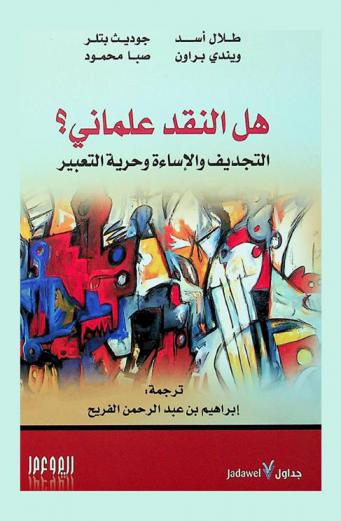
هل النقد علماني ؟ : التجديف والإساءة وحرية التعبير
يتناول هذا الكتاب جوانب من معنى العلمانية وحرية التعبير من خلال تطورهما التاريخي ومن خلال واقعهما اليوم، وكذلك مفهوم النقد وتحولاته والعلاقة بين العالم الإسلامي والغرب، وبين الرؤية الدينية والعلمانية للعالم، ساعيًا لتفكيك هذه المصطلحات ومساءلة افتراضاتها وأطرها الفكرية كما يتناول الكتاب بعض الأسئلة المحورية التي يناقشها أربعة من أبرز المفكرين المعاصرين في هذا الكتاب، منطلقين من قضية الرسوم الكاريكاتورية للنبي محمد عليه الصلاة والسلام التي نشرتها صحيفة يولاندس بوستن الدنماركية في عام 2005 وأثارت في حينها عاصفة من ردود الأفعال بين المسلمين الذين رأوا فيها تعديا على نبيهم وإساءة له، قابلها في الغرب دعوات للدفاع عن حرية التعبير.
BOOK

Identifying Barriers and Solutions to Increase Parent-Practitioner Communication in Early Childhood Care and Educational Services: The Development of an Online Communication Application
There is considerable evidence that highlights the importance of family involvement in early childhood education and care (ECEC) on children’s development and how when combined with professional involvement has a very positive impact on children’s holistic development and therefore, quality ECEC. However, in practice, communicating with families from diverse backgrounds who have limited time, employment obligations, and varying expectations for their child’s ECEC has proven to be challenging. To investigate family involvement practices in ECEC services, 18 semi-structured interviews with Irish practitioners and 15 families were conducted. To understand the influence of family involvement on children’s development, this study was underpinned by Bronfenbrenner’s Bio-ecological framework. The interviews demonstrated that there is a dearth of communication between the home and ECEC services which results in misunderstandings between ECEC stakeholders (practitioners and families). Five barriers to family involvement (attitudinal, structural, cultural, environmental, and welfare) were identified during the interview phase. Subsequently, the development of TeachKloud, a cloud-based management ECEC tool, originated in part, to facilitate quality family involvement practices. TeachKloud was trialled for three months by seven ECEC services and 13 families of children aged 2.8–5.6 years old. A survey was administered after the respective trials to assess the efficacy of TeachKloud in supporting quality practice in ECEC services. This paper focuses on TeachKloud’s impact on family involvement. Findings indicate that online technologies such as TeachKloud decrease barriers to family involvement and make children’s learning more visible to families, thereby, improving the quality of ECEC provision.
Journal Article